7 Best Sewing Awls For Piercing Bead Holes Reviewed
Finding the right tool for jewelry making is vital. We review seven top sewing awls for piercing beads, focusing on precision, grip, and durability for crafters.
When you’re incorporating beads into your lace shawls or heavy-gauge sweaters, you quickly learn that the factory-drilled holes aren’t always cooperative. A high-quality sewing awl becomes an essential extension of your toolkit, allowing you to widen openings or clear out stubborn debris without damaging delicate fibers. Choosing the right tool ensures your beads sit perfectly flush against your stitches rather than distorting the fabric’s tension. This guide breaks down the best options to help you achieve professional results in your bead-work projects.
Tandy Leather Professional Scratch Awl Review


This tool is a staple for a reason, offering a sturdy, tapered steel shaft that makes quick work of stubborn bead linings. Its weight is significant, which provides excellent leverage when you need to clear out residual resin or widen a hole in a stone bead.
For the fiber artist, this tool is best suited for heavier beads, like ceramic or large-hole glass, where you need a bit of force. Be careful, however, as the tip is quite sharp and can easily scratch a bead’s finish if you aren’t steady.
The handle is designed for leatherwork, so it offers a grip that stays comfortable even if you’re processing a hundred beads for a beaded fringe. It’s an overbuilt, professional-grade tool that will likely outlive your current stash of needles.
C.S. Osborne Diamond Point Awl Performance

The diamond-shaped tip on this awl is a game-changer for precision work. Unlike round awls that simply push material aside, the diamond edges actually cut through minor obstructions, making it ideal for clearing out clogged holes in crystal beads.
If you are working with delicate silk or wool fibers, you’ll appreciate how cleanly this awl exits a bead. It leaves a crisp, defined opening that allows your thread to pass through without snagging or fraying your yarn.
Just keep in mind that the sharp edges can be unforgiving if you slip. Use a light touch, as you are essentially reaming the hole rather than just poking through it.
Speedy Stitcher Sewing Awl for Bead Work

While technically a tool for heavy-duty sewing, the Speedy Stitcher is a secret weapon for beaders who prefer a mechanical approach. It’s particularly useful when you need to stabilize a bead on a thick, multi-ply yarn that refuses to thread easily.
The locking mechanism allows you to hold your tension steady while you manipulate the bead onto the thread. It’s a bit bulky for fine lace work, but for heavy cowls or decorative tapestries, it provides an unmatched level of control.
Consider this your "heavy lifting" tool for when you’re working with chunky, rustic yarns. It’s not for the delicate stuff, but it’s invaluable for structural bead placement.
General Tools 1271 Precision Awl Review
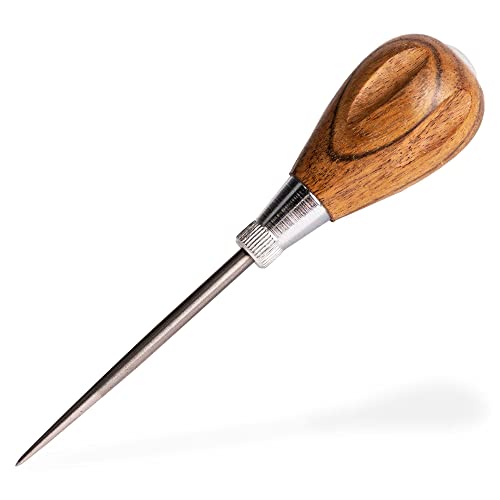
This is a classic, no-nonsense tool that feels like a natural part of a knitter’s notions bag. Its slim profile makes it perfect for reaching into tight spots on a project already in progress.
The point is fine enough to handle smaller seed beads without causing them to crack or chip. If you find your thread is getting caught on the interior ridge of a bead, this awl is the precise instrument needed to smooth that edge out.
It is lightweight and balanced, which prevents hand fatigue during long sessions of bead preparation. For most knitters, this is the most versatile option for everyday bead-work.
Darice Wood Handle Beading Awl Analysis
The Darice awl is an accessible, entry-level option that performs surprisingly well for the price. The wooden handle has a warm, tactile feel that is easy on the hands, especially if you have arthritis or grip fatigue.
It doesn’t have the hardened steel of professional-grade tools, so it may dull over time if you are working with hard stone or metal beads. However, for glass and plastic beads, it is perfectly adequate.
If you are just starting to experiment with adding beads to your knitting, this is a low-risk investment. It’s a solid entry point that helps you learn the mechanics of bead clearing without breaking the bank.
Beadsmith Ergonomic Beading Awl Features
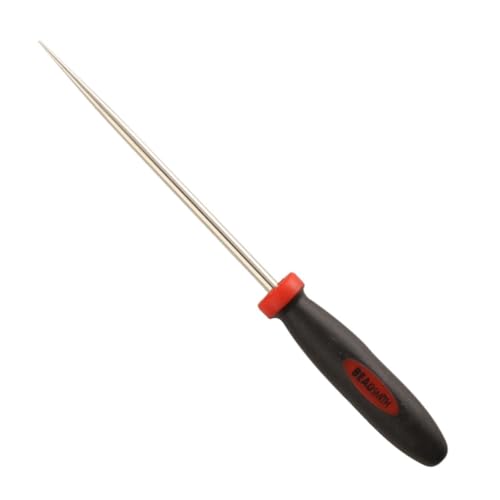
Beadsmith clearly designed this with the crafter’s comfort in mind, featuring a rubberized, ergonomic grip. This is a massive advantage when you’re prepping beads for a large project, as it prevents the handle from slipping in your palm.
The shaft is thin and strong, allowing for deep penetration into longer beads. It feels very secure in the hand, giving you the confidence to apply pressure without worrying about the tool sliding.
This is arguably the most comfortable tool to hold for extended periods. If you are prone to hand cramps while knitting, this ergonomic design will be your best friend.
Fiskars Craft Awl for Precise Piercing
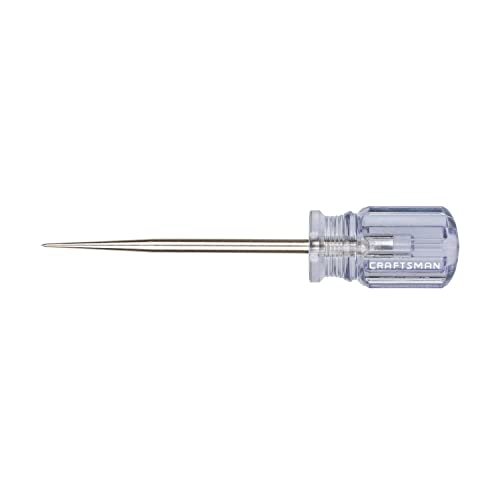
Fiskars is known for their reliable blades, and this awl is no exception, featuring a very consistent, sharp point. It is incredibly effective for piercing through layers of fabric or clearing out bead holes that are just slightly too small for your tapestry needle.
The handle is simple and lightweight, which makes it easy to maneuver around your knitting needles. It’s a great "utility" tool that sits comfortably in your notions pouch alongside your stitch markers and darning needles.
While it lacks the specialized geometry of the diamond-point awls, its simplicity is its greatest strength. It is a dependable, everyday tool that rarely lets you down.
How to Choose the Best Awl for Bead Piercing
- Tip Geometry: Choose diamond points for cutting through debris and round points for widening holes in softer materials.
- Handle Comfort: If you are prepping beads for an entire sweater, prioritize ergonomic, rubberized grips to save your hands.
- Shaft Length: A longer shaft is better for deeper beads, while a short, slim shaft offers more control for delicate lace work.
- Material Compatibility: Ensure the hardness of your awl exceeds the hardness of the beads you are working with to prevent dulling.
Safety Tips for Using Awls in Fiber Crafts
Always work on a stable, flat surface, and never hold the bead in your hand while piercing. It is far too easy for the awl to slip and cause a nasty puncture wound in your palm.
Keep your fingers well behind the path of the awl at all times. If you are struggling to get the awl through, don’t force it; use a gentle twisting motion instead to ream the hole gradually.
Finally, keep your awls capped or stored in a protective sheath when not in use. A loose, sharp awl in a knitting bag is a recipe for a pricked finger or a snagged yarn project.
Maintaining Your Awl Points for Longevity
To keep your awl performing at its best, wipe it down with a dry cloth after every use to remove any resin or debris. If you notice the tip getting dull, a light touch with a fine-grit sharpening stone can restore its effectiveness.
Avoid using your awl to pry open metal jump rings or other hardware, as this can bend the tip or damage the shaft. Keep it strictly for piercing and reaming to ensure the point stays true and sharp.
Storing your tools in a dedicated notions case will prevent them from rattling against your needles and dulling their points. Proper care ensures your tools remain as precise as the day you bought them.
Integrating beads into your fiber arts is a rewarding way to add texture and light to your favorite projects. By selecting an awl that matches the scale of your beads and the sensitivity of your hands, you can make the preparation process seamless. Remember that the right tool should feel like an extension of your creative process rather than a hurdle. May your stitches be even, your beads be perfectly placed, and your hands stay comfortable through every row.