6 Best Needle Sizers For Quick Checks Worth Owning
Struggling to identify your knitting needles? We review the 6 best needle sizers that offer quick, precise measurements to keep your craft organized and ready.
We have all been there: staring at a pair of unlabeled needles, wondering if they are a 3.75mm or a 4.0mm. A needle gauge is the unsung hero of the knitting bag, ensuring your tension remains consistent across every project. Without a reliable way to verify your tools, you risk subtle gauge shifts that can ruin the fit of a sweater. Here are the six best needle sizers to keep your stash organized and your knitting precise.


ChiaoGoo Plastic Needle Gauge: Best for Precision

When you need absolute certainty, the ChiaoGoo gauge is a gold standard for its clear, accurate sizing holes. It covers a vast range of sizes, from tiny lace needles to chunky options, ensuring you aren’t left guessing.
The plastic construction is lightweight and flexible, meaning it won’t snap if it gets buried under a heavy knitting bag. However, because it is plastic, it can occasionally warp if left in a hot car or direct sunlight for extended periods.
If you are a process knitter who values speed and clarity, this is your go-to tool. The markings are bold and high-contrast, making them easy to read even in low-light conditions.
Susan Bates Knit Chek: The Classic Pocket Tool
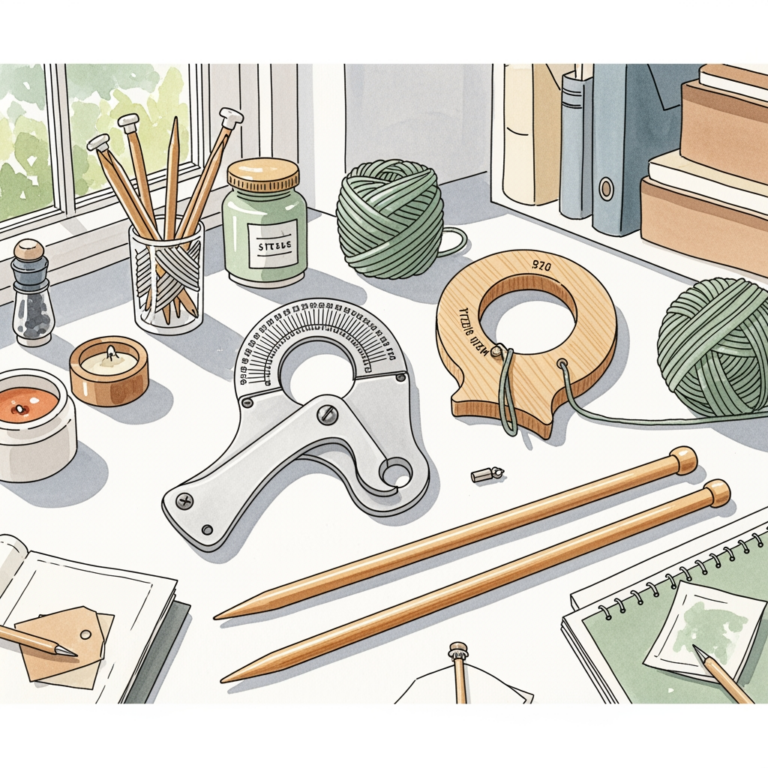
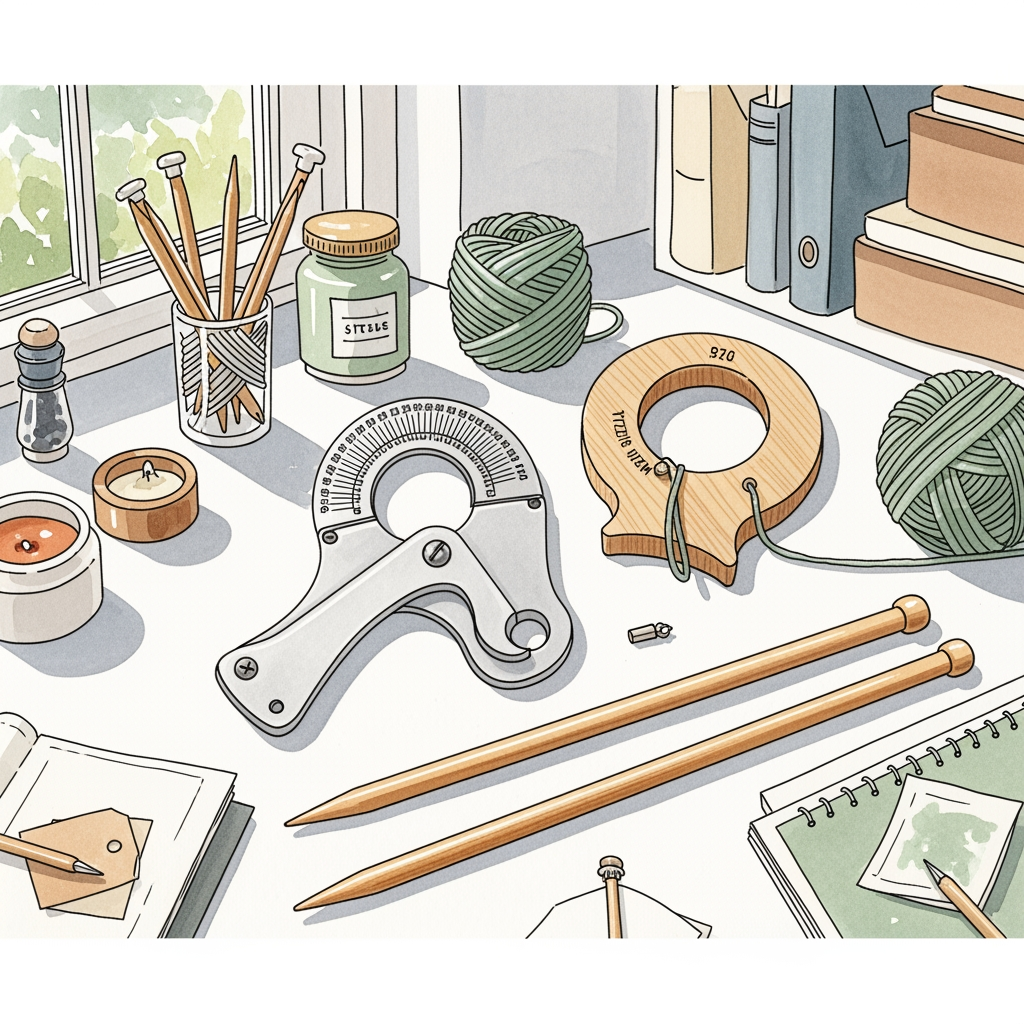
The Knit Chek is a legendary piece of gear that has been in knitting bags for decades. It combines a needle gauge with a built-in ruler and a stitch count window, making it a true multifunctional asset.
Because it is made of sturdy metal, it won’t bend or warp like plastic alternatives. This durability makes it perfect for tossing into a project bag without worrying about it getting crushed by your yarn stash.
The trade-off is that the metal can be slightly reflective under harsh lighting, which might make reading the tiny numbers a bit of a squint. Still, for the sheer utility of having a ruler and gauge in one flat, pocket-sized piece, it remains unbeatable.
Cocoknits Maker’s Keep Gauge: Best for Magnetics
This tool is designed for the knitter who constantly loses their notions. It features a magnetic back that sticks to the Cocoknits Maker’s Keep wristband, keeping your gauge within reach at all times.
The aesthetic is minimalist and modern, fitting perfectly into a curated knitting kit. It is particularly useful when you are working on complex cables or lace, where you might need to check your needle size frequently to ensure you haven’t swapped tools mid-row.
The only downside is the price point, which is higher than a standard plastic gauge. If you are prone to misplacing your tools, the investment in a magnetic system pays for itself in saved frustration.
Katrinkles Wooden Needle Gauge: Best for Aesthetics
Katrinkles gauges are crafted from beautiful, sustainable wood, making them a joy to hold. They bring a tactile, artisanal feel to your knitting practice that mass-produced plastic tools simply cannot match.
Beyond their looks, they are surprisingly functional and precise. Because wood is a natural material, it feels warmer in the hand and provides a nice grip, which is a welcome change from slick metal or plastic tools.
Be mindful that wood can be prone to splintering if treated roughly or exposed to excessive moisture. Treat these as a premium tool for your favorite needles, and they will last for years.
Knitter’s Pride Wool Needle Gauge: Best for Travel

This gauge is shaped like a cute sheep, but don’t let the whimsical design fool you; it is a highly functional tool. Its compact size makes it the perfect companion for a dedicated travel kit.
Because it is small and lightweight, it adds virtually no weight to your carry-on. It handles the most common needle sizes used for socks and hats, which are the projects most of us pack for travel.
If you are working on large-scale projects with oversized needles, this gauge might lack the range you need. However, for a portable "emergency" kit, its size and charm are hard to beat.
Clover Needle Gauge: The Reliable Budget Choice
Clover is a staple in the fiber arts world for a reason: their tools are consistently reliable and widely available. This gauge is no-frills, easy to use, and gets the job done without any fuss.
It features a simple, intuitive layout that makes checking needle sizes a quick, one-second task. The plastic is durable enough to survive years of use without the markings wearing off.
If you are a beginner looking for your first tool, start here. You get professional-grade accuracy at a price that leaves more room in your budget for high-quality yarn.
Why Every Knitter Needs a Dedicated Needle Gauge
Needles are not always labeled, and even when they are, the printing often rubs off after a few months of heavy use. Relying on your eyes to "guess" the size is a recipe for disaster in your gauge swatch.
A dedicated gauge ensures that when you pick up a project after a long break, you know exactly what tools you were using. This consistency is the secret to professional-looking garments that actually fit the wearer.
Ultimately, a gauge is an insurance policy for your time. Don’t spend forty hours knitting a sweater only to realize your gauge was off because you used a 4.0mm needle instead of a 3.75mm.
How to Measure Worn or Unmarked Needle Sizes
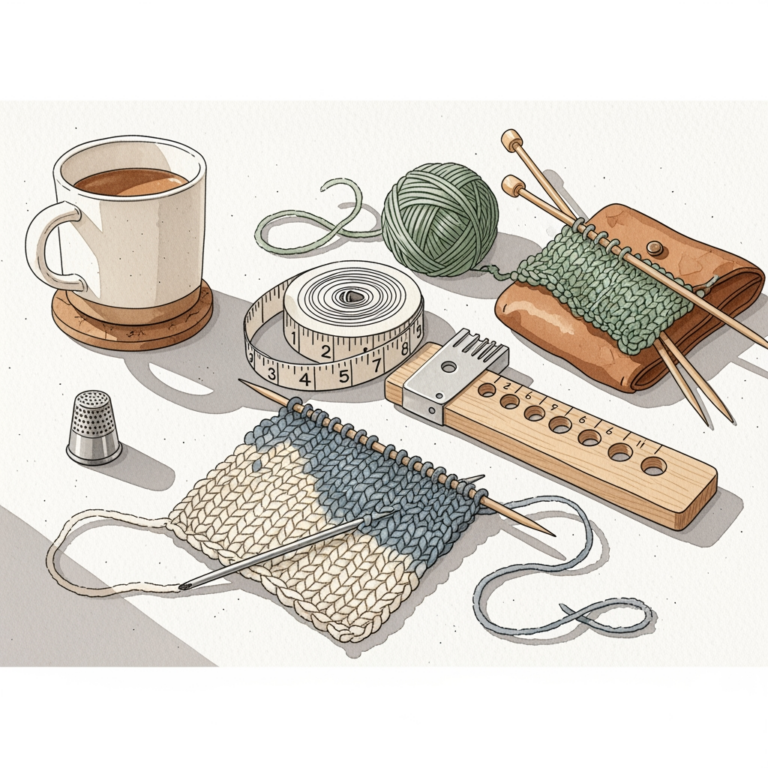
When a needle’s size has worn off, slide the needle into the holes of your gauge until you find the one that fits snugly. The needle should fit without forcing it, but it shouldn’t wiggle excessively.
If you are measuring a needle that falls between two holes, you are likely dealing with a non-standard size or a needle that has been slightly bent. In these cases, always opt for a gauge swatch to confirm your tension.
Remember to measure the shaft of the needle, not the tip. The tip is often tapered for ease of entry into stitches, which will give you a false reading if you push it too far into the gauge hole.
Understanding Metric vs. US Needle Sizing Systems
The knitting world uses two main systems: Metric (measured in millimeters) and US (measured in arbitrary numbers). Metric is universal and far less confusing, as a 4.0mm needle is 4.0mm regardless of the brand.
US sizes can be frustrating because they don’t always map perfectly to metric sizes. For example, a US 6 is often listed as 4.0mm, but some brands may vary slightly, leading to "close enough" sizing that ruins your gauge.
Always prioritize the metric measurement when following a pattern. If your pattern only lists US sizes, use your gauge to verify the metric equivalent before you cast on.
Tips for Preventing Needle Size Confusion at Home
Keep your needles organized by size rather than brand or material. Using a dedicated needle case with labeled pockets is the best way to prevent your collection from becoming a jumbled mess.
If you have a large collection, use small rubber bands or needle markers to keep pairs together. This prevents the "missing needle" syndrome that plagues so many of us.
Finally, make it a habit to check your needle size every single time you put your knitting away. By verifying the size before you store the project, you save yourself the headache of guessing when you pick it up again.
Investing in a quality needle gauge is one of the smallest but most impactful steps you can take to improve your knitting. Whether you prefer the durability of metal, the beauty of wood, or the precision of plastic, there is a tool here to suit your style. Keep your needles organized, check your sizes regularly, and enjoy the peace of mind that comes with knowing your tools are exactly as they should be. Happy knitting!