6 Best Adjustable Book Lights For Night Sewing
Brighten your workspace with our top 6 adjustable book lights for night sewing. Discover the perfect tool to improve visibility and precision—shop our list now.
Late-night stitching sessions provide a quiet sanctuary for many makers, but poor lighting remains the primary enemy of precision work. Dark yarns and complex lace patterns demand exceptional illumination to prevent dropped stitches and missed yarn-overs. Choosing the right light transforms a frustrating evening of squinting into a productive session of rhythmic crafting. This guide highlights the best adjustable lights to ensure every stitch is placed with confidence, regardless of the hour.
Glocusent LED Neck Light: Most Versatile


The ergonomic design of this neck-worn light makes it a top contender for those who prefer not to clip hardware onto their fabric. By resting comfortably on the shoulders, it provides a consistent, focused beam that moves exactly where the eyes look.
This is particularly useful when working on bulky projects like heavy wool sweaters or complex aran cables. Because the light source is independent of the needle or the project bag, it eliminates the shadow issues often created by handheld or desk-mounted lamps.
The ability to adjust the angle of each arm separately allows for a customized beam width. Bottom line: This is the ideal choice if you want hands-free, shadow-free illumination that moves with your torso.
Vekkia Rechargeable Book Light: Best for Travel

Portability is non-negotiable for the knitter who participates in retreats, guild meetings, or long commutes. This compact, rechargeable model packs easily into any notions pouch without adding significant bulk.
Despite its small footprint, the light offers surprising brightness that holds up well during extended sessions. The clip mechanism is gentle enough to attach to a pattern holder or a lightweight frame without damaging delicate fiber projects.
A common pitfall is relying on heavy, unmanageable lights that strain the fabric. Bottom line: This light is a travel essential that provides reliable utility without sacrificing space in a project bag.
CeSunlight Rechargeable Light: Brightest Option
When working with dark-colored mohair or black fingering-weight wool, high-lumen output is essential to see stitch definition. This model delivers a powerful, wide-spectrum glow that cuts through the visual “noise” of dark fibers.
The brightness settings are robust, ensuring that the light doesn’t dim prematurely during a long evening of plying or complex colorwork. It is heavy-duty, meaning it provides a stable light source that does not flicker, which is crucial for reducing eye fatigue.
Some may find the footprint larger than others, but the trade-off is superior clarity. Bottom line: Choose this if you frequently work with dark-toned yarns where high contrast is mandatory for accurate stitch counting.
LuminoLite Clip-On Light: Best Budget Pick

Reliable lighting does not always require a high financial investment. This clip-on model offers a functional, no-frills solution that performs consistently for basic projects like scarves or simple stockinette blankets.
It clips securely to most surfaces, including pattern stands or sturdy table edges. While it may lack the advanced color-temperature settings found in premium models, its white light is perfectly adequate for gauging gauge or checking cable crossings.
It serves as an excellent entry point for those building their first set of tools. Bottom line: An affordable, dependable workhorse for the casual evening crafter.
Mighty Bright NuFlex Light: Crafter’s Favorite

The flexibility of the neck on this model sets it apart, allowing for precise positioning over intricate lace or micro-knitting. Its ability to hold a shape firmly once adjusted prevents the light from drifting during delicate work.
Experienced knitters appreciate the even distribution of light, which prevents hot spots that can make it difficult to read a pattern chart. Its build quality is robust, designed to withstand the rigors of being moved frequently between projects.
This light bridges the gap between portability and performance. Bottom line: Its superior neck flexibility makes it the top choice for detailed, needle-intensive work.
OttLite Wellness LED Lamp: Premium Desk Choice
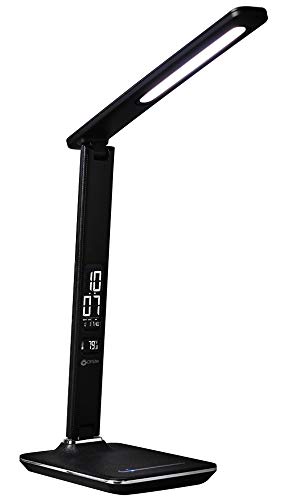
For those who treat their crafting station as a professional studio, the OttLite system is the gold standard. Its proprietary lighting technology mimics natural daylight, which is essential for accurate color matching in stranded colorwork or complex dye-lot projects.
While it is a desk-bound lamp, the footprint is worth the space for the reduction in eye strain alone. The clarity provided by the high-CRI (Color Rendering Index) output makes it easy to spot split plies or uneven tension before they become permanent flaws in a finished garment.
This is a long-term investment in the longevity of your eyesight. Bottom line: The ultimate luxury for those who spend hours at a desk and require true-to-life color accuracy.
How to Choose the Right Light for Your Project
Not every project requires the same level of illumination. For instance, knitting with light-colored, smooth cotton requires less contrast than working with dark, fuzzy alpaca.
Consider the portability of your setup as well. If you move from a living room chair to a bedroom nook, a neck light is superior. If you occupy a fixed chair, a desk lamp is a more ergonomic solution.
- Weight: Avoid clips that pull on lightweight fabric.
- Battery Life: Ensure the runtime exceeds your typical session length.
- Stability: Choose flexible necks that won’t sag under their own weight.
Bottom line: Match the light’s power and style to the specific requirements of your current yarn and fiber structure.
Understanding Color Temperature for Accurate Hues
Color temperature, measured in Kelvin (K), dictates the “warmth” or “coolness” of the light. A cool, blue-toned light (5000K+) is best for seeing fine details and identifying structural errors in your knitting.
Conversely, a warmer, yellow-toned light is often easier on the eyes for extended periods. When selecting yarn for a complex colorwork project, always check the colors under daylight-balanced lighting (around 5000K) to ensure they will look as intended in natural light.
Relying on warm incandescent house bulbs can lead to mistakes when choosing shades that look similar. Bottom line: Use cool-toned lighting to verify color accuracy and stitch integrity.
Neck vs. Clip-On Lights: Which Style Is Best?
Neck lights are the most versatile option for the nomadic knitter who moves frequently. They provide consistent light that follows your line of sight without the risk of the light slipping off a pattern holder or damaging a delicate knitted fabric.
Clip-on lights offer the benefit of staying in one place, which is helpful if you have a designated “knitting chair” with a nearby side table. However, ensure the clip is well-padded to avoid leaving impressions in softer fibers like cashmere or silk.
If you are a frequent traveler, the neck light is the obvious winner for its convenience. Bottom line: Neck lights are best for focused, hands-free mobility; clip-ons are best for stationary, focused desk work.
Tips for Reducing Eye Strain During Night Sewing
Even with the best light, the eyes need breaks. Follow the 20-20-20 rule: every 20 minutes, look at something 20 feet away for at least 20 seconds.
Proper posture is also vital. Avoid hunching over your work, which forces the eyes to focus at an unnatural distance and causes neck tension. Bringing the work up closer to your face, rather than bringing your face down to the work, keeps the spine aligned.
Finally, keep your lighting diffused rather than pinning it to a single, harsh point. Bottom line: Light is only half the battle; proper ergonomics and regular breaks are the other half of a sustainable night-stitching practice.
Quality lighting is not an accessory, but a fundamental tool that protects your eyes and improves the precision of your work. By selecting a light that fits both your project needs and your physical environment, you ensure that your evening crafting remains a source of joy rather than a strain. Choose carefully, keep your workspace bright, and enjoy the meditative process of bringing your stitches to life.