7 Best Stitch Markers For Counting Pattern Repeats
Struggling with complex patterns? Discover our top 7 stitch markers designed to help you track repeats accurately and keep your knitting projects on target.
Keeping track of pattern repeats is the difference between a meditative knitting session and a frustrating evening spent ripping back lace rows. Stitch markers act as the physical signposts that break complex instructions into manageable, bite-sized segments. Whether you are working on a simple stockinette sweater or a complex cable chart, the right tool prevents errors before they happen. Finding the perfect marker is about matching the tool’s weight, shape, and material to your specific project needs.
CocoKnits Colorful Nylon Stitch Markers
These nylon rings are the gold standard for seamless, snag-free knitting. Because they lack a sharp closing mechanism, they glide effortlessly over your needles without catching on delicate fibers like mohair or single-ply merino.
The vibrant, varied colors are their greatest asset when you need to distinguish between different pattern sections. I often use one color for the start of the round and a contrasting color to mark the beginning of a lace repeat.
The trade-off here is that they are fixed rings; you cannot add them to a row that is already on your needles. They are best suited for projects where you can place markers during the initial cast-on or setup row.
Clover Locking Stitch Markers for Lace


If you have ever needed to mark a specific stitch in the middle of a row, these are your best friend. Their safety-pin style closure allows you to clip them directly into the fabric, making them essential for identifying increases or decreases in a complex chart.
The plastic is lightweight, which is crucial when you are working with fine-gauge yarn. Heavy metal markers can distort the stitch tension, especially in delicate lace, leading to uneven gauge that is difficult to fix during blocking.
Be aware that the plastic can sometimes catch on very fuzzy or "hairy" yarns like brushed alpaca. If you feel resistance, don’t force the marker through; simply open the clasp to move it rather than sliding it along the needle.
Katrinkles Wooden Numbered Stitch Markers

These markers bring a level of professional organization to stranded colorwork or large-scale projects. Having a physical number on the marker helps you keep track of which repeat you are currently working on, effectively acting as an external brain.
Because they are made of wood, they have a slight texture that keeps them from sliding around too much on slick metal needles. This is a massive help when you are juggling multiple balls of yarn and don’t want your markers migrating.
They are inherently thicker than plastic or metal rings, so they can create a tiny gap in your knitting if placed too close to a tight cable. Use them for marking the start of a section rather than individual stitches to avoid unwanted tension changes.
ChiaoGoo Split Ring Stitch Markers Set

Split ring markers are the ultimate hybrid, offering the ease of a ring with the versatility of a locking marker. You can slide them onto the needle like a standard ring or hook them into a stitch if you need to track a specific spot.
They are incredibly durable and won’t bend or snap like cheaper plastic alternatives. This makes them a smart long-term investment for a knitter who frequently works with heavy-weight wools or cottons that might stress a weaker marker.
The only downside is that the "split" can occasionally catch a stray fiber if you aren’t careful. If you find them snagging, check that the edges of the split are smooth, or rotate the marker so the opening faces away from the working yarn.
Cocoknits Maker’s Keep Magnetic Bracelet
This tool changes the game for managing your markers while you work. Instead of fumbling for a bowl or a pocket, you have a magnetic base right on your wrist to hold your metal markers securely.
It is particularly useful for knitters who suffer from hand fatigue or who have trouble keeping track of small items. Having your markers within arm’s reach ensures you never skip a repeat just because you didn’t want to reach across the couch.
It does require you to use metal markers, which can be heavier than plastic. If you are working on a long, heavy project, be mindful that the weight of the bracelet plus the markers can feel significant after several hours of knitting.
Tulip Heart-Shaped Locking Stitch Markers
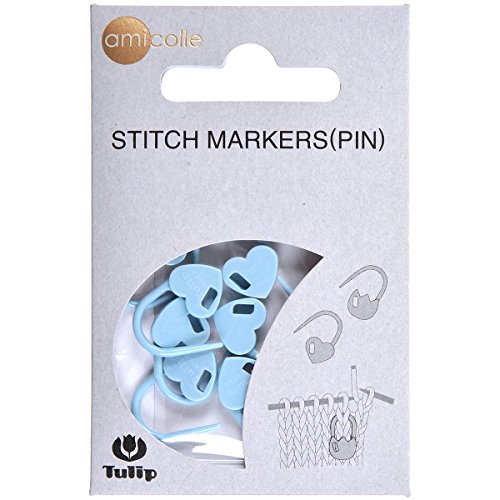
These markers are as functional as they are charming. The heart shape is surprisingly ergonomic, making them easier to grip and open than traditional, smaller locking markers.
They are exceptionally smooth, which minimizes the risk of splitting your yarn. I recommend these for beginners who are still developing their "flick" or "throw" technique and might accidentally catch their needle tip on a sharper marker.
Like all locking markers, they are prone to getting lost if you set them down on a dark fabric surface. Keep them on your project or in a dedicated tin to ensure they don’t migrate into the abyss of your sofa cushions.
Susan Bates Crystalites Stitch Markers

These are the classic, no-nonsense choice for most knitters. They are lightweight, inexpensive, and come in a variety of sizes to fit everything from tiny sock needles to jumbo circulars.
Because they are made of a smooth, rigid plastic, they are virtually invisible to your hands while you knit. They don’t add bulk, making them ideal for high-tension patterns where any extra girth on the needle would be noticeable.
They are not locking, so they are strictly for use on the needle. If you are looking for a simple, reliable way to mark repeats without any bells or whistles, this is the most cost-effective and practical solution.
Choosing Markers for Different Yarn Weights
The golden rule is that your marker should never be significantly thicker than your needle. If you are knitting with lace-weight yarn on 2.0mm needles, a bulky wooden marker will create a "ladder" or an enlarged stitch every time you pass it.
For heavy, bulky yarns, you need a larger diameter ring that can slide easily over the needle without getting stuck. If the marker is too small, you will find yourself fighting the tool rather than focusing on your pattern.
- Fingering/Sock Weight: Use thin, smooth rings or small locking markers.
- Worsted/Aran: Medium-sized rings or standard locking markers work best.
- Bulky/Super Bulky: Use large, flexible rings to accommodate the needle diameter.
Why Shape Matters for Pattern Repeat Clarity
Shapes aren’t just for aesthetics; they provide tactile feedback. When you are knitting in low light or while watching television, you can feel the difference between a round marker and a heart-shaped one.
I suggest using a unique shape for your "Start of Round" marker and standard rings for your repeats. This allows your fingers to identify your position in the pattern without you needing to look at the work constantly.
Avoid overly ornate markers with beads or charms for high-frequency use. While they look beautiful, they add unnecessary weight and can get tangled in your working yarn during complex maneuvers like short rows or cables.
Tips for Organizing Your Stitch Marker Collection
A disorganized collection leads to wasted time and missing tools. I recommend sorting your markers by type—locking, fixed ring, and split ring—rather than by color or brand.
Use a small, compartmentalized box to keep them separate. If you have a large collection, labeling the compartments by size can save you from trying to force a small ring onto a large needle.
Finally, keep a "travel set" in your project bag at all times. There is nothing worse than starting a new pattern at a coffee shop and realizing your markers are sitting on your desk at home.
Masterfully using stitch markers is a skill that evolves alongside your knitting journey. By selecting the right material and shape for your specific fiber, you eliminate the guesswork that often leads to dropped stitches. Remember that the best marker is the one that disappears into your workflow, allowing you to focus entirely on the rhythm of your craft. Keep your collection organized and your mind clear, and you will find that even the most daunting patterns become simple, repeatable joys.