6 Best Rechargeable Task Lights For Evening Knitting
Brighten your yarn work with our top 6 rechargeable task lights for evening knitting. Find the perfect hands-free lamp to illuminate your stitches and shop now.
Knitting in low light is a common hurdle, especially when working with dark-colored yarns or intricate lace patterns that require precise stitch visibility. Poor lighting leads to eye strain, missed stitches, and frustration during evening sessions when relaxation should be the primary goal. Finding the right task light transforms the craft, allowing for longer sessions without compromising the health of the eyes or the accuracy of the work. This guide explores the best rechargeable lighting solutions tailored specifically for the unique needs of the knitting community.
Glocusent LED Neck Light: Best Overall Choice


The ergonomic design of this neck light makes it a top contender for knitters who shift positions frequently. By resting comfortably on the shoulders, it provides a consistent, focused beam that follows the movement of the hands.
When working on a complex project like a stranded colorwork sweater, the ability to direct light exactly where the needles meet the yarn is invaluable. This light offers multiple brightness and temperature settings, which proves essential when switching between high-contrast yarns and more muted, tonal hand-dyed wools.
The main drawback is the slight weight around the neck during multi-hour sessions. However, for those who move from the armchair to the couch, the hands-free convenience is unmatched.
Vekkia Amber Clip-On Light: Eases Eye Strain
Blue light emitted by standard LEDs can be jarring at night, often disrupting sleep patterns after a long knitting session. The Vekkia Amber option prioritizes a warmer, eye-friendly glow that mimics natural sunset light.
This light is particularly beneficial for knitters using black or navy mohair, where the fuzziness of the fiber can make the stitches difficult to distinguish under harsh, cool lighting. The warm tone reduces glare against metallic or slick nickel-plated needles, preventing the “sparkle fatigue” that often occurs when light bounces off needle tips.
While it lacks the sheer power of some industrial-style lamps, the focused clip-on mechanism makes it ideal for securing directly to a pattern holder or a bedside table. It is the best choice for late-night knitters who want to protect their circadian rhythm.
Brightech Litespan Floor Lamp: Ultimate Splurge
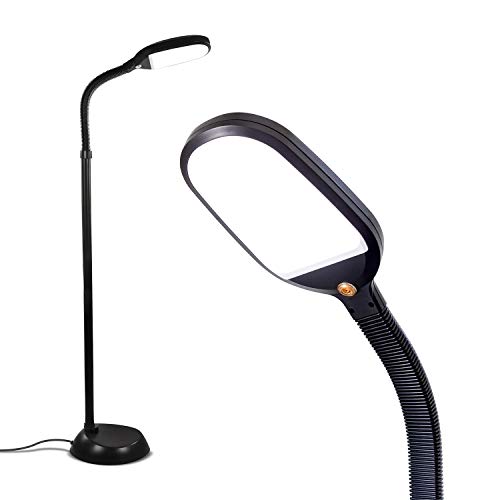
For the dedicated knitter who maintains a permanent station, a high-quality floor lamp is an investment in longevity. The Brightech Litespan provides a broad, flicker-free light source that covers a wide surface area, making it perfect for managing large projects like blankets or oversized shawls.
Its stability and adjustable gooseneck allow for precise placement over the lap without the need for constant readjustment. The light quality is remarkably consistent, ensuring that the true color of the yarn—whether it is a subtle alpaca blend or a vivid superwash merino—is reflected accurately.
Though it occupies floor space, it eliminates the need for any wearable or attachable components. It is the ultimate tool for those who spend hours every day at their craft.
OttLite Pivot LED Desk Lamp: For True Color

Color accuracy is non-negotiable when working with variegated yarns or matching dye lots for a large garment. OttLite is renowned for its proprietary light technology that replicates the look of natural daylight.
This lamp is indispensable when choosing buttons for a finished cardigan or checking if a color transition in a project is as seamless as intended. The base is sturdy and the footprint is small enough to fit on a side table or yarn shelf, keeping the workspace organized.
It provides a crisp, clear view of the stitches, making it easier to spot errors in cable crossings or lace repeats. If project precision is the priority, the clarity provided here is hard to beat.
LuminoLite Book Light: Most Portable Option

Portability is the primary advantage for the knitter who enjoys knitting at guild meetings, in transit, or during travel. This compact, rechargeable clip-on light tucks easily into any project bag, ensuring that lighting is never left to chance.
Despite its small size, the light is surprisingly bright and stable enough to be attached directly to a pattern holder or a knitting bag rim. It serves as an excellent backup for when the primary home lamp is unavailable.
While it does not offer the same broad coverage as a floor lamp, its efficiency in lighting a specific section of the work is excellent. It is a necessary addition to any travel knitting kit.
DEWENWILS Gooseneck Lamp: Most Versatile Setup
The extreme flexibility of this gooseneck lamp allows it to be shaped in ways that traditional clip-on lights cannot accommodate. It can be wrapped around a chair arm or hooked onto a knitting notions organizer with ease.
This versatility is a major asset when working with different needle lengths, such as long circular needles or double-pointed needles, where cords can sometimes get in the way of a rigid light source. By bending the neck away from the needles, the knitter can avoid snagging the yarn while maintaining perfect visibility.
It strikes a balance between portability and structural integrity. For those with limited space or specific furniture constraints, this is often the most practical solution.
Key Features to Look for in a Knitting Light
When selecting a light, prioritize a rechargeable battery over battery-operated models to reduce environmental waste and long-term costs. Adjustable brightness settings are equally important, as the required intensity changes based on the color and thickness of the yarn.
- Flicker-free performance: Essential for preventing headaches during long sessions.
- Color Temperature Control: Allows for switching between cool light for daylight precision and warm light for evening relaxation.
- Flexible Neck/Mounting: Ensures the light hits the yarn, not the eyes or the needles.
- Base Stability: Prevents tipping if using a desk or floor model.
Understanding Lumens and Color Temperature
Lumens measure the brightness of a light, while color temperature, measured in Kelvins (K), describes the hue of that light. For knitting, a range of 3000K to 5000K is typically best, with the lower end providing a warmer, softer feel and the higher end providing a daylight-sharp white.
Avoid extremely high lumen counts if the light is placed very close to the face, as this can create intense glare. Always ensure the light source is diffused rather than concentrated into a harsh, single-point beam.
Why Light Quality Affects Your Yarn Colors
Inadequate or incorrect lighting can drastically alter the appearance of dyed fiber. Cool, blue-tinted lights often wash out warm, earthy tones, while overly yellow lights can make it impossible to distinguish between similar shades of blue or green.
For complex stranded colorwork where subtle contrast determines the design’s success, high-CRI (Color Rendering Index) lights are vital. A high CRI ensures that the colors visible under the light are as close to natural sunlight as possible, preventing unpleasant surprises when the project is viewed in daylight.
Neck vs. Clip-On Lights: A Knitter’s Guide
Neck lights are superior for knitters who change posture or move between rooms, as they provide a constant, dedicated light source without setup. They are ideal for projects that stay in the lap but can become cumbersome if they interfere with the neck and shoulders.
Clip-on lights, conversely, are best for stationary knitting setups. They excel when attached to a pattern board or table, providing a steady stream of light that does not fluctuate with the knitter’s movement. Choosing between them comes down to a preference for mobility versus consistent, fixed lighting.
Finding the right rechargeable task light is a highly personal decision that depends on individual workspace constraints, sensitivity to light, and the types of projects favored. Whether opting for the convenience of a neck light or the clarity of a dedicated desk lamp, the right tool should support the craft without ever becoming an obstacle. Prioritize features that minimize eye strain and maximize color accuracy to ensure that the joy of knitting continues long after the sun goes down.