7 Best Wool Roving For Felted Pompom Accents To Try
Discover the 7 best wool rovings for crafting felted pompom accents. Learn which fibers offer the ideal texture and durability for your next textile project.
Felted pompom accents add a sophisticated, tactile dimension to everything from heavy wool beanies to delicate decorative pillows. Choosing the right wool roving is the difference between a dense, professional-looking sphere and a fuzzy, misshapen mess. Over my two decades in the fiber arts, I have learned that the fiber’s crimp and micron count dictate how quickly your project comes together. This guide highlights the best roving options to ensure your next embellishment is as durable as it is beautiful.
Ashford Corriedale Wool: Best All-Rounder Choice
Ashford Corriedale is the "workhorse" of the felting world for a reason. Its medium micron count provides enough structure to hold a shape firmly, yet it is soft enough to handle without irritation.
When you are needle-felting a pompom, you need a fiber that "grabs" itself quickly. Corriedale’s balanced crimp allows the scales of the fiber to lock together efficiently during the agitation process. It is neither too slick nor too coarse, making it an ideal starting point for beginners.
If you find that your pompom is losing its roundness after a few days of wear, you likely need a fiber with more structural integrity like this one. The bottom line: It is the most reliable choice for a consistent, sturdy result.
World of Wool Merino Top: Best Soft Texture

Merino is often synonymous with luxury, and for good reason. Its incredibly fine fibers create a smooth, velvety finish that is hard to achieve with coarser wools.
Because the fibers are so fine, they felt very quickly. However, this speed can be a double-edged sword; if you aren’t careful with your needle placement, you can over-felt the surface, leading to a slightly "pilled" appearance.
I recommend this for decorative accents that won’t see heavy friction, such as on a wall hanging or a delicate scarf. Use this when the tactile, soft-touch experience is more important than extreme durability.
Living Dreams Fiber Bluefaced Leicester: Best
Bluefaced Leicester (BFL) is a long-staple fiber with a distinct luster that adds a subtle sheen to your finished work. This is my go-to choice when I want an accent that catches the light differently than standard matte wool.
The longer staple length means the fiber is less prone to "flyaways" or haloing. When you are shaping a pompom, you want a fiber that stays put, and BFL’s natural drape and strength provide exactly that.
It is slightly more expensive, but you will notice the difference in how clean the finished surface looks. Choose BFL if you want a professional, high-end finish with a slight, elegant shimmer.
Paradise Fibers Gotland Roving: Best Durable

Gotland wool is a primitive breed fiber known for its incredible resilience. If you are making pompom accents for a high-traffic item—like a child’s sweater or a frequently used throw blanket—this is the fiber you want.
It has a slightly coarser hand than Merino, which translates to a pompom that resists crushing. While it might take a few extra minutes of needle-felting to achieve a smooth surface, the resulting shape will hold up for years.
Many makers overlook Gotland because they chase softness, but durability is a virtue in functional knitting. Invest in Gotland for items that need to withstand heavy daily use.
Malabrigo Nube Merino Wool: Best Color Range
Malabrigo is famous for its kettle-dyed, painterly colorways, and their Nube roving is no exception. If your project requires a specific, complex color palette, this is the only place you should look.
The way the colors transition within the roving allows you to create marbled or variegated pompoms without needing to blend fibers yourself. It is a fantastic way to add a "designer" touch to a plain knit garment.
Because it is high-quality Merino, it felts beautifully, though it requires a gentle hand to keep the color transitions crisp. Use this when color expression and unique aesthetics are your primary goals.
KnitPicks Bare Wool Roving: Best Value Option
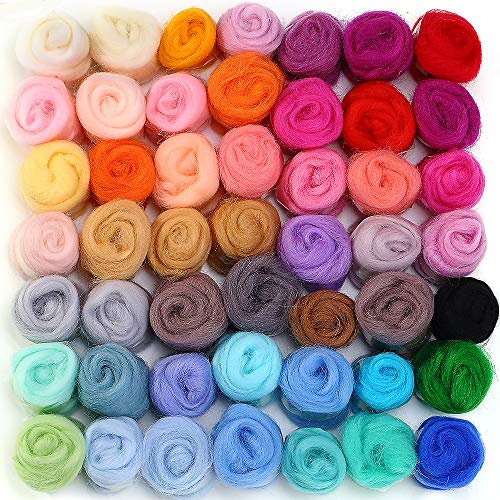
If you are just learning the mechanics of needle-felting or need to make dozens of pompoms for a large project, KnitPicks Bare is an excellent, cost-effective choice. It is a clean, undyed wool that acts as a perfect blank canvas.
You can dye this yourself using acid dyes or leave it in its natural, creamy state for a minimalist look. It felts predictably and doesn’t have the "surprises" that can sometimes come with bargain-bin fibers.
Don’t let the low price fool you; this is genuine wool that performs exactly as expected. This is the best choice for bulk projects where you need a reliable, affordable base.
WeCrochet Combed Merino Top: Best for Detail

When you are adding intricate patterns or small details to your pompoms—like tiny spots or stripes—you need a fiber that is "combed." This means the fibers are aligned in the same direction, which is essential for precision work.
Combed top is much easier to manage when you are pulling off small, precise tufts of wool. It prevents the "fuzzing" that happens when you try to manipulate messy, uncombed batts.

If you are struggling to get clean lines on your felted designs, the fault is likely in your fiber preparation, not your technique. Switch to a combed top to see an immediate improvement in the clarity of your decorative details.
How to Select Roving for Optimal Felting Results
- Micron Count: Lower numbers (19-22 microns) are soft and felt fast; higher numbers (26+ microns) are durable and hold shape better.
- Staple Length: Longer fibers (like BFL) reduce surface fuzz, while shorter fibers (like Merino) create a denser, smoother surface faster.
- Fiber Preparation: Always look for "combed top" if you want to create neat, defined patterns or small shapes.
- Crimp: A natural, springy crimp helps the wool lock together during the felting process, reducing the time you spend stabbing the needle.
Essential Tools for Crafting Felted Pompoms
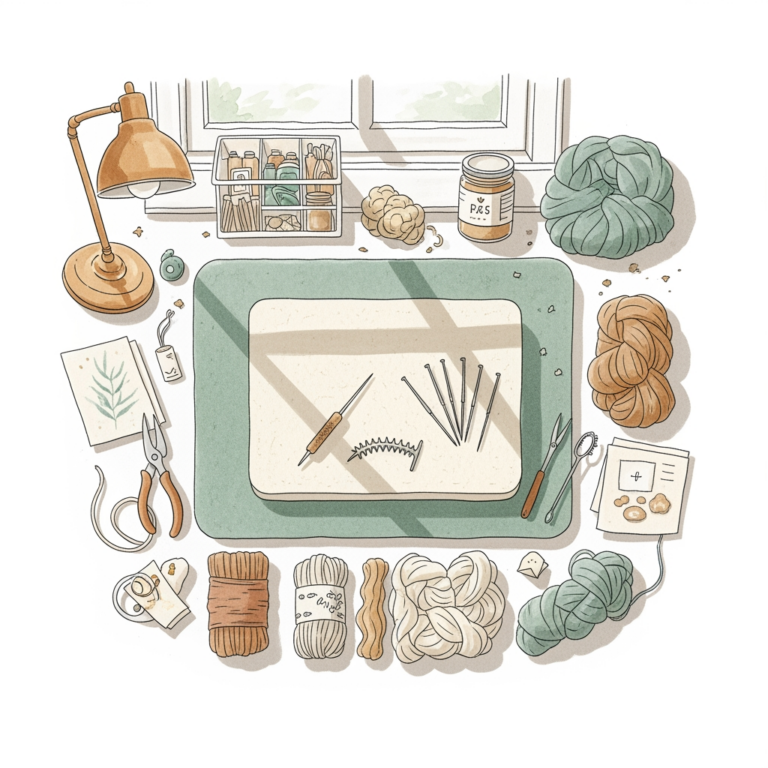
- Felting Needles: Start with a 36-gauge needle for bulk shaping and move to a 40-gauge for fine surface smoothing.
- Felting Mat: Use a dense foam block or a wool-filled pad to protect your needle tips; hitting a hard surface will snap them instantly.
- Precision Scissors: Keep a pair of sharp, small embroidery scissors nearby to trim any stray fibers that pop up after the felting is complete.
- Finger Protectors: Leather or silicone finger guards are non-negotiable; even experts slip, and felting needles are unforgiving.
Troubleshooting Common Pompom Shaping Challenges
If your pompom is lopsided, you are likely focusing your needle-felting on one side too heavily. Rotate your work constantly, treating the pompom like a 3D object rather than a flat surface.
If the surface looks "bumpy," you haven’t felted deep enough into the core. Use a deeper, more rhythmic stabbing motion to compress the center, then finish with shallow, light stabs to smooth the outer layer.
Finally, if you have stray fibers sticking out, don’t pull them! Use your needle to "tuck" them back into the body of the pompom, or carefully trim them with sharp scissors.
Mastering the art of the felted pompom is a journey of understanding how different sheep breeds translate into different tactile outcomes. Whether you prioritize the extreme softness of Merino or the rugged durability of Gotland, there is a fiber perfectly suited for your specific knitting project. Remember that your choice of roving is just the first step in a process that rewards patience and consistency. Happy felting, and may your accents always be perfectly round.