7 Best Fabric Glues For Attaching Backings Tested
We tested top fabric glues for attaching backings. Discover which adhesives offer the strongest hold, fastest dry times, and best durability for your projects.
Attaching a backing to a finished knit piece is often the final, nerve-wracking step that turns a decorative swatch into a functional heirloom. Whether you are lining a felted bag or adding a sturdy backing to a wall hanging, the adhesive you choose dictates the longevity of your work. After years of experimenting with various bonding agents, I have found that not all glues respect the delicate structure of yarn fibers. This guide breaks down the best options to ensure your backing stays put without compromising the integrity of your knitting.
Aleene’s Original Tacky Glue: Best Overall Choice


If you have spent any time in a craft room, you have likely seen this iconic gold bottle. It is the gold standard for a reason: it is thick, reliable, and remarkably forgiving for those of us who tend to be a bit heavy-handed with application.
For knitters, the benefit here is the viscosity. Because the glue is "tacky," it sits on the surface of the yarn rather than soaking deep into the core and making the fabric stiff or crunchy. It is perfect for attaching felt or cotton linings to accessories where you need a bit of flexibility.
However, be warned that it does take time to cure. If you are in a rush to finish a gift, this is not your best friend. But for the patient maker who wants a reliable, non-toxic bond, it remains the most versatile tool in the kit.
E6000 Craft Adhesive: Best for Heavy Backings

When you are working with heavy-duty projects, like attaching a leather bottom to a hand-knit tote, standard craft glues simply won’t hold. E6000 is an industrial-strength adhesive that acts more like a rubber cement than a traditional fabric glue.
It creates a permanent, flexible bond that withstands the natural stretching and shifting of knitted fabric. Unlike water-based glues, it won’t dissolve if your project gets caught in a light drizzle.
The trade-off is the fumes and the permanent nature of the bond. Once this touches your yarn, it is there for good, so precision is mandatory. Always work in a well-ventilated area, as the chemical smell is quite strong.
Beacon Fabri-Tac: Best for Quick Drying Needs
When you are nearing the end of a project and just want to get it finished, waiting twenty-four hours for glue to dry feels like an eternity. Beacon Fabri-Tac is the solution for the impatient knitter, as it sets almost instantly upon contact.
Because it is a solvent-based glue, it doesn’t cause the puckering that water-based glues often trigger in thinner knits. It creates a clean, professional finish that is ideal for appliques or delicate fabric backings.
Just remember that "fast-drying" means you have very little room for error. If you misalign your backing, you won’t have the luxury of sliding it into place. Practice on a swatch first to get a feel for the speed.
Dritz Liquid Stitch: Best for Fabric Repairs
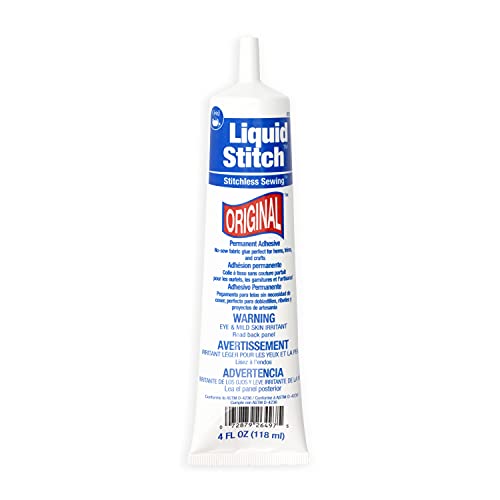
We have all had that moment of panic when a seam starts to pull or a small hole appears in a cherished garment. Dritz Liquid Stitch is designed specifically for textiles, making it the most "knit-friendly" option on this list.
It mimics the movement of the fabric, meaning it won’t create a hard, brittle spot that could lead to further tearing later. It is excellent for securing loose ends or reinforcing high-stress areas where you don’t want to add bulk with needle and thread.
While it is marketed for repairs, it works beautifully for light backings. It is essentially a liquid hem, so it is best used on projects that don’t require heavy-duty reinforcement.
Gorilla Fabric Glue: Best for Strong Bonding
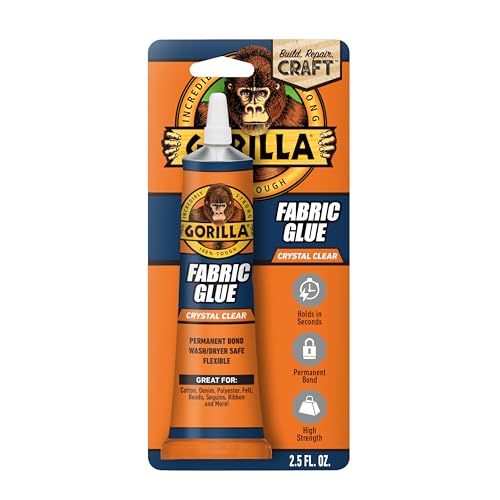
Gorilla has a reputation for intense strength, and their fabric-specific formula lives up to the name. It is designed to bond multiple layers of fabric together, making it perfect for complex projects like quilted linings.
It is particularly effective at holding synthetic fibers, which can sometimes be "slippery" and resistant to other adhesives. If you are backing a project made of acrylic or nylon blends, this glue will provide the necessary grip.
Be careful not to over-apply, as this glue can add significant weight to your work. A little goes a long way, and a thin, even bead is always superior to a thick glob.
Tear Mender Instant Fabric Glue: Best for Speed
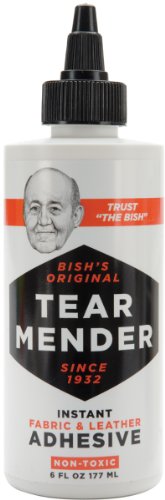
Tear Mender is unique because it is a natural latex-based adhesive that bonds almost instantly. It is incredibly thin, meaning it absorbs into the fibers to create a bond that is actually stronger than the yarn itself.
Because it is so thin, it is virtually invisible on the finished piece. It is the best choice for delicate lace or fine-gauge projects where you need the backing to stay put without adding any noticeable thickness.
It is also water-resistant, which is a huge plus for items that might need a gentle hand-wash. Just be aware that it has a distinct smell that lingers for a few hours, so let your project air out before gifting it.
Elmer’s CraftBond Fabric Glue: Best for Precision
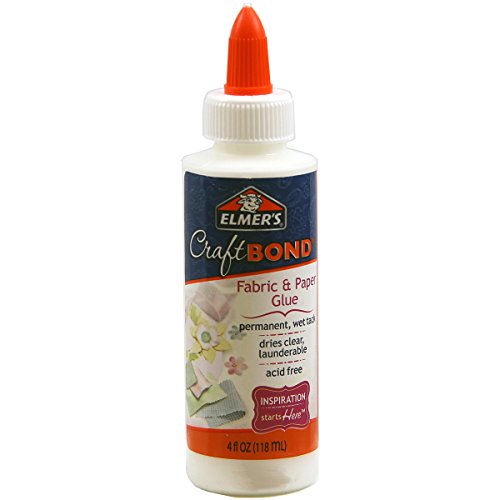
Sometimes you need to attach a small label or a delicate decorative element to the back of your work. Elmer’s CraftBond provides a precise, controlled application that prevents the "glue bleed" that ruins so many professional-looking pieces.
The applicator tip is designed for control, allowing you to trace the edges of your backing with ease. It is a water-based formula, so it cleans up easily with water if you make a mistake before it sets.
It is not the strongest glue on the list, so I recommend it for decorative backings rather than structural ones. It is the perfect choice for the knitter who values a clean, tidy aesthetic above all else.
How to Select the Right Glue for Your Fiber Type
Choosing the right glue starts with understanding your fiber. Natural fibers like wool and cotton are porous and absorb glue quickly, which can lead to stiffness if you use too much.
- Wool: Works well with almost any glue, but avoid solvent-based glues if you want to keep the wool soft.
- Cotton/Linen: These can be prone to water-based glue puckering; use a thin application.
- Synthetics (Acrylic/Nylon): These are non-porous and often require a stronger, solvent-based glue to create a lasting bond.
- Superwash Wool: The chemical treatment can make the surface slicker; choose a stronger, high-tack adhesive.
Always perform a "pull test" on a spare swatch of the same yarn and backing material. If the glue peels off easily, you need a stronger adhesive or a different application method.
Essential Tips for Applying Glue to Knit Backings
The biggest mistake knitters make is applying glue directly to the knit fabric. Instead, apply the glue to your backing material first, then press the backing onto your knit piece.
This prevents the glue from saturating the yarn, which is the primary cause of stiff, uncomfortable backings. Use a small foam brush or a toothpick to spread the glue in a thin, even layer, especially near the edges.
If you are working with a loose-gauge knit, consider placing a piece of stabilizer or thin interfacing between the knit and the backing. This creates a solid surface for the glue to grab, preventing it from seeping through the gaps in your stitches.
Testing Fabric Adhesives for Long-Term Durability
Before committing to a permanent bond, consider the lifespan of your project. A wall hanging doesn’t need to withstand the same stress as a bag or a pair of slippers.
Check for flexibility once the glue has fully cured. If the bond feels like a hard piece of plastic, it will likely crack or detach as the knitted fabric moves and stretches over time.
Finally, consider the washability. If your project needs to be cleaned, ensure your glue is labeled as "washable" or "permanent." A glue that holds during the winter months might fail the moment it hits warm soapy water if it isn’t formulated for durability.
Selecting a fabric glue is an exercise in balancing strength, flexibility, and the specific needs of your yarn. By testing your adhesive on swatches and applying it with care, you can ensure your hard-won knitting is supported by a backing that lasts as long as the stitches themselves. Remember that the best glue is the one that disappears into your work, leaving only the beauty of your craft behind. Take your time, test your materials, and your finished projects will be all the better for it.