7 Best Knitting Lightings for Dark Yarn Projects
Struggling with dark yarn? Discover the 7 best knitting lights to improve visibility, reduce eye strain, and ensure your stitches are always perfectly clear.
Knitting with black, navy, or charcoal yarn is a rite of passage that often feels more like a test of endurance than a creative endeavor. Without the right illumination, you are essentially knitting blind, relying solely on touch to find your next stitch. These seven lighting solutions are designed to turn those "invisible" projects into manageable, enjoyable experiences. Investing in the right light is not just about convenience; it is about saving your eyes and preserving your sanity during late-night sessions.
Glocusent LED Neck Reading Light: Best Overall


The Glocusent LED Neck Reading Light has become a staple in my knitting bag because of its sheer versatility. It rests comfortably around your neck, casting light directly downward onto your needles regardless of your posture.
This hands-free design is a game-changer when you are working on complex cabling or intricate lace. You don’t have to worry about shifting your lamp every time you move your hands to adjust your tension or grab your stitch markers.
The adjustable color temperatures are the real highlight here. Being able to toggle between a warm glow and a crisp, daylight-mimicking white allows you to see the definition of dark fibers without the harsh blue glare that causes eye strain.
OttLite 2-in-1 LED Floor Lamp: Best for Clarity

OttLite is famous for its proprietary lighting technology, which is specifically engineered to mimic natural daylight. When you are working with dark wool, clarity is your best friend, and this lamp delivers it in spades.
The 2-in-1 design allows you to switch between a floor lamp for your favorite armchair and a smaller desk configuration. It’s perfect for those who switch between knitting socks in the living room and working on larger sweaters at a dedicated crafting table.
The light quality is consistent and steady, meaning you won’t deal with the flickering that often plagues cheaper LEDs. For dark projects, this consistency helps your eyes maintain focus on the stitch structure without having to constantly readjust to shifting shadows.
Daylight Company Wafer Lightbox: Best for Detail
If you have never used a lightbox for knitting, prepare to have your mind blown. Placing a thin, illuminated panel on your lap underneath your project creates a "backlit" effect that makes every single stitch pop against the dark background.
This is particularly useful when you are working with dark, fuzzy mohair or alpaca yarns. The light shines through the gaps in the fabric, revealing the stitch path that would otherwise be swallowed by the dark fibers.
It is incredibly thin and lightweight, making it easy to tuck under a project bag. While it requires a bit of a learning curve to get used to looking "through" your work, it is arguably the most effective tool for preventing dropped stitches in dark yarn.
Mighty Bright NuFlex Versatile Light: Best Value

Sometimes you don’t need a massive studio setup; you just need a reliable, focused beam of light. The Mighty Bright NuFlex is a sturdy, clamp-on light that attaches directly to your knitting chair or a nearby side table.
The flexible neck allows you to aim the light exactly where your needles meet the yarn. This is essential for those moments when you need to perform a complicated maneuver, like a k2tog (knit two together) or a decorative yarn-over, in dark-colored wool.
It is an affordable entry point for any knitter struggling with visibility. While it lacks some of the high-end color-tuning features of more expensive models, its portability and ease of use make it a fantastic "workhorse" light.
Vekkia Rechargeable Book Light: Best for Travel
Traveling with knitting is a necessity for many of us, but hotel lighting is notoriously dim and yellow. The Vekkia rechargeable light is small enough to fit in a notions pouch but powerful enough to illuminate your work on a dark flight or in a dimly lit cabin.
Because it is rechargeable, you aren’t tethered to a wall outlet or constantly burning through batteries. This is ideal for long-term projects where you might be knitting in various locations, from a train to a park bench.
It clips securely onto a project bag or your clothing. It’s a simple, no-fuss solution for the knitter on the go who refuses to let low light stop their progress on a dark-colored shawl.
Brightech LightView Pro Magnifying Floor Lamp
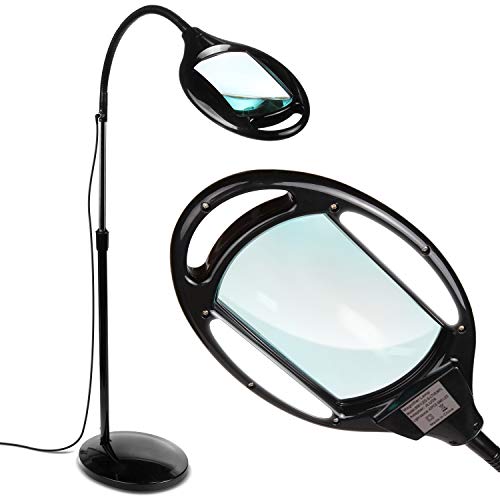
When you are working with dark yarn on small needles, visibility is only half the battle; the other half is magnification. This floor lamp combines a powerful LED array with a high-quality magnifying lens.
This is invaluable for knitters who find themselves squinting to see the "V" shape of a stitch in dark navy or black. The magnification allows you to see exactly where your needle tip is entering the stitch, which is a lifesaver for correcting errors without ripping back.
It is a significant piece of furniture, so ensure you have the floor space for it. However, for those working on complex lace or tiny gauge socks, the investment in clarity pays for itself in reduced frustration and fewer dropped stitches.
Lepower Architect Desk Lamp: Best for Accuracy
The classic architect lamp design is a favorite for a reason: the adjustability is unparalleled. If you have a dedicated knitting nook, the Lepower Architect lamp allows you to swing the light into virtually any position.
The focused beam is excellent for detail-oriented work. By adjusting the arm, you can eliminate shadows entirely, which is the biggest enemy of dark-yarn knitting.
It provides a clean, bright, and directional light source. It is perfect for those who like to keep their work area tidy and want a lamp that can be tucked away when not in use, leaving your space clear for blocking mats or yarn storage.
Why Color Temperature Matters for Dark Knitting
Color temperature is measured in Kelvins (K), and it dictates the "warmth" or "coolness" of the light. For dark yarn, you generally want to aim for a "Daylight" spectrum, which falls between 5000K and 6500K.
- Warm Light (2700K-3000K): Often feels cozy but can make dark colors look muddy and indistinguishable.
- Cool/Daylight (5000K-6500K): Sharp and bright, making it easier to see the texture and individual strands of the yarn.
Avoid anything too blue, as it can cause eye fatigue during long sessions. The goal is to find a balance that mimics a bright, overcast afternoon—the perfect environment for seeing every detail of your knitting.
Tips for Seeing Stitches in Black or Navy Yarn
If you are struggling with dark yarn, try placing a white towel or a light-colored pillowcase on your lap. This creates a high-contrast background that makes the dark stitches stand out much more clearly against your clothing.
- Increase your lighting: Don’t rely on ambient room light; use a dedicated task light.
- Use reflective needles: If you are using dark wooden needles, switch to polished metal needles. The light will bounce off the metal, highlighting the stitch loop.
- Check your tension: Keep your stitches slightly looser than usual to ensure you can actually see the path of the yarn.
Remember that dark yarn absorbs light, so you need more illumination than you would for a light-colored project. Don’t be afraid to double up on your light sources if you find yourself struggling.
How to Position Your Lighting to Reduce Fatigue
The key to reducing fatigue is to eliminate the "shadow cast" by your own hands. Position your light source at a 45-degree angle to your work, ideally coming from the side rather than directly overhead.
If you are right-handed, try placing the light to your left so that your hand doesn’t block the beam as you knit. If you find your eyes getting tired, take a break every 30 minutes to look at something far away.
Your posture also matters; if you are hunched over your work to see better, you will end up with neck and shoulder pain regardless of how good your light is. Keep your light source adjustable so you can sit upright and bring the light to your knitting, not the other way around.
Knitting with dark yarn doesn’t have to be a chore if you provide yourself with the right tools to succeed. By prioritizing high-quality, daylight-balanced lighting and adjusting your environment, you can tackle even the darkest fibers with confidence. Remember that your eyes are your most important knitting tool, so invest in them as much as you invest in your yarn. Happy knitting, and may your stitches always be visible and your tension perfectly even.