6 Best Led Floor Lamps For Intricate Needlework
Illuminate your detailed projects with the 6 best LED floor lamps for intricate needlework. Read our expert reviews and choose the perfect light for your craft.
When you are hunched over a complex lace shawl at midnight, the difference between a subpar bulb and a high-quality lamp is the difference between a completed project and a pile of dropped stitches. Poor lighting obscures dark yarns, flattens stitch definition, and forces the eyes to strain far sooner than necessary. Proper illumination is not a luxury; it is an essential tool for maintaining gauge consistency and color accuracy. Selecting the right floor lamp ensures that every yarn-over is placed with precision, regardless of the complexity of the pattern.
Brightech Litespan LED Lamp: Best Overall Value
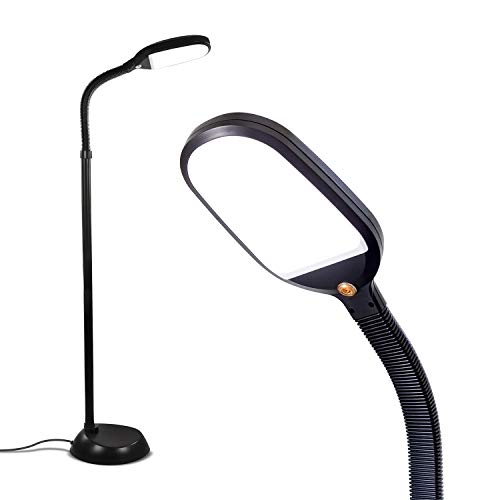

This lamp strikes the ideal balance between functional brightness and everyday versatility. For the majority of knitters working with standard worsted or DK weight yarns, the Litespan offers a clean, crisp light that mimics natural daylight without the flicker associated with cheaper LEDs.
The flexible neck is its primary strength, allowing for precise positioning over a lap full of knitting. Whether working on a complicated cable project or a simple stockinette blanket, the ability to direct light exactly where the needles meet the yarn prevents eye fatigue during long sessions.
The bottom line: It is an exceptional workhorse for the serious hobbyist who needs reliable, flicker-free performance without the premium price tag.
Daylight Company Lumi Lamp: The Pro Crafter’s Pick

When working with high-contrast colorwork or delicate black lace, the Lumi Lamp is a superior choice for its exceptional color rendering index (CRI). A high CRI ensures that the true color of the yarn is visible, which is crucial when matching dye lots or blending gradients in stranded colorwork.
This lamp is designed with the professional in mind, featuring a wide head that illuminates a large surface area. It reduces the need for constant repositioning as the work grows, making it perfect for those finishing large sweaters or heavy blankets.
It remains a top-tier investment for those whose knitting time is limited to evening hours and who require professional-grade clarity to avoid errors in intricate patterns.
OttLite 2-in-1 Magnifier Lamp: For Fine Details

Magnification is often misunderstood as a tool only for those with aging eyes, but it is actually a vital asset for fine-gauge knitting. If you are working with lace-weight mohair or cobweb yarn, seeing the individual strands is necessary to ensure you are catching both loops of a stitch.
The 2-in-1 design allows for the versatility of a floor lamp while providing a dedicated magnifying lens for inspecting dropped stitches or tricky decorative decreases. This is a game-changer for repair work, allowing for surgical precision when fixing a mistake in a complex chart.
If fine-detail projects are a staple in your knitting rotation, the added clarity of the magnifying lens will significantly reduce the time spent “tinkering” with repairs.
Brightech Sky Dome Lamp: Bright, Unobtrusive Light

The Sky Dome excels at filling a room with diffused, upward-facing light, making it the perfect companion for mood-setting while you work. It functions differently than a task lamp, providing a soft ambient glow that prevents the harsh contrast between a bright circle of light and a dark room.
Because it casts light toward the ceiling, it creates an even illumination that is very easy on the eyes. This is particularly helpful for knitters who find that focused spotlights cause reflections on plastic or metal needles, leading to distracting glare.
This lamp is the best choice for the knitter who prefers to keep their space feeling like a cozy living area rather than a clinical workstation.
Neatfi XL Bifocals Lamp: Maximum Brightness Pick

The Neatfi XL Bifocals lamp is a powerhouse, offering a massive lens and intense light output that is unmatched in the hobbyist market. This is the heavy-duty choice for knitters who suffer from eye strain or who are working on dark-colored fibers that tend to absorb all available light.
The bifocal lens allows for different levels of magnification, which is helpful when switching between standard knitting and more precise tasks like grafting or Kitchener stitch. It is a robust, sturdy piece of equipment that handles the rigors of daily use without wobbling.
For those whose eyesight makes working with thin, dark, or low-twist yarns difficult, this lamp effectively restores the ability to knit comfortably.
Lepro LED Floor Lamp: A Solid Budget-Friendly Pick
Not every knitting setup requires a professional-grade station, and the Lepro LED floor lamp serves as an excellent entry-level solution. It provides a focused, consistent beam of light that is a massive upgrade over standard overhead residential lighting.
It is lightweight and easy to move, making it perfect for a household where the knitting corner might need to be packed away after a session. While it lacks the advanced features of more expensive models, it provides the essential brightness needed to keep stitches visible.
This is the practical bottom line: it offers the best “bang for your buck” for the beginner or the occasional knitter looking to improve their setup without a significant financial commitment.
How to Choose the Best Light for Your Craft Space
When selecting a lamp, you must consider the specific requirements of the yarn you choose. Dark, fuzzy, or low-contrast fibers, such as unspun Icelandic wool or black alpaca, require significantly more light than light-colored, high-twist superwash wools.
You should evaluate the ergonomics of your knitting chair in relation to the lamp’s reach and base. A lamp that cannot extend over your lap will force you into a hunched posture, which is a leading cause of neck and shoulder pain for knitters.
- Adjustability: Can the head tilt and rotate to avoid hitting the needles?
- Stability: Is the base heavy enough to prevent tipping if the cat brushes past it?
- Color Temperature: Does the lamp offer adjustable settings for warmer or cooler tones?
Ultimately, choose a lamp that accommodates your most difficult project, not your easiest one.
Lumens vs. Color Temperature: What Knitters Need
Lumens measure the total amount of light output, while color temperature—measured in Kelvin—describes the hue of that light. For knitting, a range between 4000K and 5000K is ideal because it closely replicates daylight, which is the gold standard for color accuracy.
Avoid lamps that are too “warm” (below 3000K), as they will yellow your yarn and make it difficult to distinguish between shades of blue or green. Conversely, light that is too “cool” (above 6000K) can feel clinical and harsh, contributing to eye fatigue over time.
Aim for a high lumen count (at least 800-1000) for task lighting to ensure you are not straining to see the texture of your stitch.
Positioning Your Lamp to Avoid Shadows and Glare
The secret to a perfect lighting setup is positioning the lamp over your non-dominant shoulder or directly above the work if the base allows. Placing the light directly in front of you often results in the shadow of your own hands falling squarely onto the needles, which is counterproductive.
If you are using metallic needles, experiment with the angle of the light to avoid the “glare” effect. Often, a slight adjustment to the height of the lamp or tilting the light head away from the needle surface will eliminate the bounce-back of light.
If the lamp head is too close, it can create a hot spot that makes it hard to see the stitches at the edges of the needle. Find the sweet spot where the light is even and diffused across the entire area of your active work.
Do You Really Need a Magnifier Lamp for Knitting?
A magnifier is not a necessity for the average knitter, but it is an invaluable tool for certain niche applications. If you engage in complex techniques like Shetland lace, brioche with two colors, or working with luxury fibers like silk, the magnification helps you catch potential errors before they become unfixable.
However, be cautious about relying on magnification for standard knitting; it can sometimes distort the sense of distance between your needles, which may lead to awkward hand movements. Use a magnifier as a diagnostic tool for checking your work, rather than as a permanent companion while you knit.
For most projects, a high-quality, high-CRI light is more beneficial than a magnifying lens. Use the lens when the pattern calls for high attention to detail, and stick to standard lighting for the rhythmic, meditative parts of the project.
Finding the right lamp is an investment in your comfort and the longevity of your craft. By balancing the technical requirements of your yarn with the physical needs of your eyes, you create a space where complex lace and stranded colorwork become a joy rather than a struggle. Whether you opt for a professional-grade magnifier or a reliable, budget-friendly task lamp, the right choice will undoubtedly result in better stitch quality and many more hours of enjoyable, strain-free knitting.