6 Work Lights For Detailed Assembly That Improve Precision
Boost your assembly accuracy with these 6 high-quality work lights designed for precision tasks. Read our expert review and choose the best setup for your shop.
Struggling to see your stitches during a late-night knitting session is a common frustration that can turn a relaxing hobby into a source of eye strain. When working with dark-colored yarns or complex lace charts, insufficient lighting often leads to dropped stitches and uneven tension. The right work light transforms the visibility of your project, allowing you to clearly distinguish between dark navy wool and black mohair. These six lighting solutions provide the clarity needed to maintain consistent gauge and precision throughout your most intricate work.
Brightech Litespan LED Floor Lamp: Best Overall
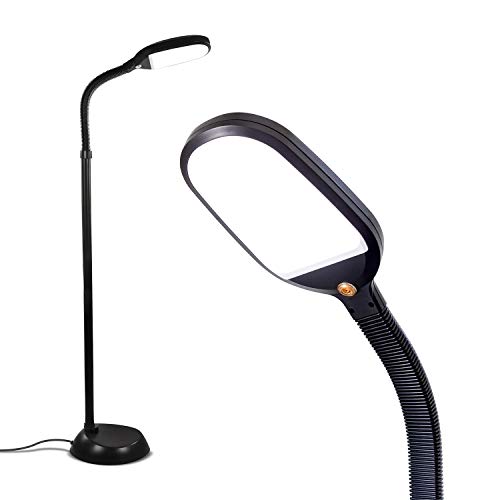

This floor lamp excels by providing a wide, consistent wash of light that covers your entire lap and side table. For knitters working on large blankets or shawls, the adjustable gooseneck ensures the beam follows your hands as you move down a long row.
The color temperature is specifically calibrated to mimic natural daylight, which is crucial when color-matching yarn for stranded colorwork. If you have ever been misled by the yellow hue of a standard living room bulb, this lamp effectively eliminates that risk.
Because it stands on its own, it removes the clutter of desk lamps that often snag on long circular cables. The weighty base ensures stability, preventing the lamp from tipping over during an enthusiastic cable session.
Neatfi Bifocals LED Magnifying Lamp: Pro Pick

Magnification is a game-changer when working with fine-gauge lace or tiny sock yarn on 2.0mm needles. This lamp features a large lens that provides a distortion-free view, making it easier to spot an accidental yarn-over or a missed decrease.
The bifocal design is particularly useful because it offers a secondary, higher-magnification area for extreme detail work. If you are picking up dropped stitches in a delicate silk-blend fabric, the added clarity prevents you from accidentally splitting the plies.
While the weight of the lamp requires a sturdy workspace, the reach of the arm is unparalleled. It is the ideal choice for those who spend hours performing surgery on complex patterns where every loop counts.
Glocusent LED Neck Reading Light: Most Versatile
Neck lights provide a unique advantage by moving exactly where your gaze travels, keeping your needles perfectly illuminated at all times. This flexibility is essential for knitters who prefer to lounge on a sofa rather than sit upright at a desk.
The adjustable brightness and color temperature settings allow for customization based on the yarn fiber. A cooler, brighter light works best for dark alpaca, while a warmer setting reduces glare when working with shiny, reflective mercerized cotton.
Since these lights hang comfortably around the neck, they do not interfere with your arm movements or yarn tension. They are lightweight enough to be worn for hours without causing neck strain, even during lengthy marathon knitting sessions.
OttLite 2-in-1 Magnifier Lamp: Best for Eyes

OttLite technology is specifically engineered to reduce eye fatigue by providing high-contrast illumination. For those who find that long hours of knitting result in headaches, the natural daylight spectrum emitted by this lamp can significantly ease the strain.
The 2-in-1 design allows for a quick transition from a desk lamp to a handheld magnifier. This versatility is perfect for checking the structure of your stitches after finishing a row of complex brioche or intarsia.
The lens clarity is exceptional, providing a clear window into the fine structure of your knitting. Investing in high-quality optics ensures that you see the stitch definition clearly without squinting, preserving your eyesight for years of future projects.
LAMPLUS Clip-On LED Light: Small Space Solution

When your knitting space is shared with other household activities, a full-sized floor lamp might not be practical. This clip-on light attaches directly to a side table or a project basket, providing focused light exactly where you need it without taking up floor space.
The compact size makes it an excellent companion for travel or small apartment living. It clips securely onto most surfaces, ensuring your light source remains fixed even when you shift your position on the couch.
While the beam is more focused than a floor lamp, it offers enough coverage for a standard knitting project. It is a cost-effective, space-saving solution that delivers high-quality light without the footprint of larger equipment.
Vekkia Rechargeable Neck Light: Best for Travel
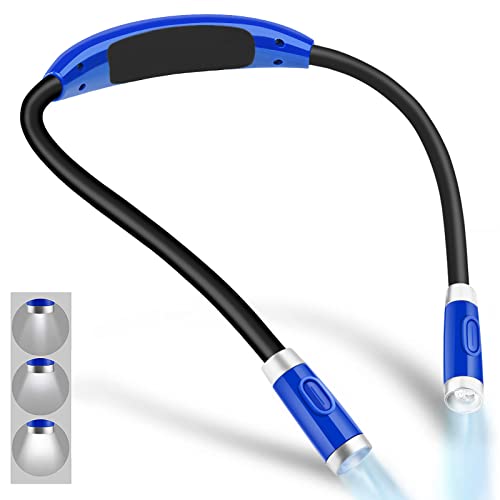
Portability is the defining feature of this rechargeable neck light, making it the perfect addition to any dedicated knitting bag. You will never have to worry about finding an outlet at a knitting retreat or on a long train ride.
The battery life is robust, offering several hours of operation on a single charge. This gives you the freedom to finish a row or two during travel without relying on external power sources.
It provides enough illumination to keep your stitch markers and needles visible even in dim transit environments. When not in use, it folds down small, fitting easily into even the most packed project bags.
Lumens vs. Color Temperature: What Matters Most?
Lumens measure the total amount of light, but for knitting, the quality of that light is equally critical. You generally want a high-lumen output for dark fibers to avoid eye fatigue, but too much light can cause distracting glare on shiny, synthetic yarns.
Color temperature, measured in Kelvins (K), dictates whether the light appears warm or cool. Look for lights in the 4,000K to 5,000K range, as this provides a neutral daylight appearance.
Natural daylight is best for color accuracy, ensuring that the yarn you see in the store matches the yarn you see on your needles. Avoid very warm, orange-toned bulbs that obscure the true shade of your work and make identifying stitch counts difficult.
Choosing a Light: Floor, Desk, or Wearable?
The right choice depends largely on where you spend your time knitting. Floor lamps are ideal for living room setups where you have space to position the base behind your chair.
Desk lamps are better suited for those who maintain a dedicated craft station for measuring gauge swatches or charting patterns. Wearable lights provide the most freedom, allowing you to move from chair to bed without adjusting your lighting setup.
Evaluate your typical knitting posture before buying. If you tend to hunch over, a wearable or floor light may be more beneficial than a desk lamp, which might force an uncomfortable angle.
Does Your Craft Light Need a Magnifier?
Magnification is not just for aging eyes; it is a vital tool for technical precision. If you work with lace-weight yarn, intricate cables, or fine-gauge needles, a magnifier helps confirm that your stitches are seated correctly.
- Check for split plies: Magnification reveals if a needle has pierced the yarn strand instead of knitting the stitch clean.
- Identify pattern errors: Spotting a missed yarn-over is significantly easier when the work is magnified.
- Enhance contrast: Magnifiers allow you to see the individual fibers of fuzzy yarns, like mohair or angora, which often hide the stitch structure.
Beginners may find magnification overkill, but as you advance into complex lacework or small-diameter projects, it becomes an essential asset.
How to Position Your Light to Avoid Shadows
Proper positioning is the difference between effortless knitting and constant repositioning. Aim to place your light source slightly to the side and slightly behind or above your non-dominant hand.
This angle minimizes the shadows cast by your needles and hands, which otherwise obscure your view of the active stitches. If you are using a desk lamp, utilize the adjustable joints to aim the light downward rather than directly into your face.
Test your lighting by placing your knitting in your lap and moving the light until the shadow of your needle falls away from the row you are currently working. Consistency in your lighting setup leads to more consistent tension and fewer mistakes.
Selecting the right light is an investment in your craft as significant as choosing the right needles or high-quality wool. By prioritizing daylight-balanced LEDs and ergonomic positioning, you ensure that your projects remain as enjoyable to create as they are to wear. Prioritizing visibility ultimately leads to better stitch definition, fewer errors, and a more sustainable knitting practice.