6 Best Sewing Tape Measures For Garment Fitting
Find the 6 best sewing tape measures for garment fitting to ensure precise measurements and a perfect fit. Compare our top-rated recommendations and shop now.
A well-fitted garment begins long before the first stitch is cast on, rooted entirely in the precision of body measurements. Every knitter knows the heartbreak of spending weeks on a complex cabled sweater, only to find the finished piece doesn’t drape correctly across the shoulders or sits awkwardly at the waist. A reliable tape measure is the most essential tool for bridging the gap between a paper pattern and a flattering, wearable result. Choosing the right one transforms the measurement process from a source of frustration into a consistent, accurate foundation for success.
Dritz Soft Body Tape Measure: Best Overall


The Dritz Soft Body tape is the industry standard for a reason. Its flexible, vinyl construction contours perfectly to the curves of the body, which is essential for capturing accurate bust and hip measurements without the tape digging in or creating false bulk.
For projects where precise negative ease is critical—like a form-fitting rib-knit camisole—this tape provides the reliable, repeatable data needed to adjust patterns. It does not stretch over time, ensuring that the measurements taken today will match the project requirements months later.
While the basic design lacks bells and whistles, its simplicity is its greatest strength. It stays flat against the skin, providing a clear reading every time.
Singer ProSeries Retractable Tape: Best Compact

Compact tools are vital for knitters who frequently attend fiber festivals or travel with their projects. The Singer ProSeries fits easily into a standard notions bag, keeping the tape protected from tangles or fraying while on the move.
The retraction mechanism operates smoothly, allowing for one-handed adjustments when measuring your own reach or sleeve length. This is particularly helpful when working on top-down sweaters where you need to check sleeve progress against your arm length while the garment is on the needles.
However, retractable tapes can be slightly less durable than static tapes over years of heavy use. The internal spring can eventually lose tension, making this the ideal “project bag” companion rather than the sole primary tool for a home studio.
Hoechstmass Rollfix Tape: Premium German Choice
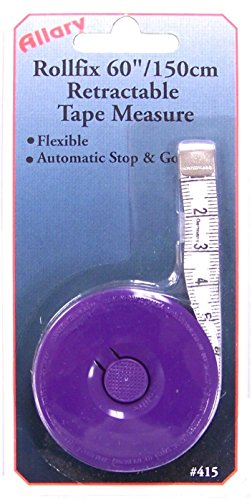
German engineering extends to the craft room with the Hoechstmass Rollfix, which is celebrated for its exceptional longevity. The tape material itself is robust, resisting the cracking and fading that often plague cheaper plastic alternatives after exposure to natural skin oils.
The tape features a stop-and-release button that feels mechanical and precise. It does not flutter or drift while in use, which is a significant advantage when trying to mark precise points for sleeve shaping or neckband depth.
Investing in this tape is a decision for the long-term maker. It offers a level of tactile satisfaction and consistency that simplifies the measurement process for high-stakes projects like hand-knit intarsia garments.
Clover Shiro Fiberglass Tape: Most Durable Pick

Fiberglass is the material of choice for those who want a tape that will never stretch or deform. The Clover Shiro tape utilizes high-quality fiberglass filaments that maintain their structural integrity even after years of being pulled, folded, and stored in crowded knitting baskets.
This tape is remarkably thin and soft, despite the fiberglass reinforcement. It lays perfectly flat across the chest, which is crucial for determining how a garment will hang over a bust line—an area where even a sixteenth of an inch can change the final look of a piece.
Because it is so durable, it is less prone to the “wavy” edges that develop on cheap vinyl tapes. If you prioritize precision and longevity above all else, the Shiro is the most reliable choice for your permanent studio toolkit.
WAWAK Pro Non-Stretch Tape: Best Budget Option
Professional-grade tools do not always require a high price point. The WAWAK Pro tape is an excellent choice for the knitter who wants reliable, no-nonsense performance without paying for fancy branding or complex retracting mechanisms.
The high-contrast markings are easy to read, even in low light or while working with dark-colored yarns. Its non-stretch property is the most important factor for accuracy; it ensures that your measurements remain consistent even when you pull the tape snugly around your frame.
Budget-conscious knitters will appreciate the ability to keep one in every project bag without breaking the bank. It performs exactly as needed for taking standard body measurements or checking gauge swatches.
Adger Dual Sided Cm/Inch Tape: Best for Patterns
Pattern drafting or modifying existing knitting charts often requires switching between metric and imperial systems. The Adger tape features a dual-sided layout that eliminates the need for mental conversions, which are notorious for causing small, project-ruining math errors.
Having both scales clearly marked on the same ribbon allows you to verify your gauge swatch in inches while cross-referencing your pattern’s schematic in centimeters. This is a lifesaver when working with international knitting patterns or converting sizing for different yarn weights.
The markings are crisp and durable, resistant to the wear and tear of frequent use against rougher wool fibers or needles. It is a highly practical, efficiency-focused tool that belongs in the arsenal of any knitter who moves between different pattern sources.
Fiberglass vs. Vinyl Tapes: Which Is Better?
The debate between fiberglass and vinyl centers on long-term stability versus comfort. Fiberglass tapes are reinforced with a mesh core, making them virtually immune to stretching over time, which ensures that your measurement units remain true for decades.
Vinyl tapes are generally softer and feel more pleasant against the skin. However, they are susceptible to heat and long-term tension, which can lead to slight stretching or warping that causes your “36-inch” measurement to actually be 36.25 inches.
For critical garment construction, prioritize fiberglass. If the tool is used primarily for casual measurements or measuring yarn lengths, a high-quality vinyl tape is perfectly acceptable.
Retractable vs. Standard: Which Is Right for You?
Retractable tapes provide excellent protection and portability but introduce a mechanical point of failure. The spring can eventually jam, or the casing can crack if dropped, rendering the tape unusable.
Standard, flat tapes are essentially indestructible if kept away from sharp objects. They are the best choice for a home base station where they stay on your cutting table or in a dedicated tool drawer.
If you are a mobile knitter, the convenience of a retractable tape almost always outweighs the risk of mechanical wear. Keep a dedicated stationary tape at home and a retractable one in your travel kit for the best of both worlds.
How to Ensure Your Tape Measure Stays Accurate
Even the most expensive tape measure can become unreliable if handled improperly. Always check the first few inches against a rigid metal ruler at least once a year to ensure the zero-point has not worn away or been cut.
Never store your tape tightly wrapped or knotted, as this weakens the material and can induce permanent stretching. When not in use, either retract it fully or lay it flat to maintain its shape.
Keep the tape away from excessive heat and direct sunlight, as these environmental factors degrade the polymers and coatings on both vinyl and fiberglass. A quick wipe with a damp cloth is enough to keep it clean and readable.
Essential Tips for Measuring a Body for Fit
Always take body measurements while wearing the same undergarments you plan to wear under the finished garment. The padding in a bra or the thickness of a base layer can change your circumference measurements by over an inch, drastically affecting the fit of a sweater or cardigan.
Keep the tape level and snug against the skin, but never pull it tight enough to indent the flesh. When measuring for knitting, it is often helpful to have someone else take the measurements while you stand in a natural, relaxed posture.
Finally, measure twice and compare the results against the pattern schematic before choosing your size. When in doubt, look at the finished garment measurements provided by the designer rather than the body measurements, as these will give a more accurate picture of how the finished piece will sit on your frame.
Choosing the right tape measure is an investment in the longevity and fit of your handmade wardrobe. By selecting a tool that suits your workflow and maintaining it with care, you eliminate the guesswork and ensure every stitch leads to a finished piece that you will be proud to wear for years to come.