7 Best Craft Lights For Nighttime Knitting To Try
Illuminate your late-night projects with our top 7 craft light picks. Discover ergonomic, bright solutions designed to improve visibility and reduce strain.
Knitting by the glow of a lamp after the sun goes down is one of the most peaceful rituals a maker can cultivate. However, poor lighting can turn a relaxing session of colorwork or lace into a recipe for eye strain and dropped stitches. Finding the right light is about more than just brightness; it is about finding a beam that illuminates your stitches without creating harsh shadows or glare. This guide explores the best tools to keep your hands moving comfortably until the final bind-off.
Glocusent LED Neck Reading Light: Best Overall


The Glocusent LED neck light is a game-changer for knitters who prefer to work from the comfort of their favorite armchair. By resting securely around your neck, it directs light exactly where your hands are, rather than relying on an ambient source that might be blocked by your own body.
This design is particularly beneficial when you are working on dark-colored yarns like navy or charcoal. The adjustable color temperature allows you to switch to a cooler, brighter light that makes it easier to distinguish between individual plies.
The trade-off here is the weight; while it is lightweight, wearing anything around your neck for several hours can become noticeable. If you are prone to neck tension while knitting, you may find yourself adjusting the angle frequently to keep the light focused on your needle tips.
Mighty Bright NuFlex Rechargeable Book Light

This compact clip-on light is a fantastic companion for the minimalist knitter. It attaches directly to your pattern holder or the edge of a side table, offering a focused beam that won’t distract anyone else in the room.
Because it is rechargeable, you never have to worry about mid-row battery failure. The flexible neck is its strongest asset, allowing you to position the light precisely over your work as you move from the beginning of a round to the end.
Be aware that clip-on lights can sometimes be top-heavy depending on where you attach them. If you are working on a large project like a heavy wool blanket, ensure your light is clipped to a stable surface so it doesn’t wobble while you manipulate the weight of the fabric.
Vekkia Amber LED Rechargeable Neck Light

If you are a late-night knitter who struggles with sleep, the Vekkia amber light is a thoughtful choice. The amber setting significantly reduces blue light exposure, which is much easier on the eyes during those final hours before bed.
While the amber glow is soothing, it does slightly alter how colors appear. I would avoid using this setting for complex colorwork projects where distinguishing between subtle shade variations is critical to the design’s success.
For simple stockinette or garter stitch projects, however, this light is unmatched in comfort. It provides enough illumination to see your stitches clearly without the jarring intensity of a standard daylight bulb.
Daylight Company Slimline 3 Table Lamp

For those who have a dedicated knitting nook, the Slimline 3 is the gold standard for professional-grade illumination. Its long, wide head ensures that light is spread evenly across your entire lap, which is vital when you are juggling multiple balls of yarn or a complex chart.
The high-quality LED output mimics natural daylight, which is essential for accurate color matching. If you are working with hand-dyed yarns, this lamp will reveal the true tonal variations that cheaper lights might wash out.
The main downside is the footprint; this is a permanent fixture that requires a sturdy table. It is an investment piece, but one that pays for itself in reduced eye fatigue during long, intricate lace projects.
OttLite 2-in-1 LED Magnifier Floor Lamp

Magnification is a secret weapon for knitters, especially when working with fine-gauge yarns or intricate cables. This floor lamp combines a powerful light source with a magnifying lens, making it easier to spot an accidental yarn-over or a twisted stitch.
The 2-in-1 design allows you to use it as a floor lamp or a tabletop model, providing great versatility for different seating arrangements. It is particularly helpful if you are working on small-diameter projects like socks, where the stitches can appear quite tiny.
Remember that using a magnifier takes practice. It changes your depth perception, so you may find yourself missing the needle tip occasionally until your brain adjusts to the magnification.
Brightech Litespan LED Floor Lamp Choice
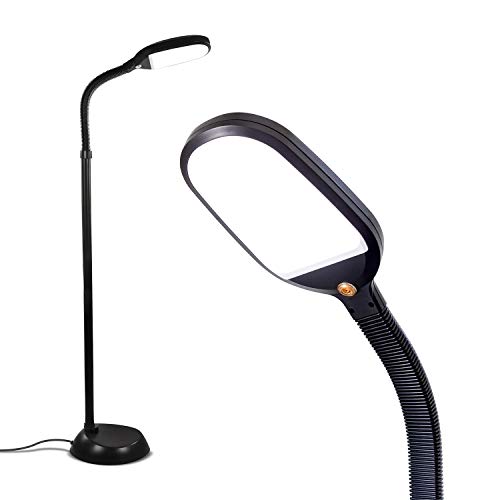
The Brightech Litespan is a workhorse that offers a clean, bright light without a heavy price tag. Its adjustable gooseneck allows you to bring the light source close to your knitting without the lamp itself getting in your way.
This lamp is excellent for knitters who move around the house, as it is relatively easy to reposition. The light is bright and crisp, which is perfect for working with black or dark brown fibers that usually hide your needle movements.
Because the light is quite focused, you might experience some glare if you are using highly reflective needles, such as polished nickel or chrome. If you find this distracting, pairing this lamp with matte-finish wooden or bamboo needles can help soften the reflection.
Lumos LED Lighted Knitting Needles Set
These needles have tiny LEDs built directly into the tips, putting the light exactly where the action is. This is a fascinating solution for knitters who find that external lamps still leave their needle tips in the shadows.
They are particularly useful for travel knitting or low-light environments like a dimly lit airplane cabin. However, because the tips contain electronics, they tend to be slightly heavier and stiffer than standard needles, which may affect your gauge if you have a very loose tension.
I recommend these primarily for emergency situations or specific, low-light projects. For everyday use, most knitters will eventually prefer the ergonomics of their favorite traditional needle brand.
Key Features to Look for in Craft Lighting
When shopping for lighting, prioritize adjustability and color rendering. You want a light that can be dimmed or angled, as your needs will change depending on whether you are working on a bright morning or a dark evening.
Look for a high CRI (Color Rendering Index) rating. A high CRI ensures that the colors you see under the lamp are the same colors you will see in natural daylight, preventing surprises when you finish your project.
Consider the power source as well. Rechargeable batteries are generally preferred for portability, but a corded lamp is more reliable for long-term, stationary knitting sessions where you don’t want to worry about power levels.
Understanding Color Temperature for Knitting
Color temperature is measured in Kelvin (K), and it drastically changes how your yarn looks. For knitting, a range between 4000K and 5000K is usually the "sweet spot" for mimicking natural daylight.
- Warm light (2700K-3000K): Cozy, but can make it hard to distinguish between similar colors like navy and black.
- Neutral/Daylight (4000K-5000K): The best for accurate color work and seeing stitch definition.
- Cool light (6000K+): Very bright and crisp, but can feel harsh and clinical after a few hours.
Always aim for a neutral light if you are doing stranded colorwork or intarsia. If you are just knitting a simple scarf, a warmer light might be more relaxing for your eyes.
Tips for Reducing Eye Strain While Knitting
Even with the best light, your eyes need regular breaks. Follow the 20-20-20 rule: every 20 minutes, look at something 20 feet away for at least 20 seconds to reset your focus.
Ensure your light source is positioned to avoid direct glare on your needles. If you are using metallic needles, try to angle your light from the side rather than directly overhead to minimize the "flash" effect.
Finally, listen to your body. If you find yourself squinting, it is time to stop and adjust your lighting or take a break. Your knitting will be waiting for you, and your eyes will thank you for the rest.
Choosing the right craft light is a personal journey that depends on your specific knitting style and the environment where you create. Whether you opt for a high-powered floor lamp or a simple, portable neck light, the goal remains the same: to see your stitches clearly and comfortably. By investing in quality illumination, you ensure that every row is a pleasure rather than a strain. Happy knitting, and may your stitches always be bright and clear.