6 Best Tapestry Needles For Chunky Seams Reviewed
Struggling with thick yarn? We review the 6 best tapestry needles for chunky seams, focusing on eye size, durability, and ease of use for your heavy projects.
Finishing a chunky knit project is the final hurdle that stands between you and a completed garment, yet it is often where knitters struggle the most. Using the wrong needle for heavy-gauge yarn can lead to frayed fibers, split plies, and messy, visible seams that ruin your hard work. Choosing the right tool is not just about convenience; it is about ensuring your stitches remain secure and your project looks professionally finished. This guide highlights the best tapestry needles to help you manage those thick, luscious yarns with ease and precision.
Clover Chibi Bent Tip Needles: Best Overall


These needles have become a staple in my notions bag for a reason. The signature bent tip acts like a tiny hook, allowing you to slide under stitches without piercing the yarn or splitting the fibers.
When you are working with a bulky, single-ply wool, splitting the yarn can be a nightmare. The blunt, rounded end of the Clover Chibi glides through the fabric seamlessly, preserving the integrity of your stitches.
They come in a handy, durable case that prevents them from getting lost in the bottom of your project bag. For the vast majority of chunky projects, these are the most reliable, user-friendly choice available.
CocoKnits Steel Tapestry Needles: Best Quality
If you prefer the feel of a substantial tool in your hand, these steel needles are the gold standard. They are smooth, incredibly strong, and have just enough weight to feel balanced while you work.
Unlike plastic needles that can feel flimsy or bend under the tension of thick yarn, these maintain their shape perfectly. They are particularly excellent for heavy cotton or wool blends that require a bit of force to pull through tight seams.
Because they are made of steel, they won’t snag on delicate fibers. They are an investment piece for your kit, but they are designed to last a lifetime of finishing work.
Susan Bates Finishing Needles: Best for Value
We have all been there: you reach for your tapestry needle only to find it has vanished into the couch cushions. This set offers a practical, low-cost solution that ensures you are never caught without a tool.
While they lack the refined finish of premium steel options, they get the job done efficiently. They are lightweight and flexible, which can be helpful if you are navigating a particularly tight or awkward corner in a garment.
Don’t let the price tag fool you; they are perfectly functional for standard chunky acrylics and wools. Keep a few in your project bag and a few by your favorite knitting chair, and you will never have to hunt for a needle again.
Dritz Yarn Darner Needles: Best for Bulk
Sometimes a project requires a longer needle to navigate deep into a thick seam or to weave in a particularly long tail. Dritz yarn darners provide that extra length, giving you more surface area to grip.
These are ideal for heavy-duty projects like felted bags or thick home decor items where you need to anchor your yarn securely. The extra length allows you to weave through multiple layers of fabric without the needle disappearing into the project.
If you are a beginner who finds small needles fiddly, you will appreciate the extra reach these provide. They are a workhorse tool that prioritizes utility over aesthetics.
Boye Aluminum Tapestry Needles: Best Durable
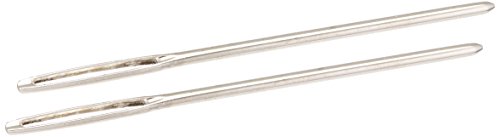
Aluminum needles offer a unique balance of being lightweight while remaining completely rigid. They are a great middle-ground for knitters who find steel too heavy but plastic too prone to bending.
The smooth, anodized finish allows the needle to pass through chunky stitches with minimal friction. This is especially useful when working with high-twist yarns that might otherwise resist being pulled through a tight seam.
Because they are metal, they don’t develop the "fuzzy" wear that plastic needles often get over time. They are a reliable, long-term staple for any collection.
Tulip Knitter’s Needles: Best Smooth Finish

Tulip is renowned for their precision engineering, and these needles are no exception. The finish is incredibly polished, meaning they glide through even the most "grabby" or sticky wool fibers without catching.
If you are working with luxury fibers like alpaca or mohair, you want a needle that won’t cause friction. Friction can lead to unwanted pilling or haloing on your finished garment.
The tips are perfectly tapered, not too blunt and not too sharp. They offer a refined experience that makes the tedious job of weaving in ends feel significantly more pleasurable.
How to Select the Right Needle for Chunky Yarn
Selecting a needle is about matching the tool to your yarn’s weight and fiber content. For chunky yarn, you need an eye large enough to accommodate the thickness without having to force the yarn through, which can cause fraying.
Consider the following factors:
- Eye Size: Ensure the eye is wide enough that the yarn isn’t crushed, as crushed yarn looks messy once woven in.
- Tip Shape: Blunt tips prevent you from splitting the plies of your yarn.
- Material: Slicker materials (steel/aluminum) are better for sticky wools, while grippier options can help with slippery synthetics.
If you are unsure, always opt for a slightly larger needle than you think you need. It is far easier to weave in ends with a needle that has a generous eye than to struggle with one that is too small.
Why Bent Tips Improve Your Seaming Technique
The bent tip is a game-changer for finishing because it mimics the curve of a crochet hook. It allows you to scoop up the "v" of a knit stitch from the back side of the fabric without poking through to the front.
When you use a straight needle, you often have to manipulate the fabric into an awkward position to see where the needle is exiting. A bent tip allows you to keep the fabric flat on your lap while the needle does the work of finding the path.
This technique is essential for invisible seaming, such as the mattress stitch. It helps you maintain a consistent tension, ensuring your seam doesn’t pucker or look uneven.
Essential Tips for Weaving in Bulky Yarn Ends
Weaving in ends on chunky yarn requires a different approach than on fingering weight. You cannot simply weave back and forth in a straight line, as the bulk will create a visible lump.
Instead, try these techniques:
- Split the Plies: If the yarn allows, split the yarn into two sections and weave them in opposite directions.
- Follow the Path: Always weave your yarn tail along the path of the existing stitches.
- Don’t Pull Too Tight: Leave a little bit of slack so the fabric can stretch naturally with the rest of the garment.
The goal is to bury the end so that it is indistinguishable from the structure of the knit. If you pull too hard, you will distort the surrounding stitches and create a permanent dimple in your work.
Common Mistakes When Finishing Chunky Projects
The most common mistake is failing to secure the yarn tail properly. Because chunky yarn is heavy, gravity will eventually pull at an improperly secured end, causing your seam to unravel over time.
Another frequent error is cutting the yarn tail too short before weaving it in. Always leave at least 4 to 6 inches of tail to ensure you have enough length to weave it securely through the fabric.
Finally, avoid knotting your yarn ends. Knots create bulky, uncomfortable bumps that are difficult to hide and can actually come undone with wear. Weaving in the ends properly is the only way to ensure a professional, long-lasting finish.
Finding the perfect tapestry needle is a small investment that pays off every time you finish a project. By choosing the right material, tip shape, and size, you can turn a tedious chore into a satisfying final step. Take your time, experiment with these options, and enjoy the pride of a perfectly finished knit.