
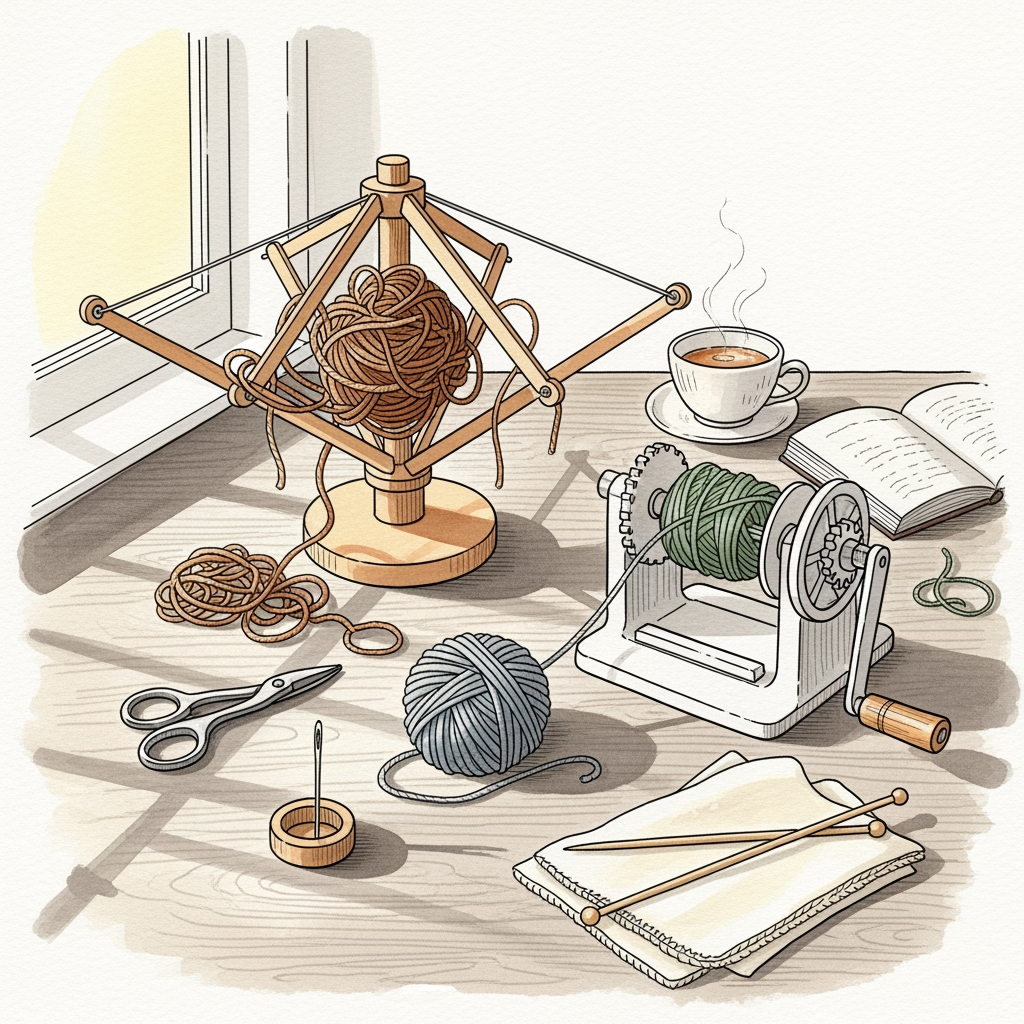
6 Best Yarn Swifts For Hand-dyed Hanks To Use
Find the perfect yarn swift for your hand-dyed hanks. We review the top 6 models, focusing on durability, ease of use, and stability for your knitting projects.
There is nothing more heartbreaking than spending hours untangling a messy "yarn barf" because a hank wasn’t wound properly. Hand-dyed yarns often arrive in loose, delicate hanks that demand a swift to prevent knots and tension irregularities. Choosing the right tool transforms a tedious chore into a smooth, meditative part of your knitting ritual. Investing in a quality swift ensures your precious indie-dyed fibers remain pristine from the hank to the ball.
Stanwood Needlecraft Wooden Umbrella Swift


This model is a staple in many studios for a reason: it is the quintessential umbrella-style swift. Its sturdy, tabletop clamp design allows it to rotate with minimal friction, which is vital when you are working with delicate, hand-dyed singles that might snap under sudden tension.
The wooden construction provides a nice aesthetic, but more importantly, it offers a smooth surface that won’t catch on loose fibers. If you frequently handle large, 100-gram hanks of wool, the adjustable diameter is a lifesaver for keeping the yarn taut but not stretched.
Be aware that the metal hardware can occasionally loosen over time with heavy use. Keep a small screwdriver handy to tighten the wingnuts, and you will find this tool serves you faithfully for years.
Amish Style Wooden Yarn Swift by Hansen Crafts

If you prefer a horizontal orientation, the Amish-style swift is a brilliant departure from the vertical umbrella design. It sits flat on your table, which many knitters find more ergonomic for controlling the speed of the yarn as it feeds into a ball winder.
Because it doesn’t rely on a tension-based umbrella mechanism, there is virtually zero risk of the swift collapsing mid-wind. This makes it an excellent choice for those who wind yarn in a hurry or are working with heavier, rustic yarns that might otherwise weigh down a vertical swift.
The main trade-off is the footprint; it takes up more table space than a folding umbrella model. However, for sheer stability and the ability to handle various hank sizes without complex adjustments, it is hard to beat.
Knit Picks Yarn Swift for Easy Hank Winding

This swift is widely regarded as the "entry-level" gold standard for a reason. It is lightweight, compact, and incredibly easy to set up, making it perfect for knitters who don’t have a dedicated fiber arts studio and need to clear their workspace quickly.
It functions best with standard-sized hanks of fingering or DK weight yarn. If you try to force a massive, heavy skein of bulky roving, you might find the plastic components flex slightly, which can lead to uneven winding tension.
For the price, it is an unbeatable value for the average hobbyist. Just treat it with a bit of care, and it will handle your monthly stash acquisitions without complaint.
Lacis Wooden Umbrella Swift for Fine Yarns
When you are dealing with luxury fibers like silk or fine mohair blends, friction is your worst enemy. The Lacis swift is engineered with high-quality wood and smooth joints that allow the swift to spin with the lightest touch.
This sensitivity is crucial for fine-gauge knitting. If your swift is "sticky" or jerky, you will accidentally stretch your delicate yarn while winding, which can permanently alter the gauge of your finished garment.
This is a premium tool for the discerning knitter who works primarily with lace-weight or high-end natural fibers. It is an investment, but it protects the integrity of your most expensive skeins.
Scheepjes Wooden Yarn Swift: Best for Stability
The Scheepjes swift feels like a heavy-duty piece of furniture rather than a plastic gadget. Its weight keeps it firmly planted on the table, which is a massive advantage if you are winding yarn while watching a movie or chatting with friends.
Stability is the unsung hero of efficient winding. When a swift wobbles or shifts, you are forced to stop and reposition, which often leads to the yarn slipping off the pegs.
This model is ideal for those who wind large quantities of yarn at once. If you are a stash-builder who likes to process ten skeins on a Sunday afternoon, you will appreciate the lack of "swift fatigue."
Frank Knitting Yarn Swift: A Portable Choice
Portability is the standout feature of the Frank Knitting swift. It is designed to be broken down quickly and stored in a project bag, which is perfect for knitters who travel to retreats or knit nights.
It doesn’t sacrifice performance for its small size, though. It offers a smooth rotation that keeps up with even the fastest ball winder, provided you don’t over-tighten the tension on your yarn feed.
If you are a mobile knitter, this is your best friend. It bridges the gap between the bulky, permanent wooden swifts and the flimsy, lightweight alternatives.
How to Properly Mount Your Hanks on a Swift
Before you even touch the swift, untwist your hank completely and shake it out. If you place a twisted hank onto the swift, you are guaranteed to end up with a tangled mess that will stop your progress cold.
Place the hank over the arms of the swift while they are in the closed or partially closed position. Once the hank is centered, gently expand the arms until the yarn is taut enough to stay in place, but not so tight that it feels like a guitar string.
Always check that the yarn is feeding from the outside of the hank toward your ball winder. If you wind from the inside, you will quickly find the yarn catching on itself, leading to frustrating knots.
Umbrella vs. Amish Style: Choosing Your Swift
Umbrella swifts are vertical, space-saving, and intuitive, making them the most popular choice for general knitting. They are fantastic for standard hanks, but they can be finicky if you aren’t careful about how you load the yarn.
Amish-style swifts are horizontal and rely on gravity rather than tension-held arms. They are generally more robust and easier to load, but they require a larger, clear surface area to operate effectively.
Choose an umbrella model if you have limited desk space and work with standard-weight yarns. Choose an Amish-style model if you have the room and want a tool that is virtually indestructible.
Essential Maintenance for Your Yarn Swift
Even the best swifts need a little love to keep them spinning smoothly. Occasionally wipe down the wooden arms with a soft, dry cloth to remove any dust or stray fibers that could cause friction.
If your wooden swift starts to squeak or feel sluggish, a tiny drop of furniture wax or a specialized wood lubricant on the joints works wonders. Avoid heavy oils, as they can migrate onto your yarn and ruin your next project.
Check your screws and wingnuts every few months. A loose screw can cause the swift to wobble, which puts unnecessary stress on the wood and leads to uneven ball winding.
Avoiding Snags When Winding Hand-Dyed Yarn
Hand-dyed yarns often have small "nubs" or variations in texture that can easily catch on rough spots. Before winding, run your hand gently over the swift’s arms to feel for any splinters or rough edges that might snag your fiber.
If you are winding high-twist yarns, go slowly. High-twist fibers have a tendency to "lively up" and jump off the swift if you wind too quickly, which is a recipe for a tangled nightmare.
Finally, never leave a partially wound hank on the swift overnight. The tension can cause the yarn to stretch or the swift to warp, and you might find the yarn has "jumped" the pegs by morning.
Selecting the right yarn swift is about matching your specific knitting habits with the mechanics of the tool. Whether you prioritize portability, stability, or the delicate handling of luxury fibers, there is a model here to suit your needs. Remember that a well-maintained swift is a long-term partner in your craft, ensuring your hand-dyed treasures are ready for the needles without a single snag. Happy winding, and may your yarn always feed smoothly.
