6 Best Seed Beads For Cord Decoration To Try
Elevate your cord projects with these 6 top seed beads. Discover durable, versatile options perfect for adding texture and professional flair to your designs.
Adding beads to a knitted cord transforms a simple structural element into a sophisticated piece of jewelry or a decorative trim. Choosing the right seed bead is not just about color; it is about how the bead’s shape interacts with the twist and weight of your yarn. This guide breaks down the industry standards to help you select the perfect hardware for your next fiber project. Whether you are creating a delicate necklace or a heavy-duty bag strap, the right bead makes all the difference.
Toho Round Seed Beads: Best Overall for Uniformity
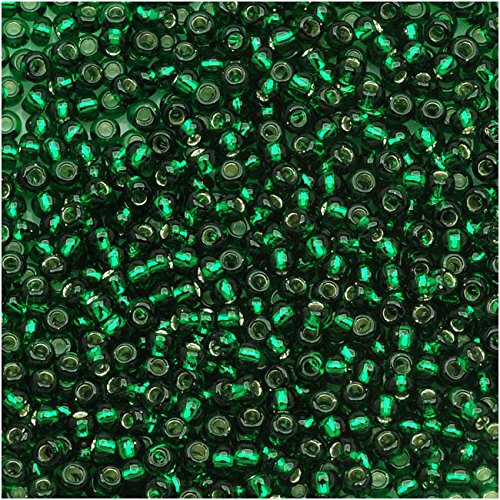

Toho round seed beads are the gold standard for consistency, which is vital when you are working with repetitive cord patterns. Because their manufacturing process is incredibly precise, you won’t find yourself digging through a bag to find beads that actually fit over your yarn.
For the knitter, this uniformity means your stitch gauge remains stable across the entire length of the cord. If you are knitting a long, decorative trim for a garment, having beads that sit perfectly side-by-side prevents the "wobble" that occurs when irregular beads force your stitches out of alignment.
Keep in mind that these beads have a slightly larger hole size than some competitors. This is a massive advantage if you are using a thicker, multi-ply cord, as it allows the fiber to pass through without unnecessary abrasion.
Miyuki Delica Beads: Best for Precision Work

Miyuki Delicas are cylinder-shaped beads that stack with mathematical perfection. When you incorporate these into a knitted cord, they create a smooth, mosaic-like surface that looks almost like a solid tube of color.
These are the go-to choice for advanced knitters working on geometric patterns or intricate colorwork charts. Because they are so uniform, they don’t shift or tilt once they are locked into your stitch, ensuring your pattern remains crisp and readable.
However, be aware that their thin walls make them slightly more fragile than round beads. If your project is intended for heavy daily use, such as a lanyard or a strap, use them in areas that won’t experience constant friction or crushing.
Preciosa Czech Seed Beads: Best for Durability
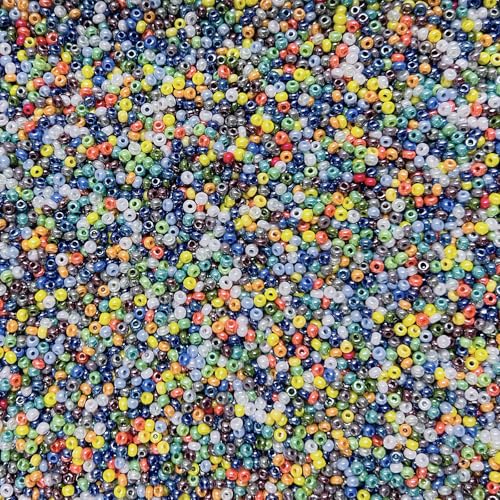
Preciosa beads are known for their slightly more organic, rounded shape and their robust glass composition. If you are working with a rustic, high-twist wool or a heavy linen cord, these are the workhorses you want in your kit.
Their durability makes them ideal for projects that will see a lot of wear, like beaded cord handles for a market bag. They can handle the tension of a tight knit without cracking, and their slightly irregular shape adds a beautiful, artisan quality to the finished piece.
Don’t expect the clinical precision of a Japanese bead here. Instead, embrace the slight variations; they add a layer of texture that works beautifully with natural, hand-dyed fibers.
Matsuno Seed Beads: Best for Delicate Textures

Matsuno beads offer a unique "soft" look that is distinct from the high-gloss finish of other brands. They are perfect when you want a more muted, sophisticated aesthetic for your fiber art.
If you are working with silk or fine bamboo yarn, these beads complement the drape of the fiber rather than overwhelming it. They are lightweight, which is a major factor when you are adding hundreds of beads to a single cord and don’t want the final piece to feel heavy or stiff.
They sit beautifully in lace-weight projects where you want a hint of shimmer without the harsh reflection of metallic-coated glass. Use them when you want your cord to feel like a piece of fine jewelry.
Miyuki Bugle Beads: Best for Added Structure

Bugle beads are long, tubular beads that act almost like a skeleton for your knitted cord. When placed strategically, they add rigid structure to a project that would otherwise be too floppy or limp.
Think of them as a way to create "segments" in your cord. By alternating a bugle bead with a round seed bead, you can create a repeating rhythm that adds both length and architectural interest to your knitting.
Be careful with the ends of these beads; they can sometimes be sharp. If you are knitting with a delicate silk or a soft cotton, ensure your tension is tight enough to keep the fiber from snagging on the bead’s edge.
Toho Treasure Beads: Best for Intricate Detail

Toho Treasures are similar to Delicas but often offer a wider range of specialty finishes. If your project requires a specific, hard-to-find metallic or iridescent color, this is where you will likely find it.
They are exceptional for small-scale, high-detail work. If you are knitting a fine cord for a pendant or a delicate bracelet, these beads provide the clarity of color needed to make small motifs pop against the background yarn.
Because they are so small and precise, they require a steady hand and a fine-gauge needle. Reserve these for your most detailed projects where the bead is the absolute focal point of the design.
How to Select Bead Sizes for Your Knitting Cord
The most common mistake is choosing a bead with a hole too small for your yarn. Always remember that the bead must not only fit the yarn but also allow the yarn to pass through comfortably without friction that could fray the fiber.
- Size 11/0: The universal standard; fits most fingering and lace-weight yarns.
- Size 8/0: Best for sport or DK weight yarns; provides a chunky, bold look.
- Size 15/0: Extremely small; reserved for fine silk or sewing thread used in micro-knitting.
If you are unsure, perform a "pull test." Thread a bead onto your yarn and slide it back and forth ten times; if the yarn shows any signs of fuzzing or splitting, the bead hole is too sharp or too small.
Essential Tools for Beaded Knitting Techniques
You don’t need a massive collection of tools, but you do need the right ones to keep your sanity. A high-quality collapsible-eye needle is non-negotiable, as it allows you to thread the needle easily and then flatten it to pass through the bead.
A bead spinner is a lifesaver if you are pre-stringing hundreds of beads onto your yarn before you start knitting. It saves hours of tedious manual threading and keeps your tension consistent.
Finally, keep a small, magnetized tray on your workspace. It prevents those tiny beads from rolling across the floor, which is a common hazard when working with glass beads on a busy knitting table.
Tips for Securing Beads onto Knitting Cords
The "knit-in" method is the most secure way to attach beads, as the bead is physically trapped by the structure of the stitch. This prevents the bead from sliding along the cord, keeping your design exactly where you intended.
If you prefer to pre-string your beads, ensure you are using a "lifeline" or a knot at the end of your yarn to prevent them from sliding off while you work. Always verify your bead count before you start a new row to avoid having to rip back your work.
Avoid using glue or adhesives to secure beads to your cord. These can discolor natural fibers, make the cord stiff, and eventually flake off, leaving your project looking messy and unfinished.
Caring for Your Beaded Fiber Art Projects
Beaded cords are delicate by nature. Always hand-wash your projects in cool water with a gentle wool wash, and avoid soaking them for extended periods, as some bead finishes can be sensitive to prolonged moisture.
When drying, lay the project flat on a towel and gently pat it into shape. Never wring or twist a beaded cord, as this puts immense stress on the yarn and can cause the beads to crack or the cord to lose its structural integrity.
Store your beaded items in a cool, dry place, ideally away from direct sunlight. Over time, UV rays can cause some bead coatings to fade or flake, so keeping them in a cloth bag will ensure your hard work stays beautiful for years to come.
Integrating beads into your knitting opens up a world of texture and light that yarn alone simply cannot achieve. By understanding the nuances of bead shapes, sizes, and durability, you can elevate your fiber art from simple utility to a true decorative masterpiece. Take your time with your initial selections, and let the interaction between the glass and the fiber guide your creative process. Happy knitting, and may your tension always be perfectly balanced.