6 Best Blocking Boards For Knitting Projects To Try
Achieve professional results with these 6 top-rated knitting blocking boards. Discover durable, versatile options to perfect your project’s shape and finish.
Blocking is the final, transformative step that turns a puckered, uneven piece of knitting into a professional-grade garment. Without the right surface, your hard work can easily lose its shape or fail to showcase the intended stitch definition. Choosing the correct blocking board depends entirely on the scale of your projects and the fibers you gravitate toward. This guide breaks down the best tools on the market to ensure your finished items look as good as they feel.
Knitter’s Pride Lace Blocking Mats: Best Overall
These mats have become a staple in my studio because they strike the perfect balance between density and ease of use. The material is firm enough to hold stainless steel T-pins securely without them wobbling, yet soft enough to allow for deep pin penetration.
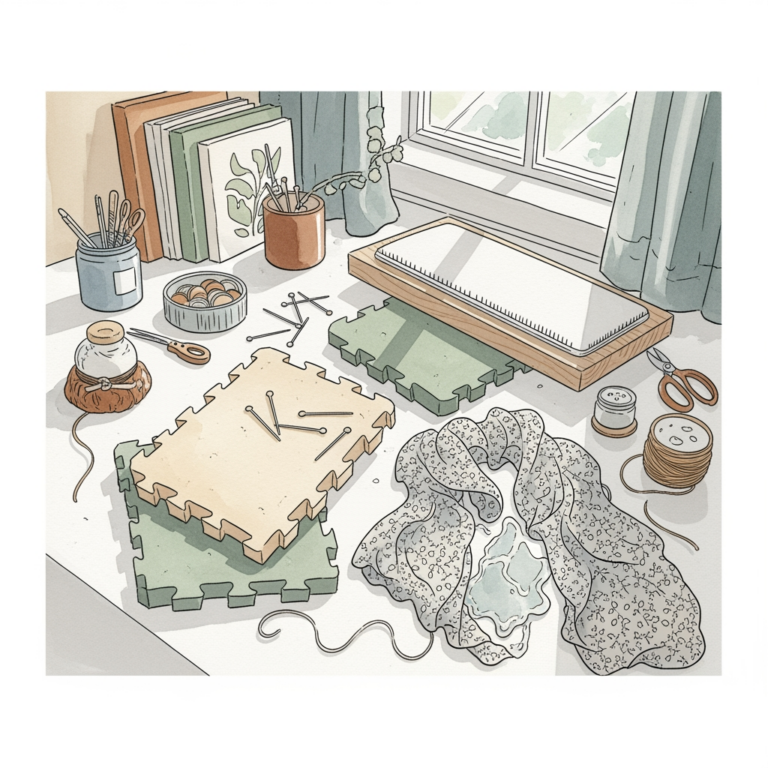
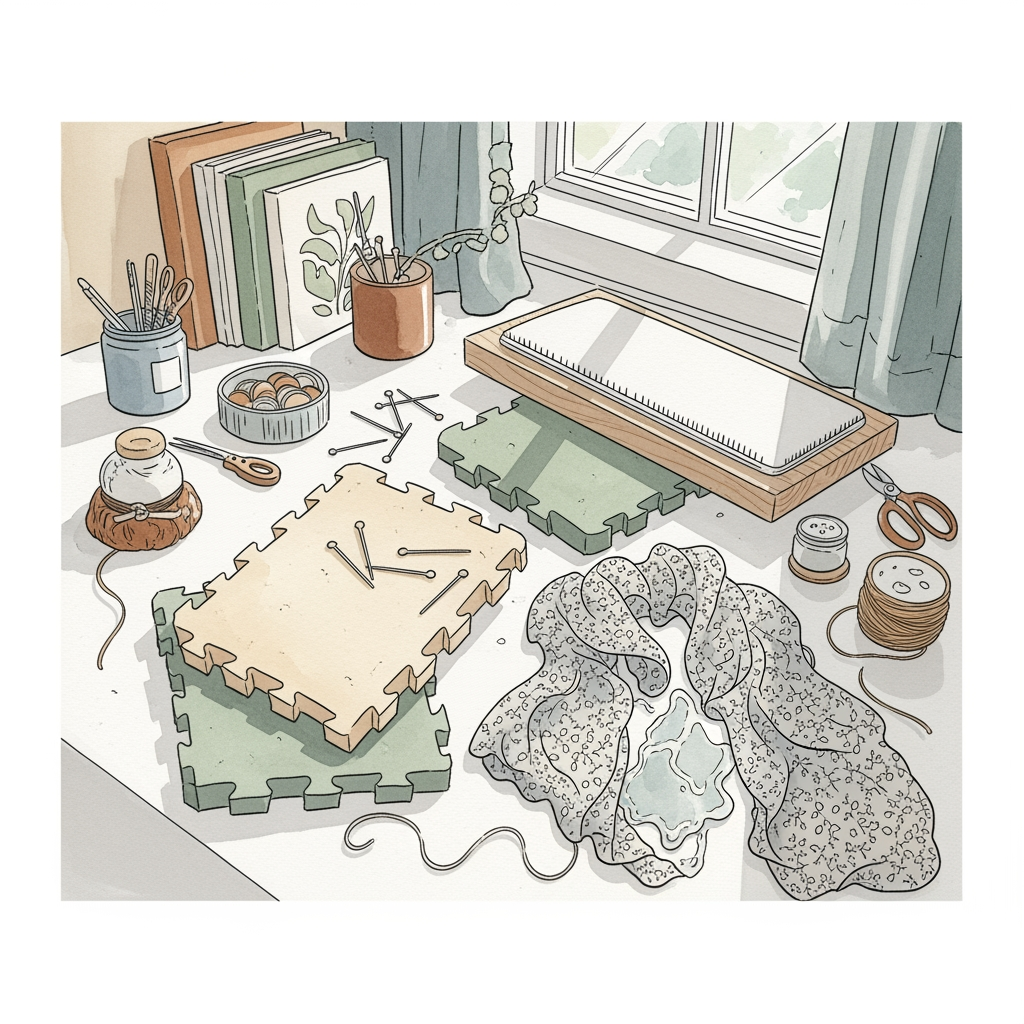
The interlocking design is the real winner here. You can configure them into a long, narrow rectangle for scarves or a large square for a heavy wool sweater. They accommodate various shapes without feeling flimsy at the seams.
The tradeoff is that the foam can eventually show wear if you are constantly using aggressive, thick-gauge pins. However, for most lace and fingering-weight projects, they are the gold standard.
Exquiss Interlocking Foam Tiles: Best for Value


If you are a prolific knitter who churns out sweaters for the whole family, you need a large surface area without breaking the bank. These tiles offer a massive amount of space at a fraction of the cost of boutique brand mats.
They are generally thicker and slightly more porous than premium options. While they might not hold a pin with the same "click" of precision, they are more than adequate for blocking heavy blankets or oversized cardigans.
I recommend these for knitters who prioritize volume over intricate, millimeter-perfect lace shaping. They get the job done reliably, provided you have the floor space to lay them out.
Clover Blocking Mats: Best for Small Projects
Clover is known for thoughtful design, and these mats are no exception. They are specifically sized for smaller accessories like socks, cowls, or baby hats, making them incredibly easy to store in a project bag or a small drawer.
The surface texture is designed to prevent the yarn from sliding, which is a common frustration when blocking slippery fibers like silk or bamboo blends. They hold pins exceptionally well, ensuring that your ribbing stays crisp and your lace motifs remain open.
If you rarely knit large garments, buying a giant set of mats is just wasted space. These are the perfect "grab and go" solution for the accessory-focused knitter.
Magma Blocking Mats: Best for Heat Resistance

Steam blocking is a powerful technique for relaxing fibers like acrylic or setting the drape of a delicate mohair, but it can warp cheap foam. Magma mats are engineered to withstand the heat and moisture of a steam iron or garment steamer without degrading.
The material is denser, which prevents the "melted" look that can happen to lower-quality mats after repeated exposure to steam. This durability makes them an investment piece for those who frequently use steam to finalize their projects.
Be aware that they are heavier and firmer than standard foam. They aren’t as portable, but they offer the structural integrity required for high-heat finishing techniques.
KnitIQ Blocking Board: Best for Precision Grids
Precision is everything when you are working on a complex shawl with hundreds of stitches. The KnitIQ mats feature a clear, printed grid that serves as an essential guide for symmetry and dimensions.
Having a visual reference allows you to measure your work while it is still pinned down. You can ensure that both sides of a garment are identical, which is vital for professional-looking seams and professional-grade finishing.
The grid lines are durable and don’t rub off easily, even with moisture. If you struggle with getting your pieces to be the exact same size, this board will solve that problem immediately.
Wefty Needle Blocking Set: Best for Versatility

This set offers a unique approach by focusing on the mechanics of pinning rather than just the surface. It is ideal for knitters who find traditional T-pins frustrating or damaging to delicate fibers.
The system is highly versatile, allowing you to create tension in ways that standard mats cannot accommodate. It’s particularly useful for geometric patterns where you need to maintain straight edges and sharp corners.
While it has a steeper learning curve than standard foam tiles, the results are undeniable. It is a fantastic choice for the advanced knitter who wants complete control over every single stitch.
Essential Factors When Choosing Blocking Boards
When selecting your board, the most important factor is the density of the foam. If the foam is too soft, your pins will lean, and your garment will shift as it dries, leading to uneven edges.
Consider the size of your typical projects. A set of mats that works for socks will be a nightmare for a full-length sweater, and buying too many mats will clutter your workspace.
Finally, think about moisture management. If you prefer wet blocking, your board must be able to handle being damp for 24 to 48 hours without developing mold or odors.
Why Grid Lines Matter for Professional Results
Grid lines aren’t just for decoration; they are a diagnostic tool. They allow you to check your gauge after the piece has relaxed, which is often different from your gauge on the needles.
When you block against a grid, you can spot "pulling" or "bunching" before the piece dries. If one side of your swatch is 4 inches and the other is 4.25 inches, the grid shows you exactly where you need to adjust your pins.
For beginners, this is the fastest way to learn how to manipulate your fabric. It turns the "art" of blocking into a repeatable, measurable science.
How to Properly Maintain Your Blocking Surfaces
After you finish blocking, always remove your pins carefully rather than pulling them out at an angle. This preserves the foam and prevents the holes from widening over time.
Wipe down your mats with a damp cloth if they get dusty or accumulate fiber lint. Never store them while they are still damp, as this can trap moisture and lead to mildew, especially in humid climates.
If you use steam, allow the mats to air out completely before stacking them. Proper storage will extend the life of your boards by several years.
Pro Tips for Achieving Perfect Blocking Tension
- Pin from the center out: This prevents the fabric from stretching unevenly across the width of the piece.
- Use rust-proof pins: Never use standard sewing pins, as they will leave permanent rust stains on your beautiful hand-knits.
- Don’t overstretch: Blocking is meant to shape the fabric, not distort the stitch structure; if you see the yarn pulling thin, you have gone too far.
- Patience is key: Let the piece dry completely on the board; removing it while even slightly damp can cause it to "bounce back" and lose your hard-earned shape.
Investing in a quality blocking board is one of the most impactful upgrades you can make to your knitting practice. While the initial purchase might feel like an extra expense, the ability to finish your projects with precision is what separates a homemade look from a handmade heirloom. Choose the board that fits your specific project needs, and you will find that your finished garments look better than ever. Happy knitting, and may your edges always be crisp.