6 Best Drying Screens For Flat Garment Care Rated
Discover the 6 best drying screens for flat garment care. Our expert guide reviews top-rated options to help you prevent stretching and maintain fabric shape.
After spending decades watching beautiful hand-knit sweaters lose their shape on wire hangers, I have learned that the drying process is just as vital as the knitting itself. Properly supporting your finished garments prevents the dreaded "shoulder sag" and helps your stitch definition truly shine. These six drying screens represent the most reliable ways to ensure your hard work stays as crisp as the day you bound off. Investing in a quality flat dryer is the single best way to protect your investment in luxury fibers like cashmere, alpaca, and hand-dyed wool.
Honey-Can-Do Folding Drying Rack: Best Overall


This rack is a workhorse in the fiber arts world, offering a generous surface area that accommodates even the most oversized, heavy-cabled sweaters. Its sturdy construction ensures that your wet garments won’t sag in the middle, which is critical when dealing with water-logged wool that can easily stretch out of proportion.
The foldable design is a major win for those of us living in homes where the laundry room isn’t a dedicated studio. When you aren’t blocking a project, it tucks away into a slim profile, leaving your floor space clear for your next knitting session.
Keep in mind that while it is robust, you should always distribute the weight of your garment evenly across the mesh. If you are blocking a particularly heavy wool sweater, center it to avoid putting undue stress on the frame’s hinges.
Whitmor Clip-On Mesh Sweater Dryer: Best Value
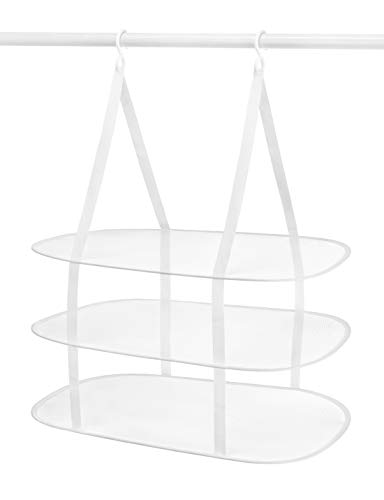
If you are just starting your journey into sweater knitting, you don’t need to break the bank to get professional results. This clip-on model is an ingenious solution that attaches to your existing laundry rack, making it perfect for smaller spaces or occasional blocking.
The mesh is breathable, which is the most important factor for drying hand knits. Air circulation is what prevents that "wet dog" smell often associated with slow-drying natural fibers like untreated sheep’s wool.
Be aware that because this attaches to other structures, it won’t be as rock-solid as a standalone unit. It is best suited for lighter projects like lace shawls or fingering-weight cardigans rather than heavy, chunky-knit fisherman sweaters.
OXO Good Grips Foldaway Dryer: Best for Space

Space is often the biggest constraint for the avid knitter, especially when you have multiple projects in various stages of completion. This dryer is designed for the urban knitter, folding down to a size that can literally slide between your washer and dryer.
The surface is firm and provides excellent tension, which is essential for blocking lace. If you are working with a delicate mohair-silk blend, the smooth, snag-free surface ensures your fibers don’t get caught or pulled during the drying process.
I recommend this for knitters who prioritize organization and efficiency. It isn’t the largest option, so if you are a fan of long, oversized tunics, you may need to fold the garment slightly, which can leave a faint crease if you aren’t careful.
Household Essentials Stackable Dryer: Best Set

When you find yourself knitting a collection of baby items or a set of matching sweaters, a single screen just won’t cut it. This stackable system allows you to dry multiple garments vertically, maximizing your square footage without sacrificing airflow.
Stacking is a game-changer when you are doing a large "blocking day" to prep your seasonal wardrobe. Just ensure you have a fan pointed near the stack to keep air moving between the layers, as the middle tiers will naturally dry slower than the top.
Always check the stability of the stack before walking away. If you have curious pets or children, a tall, loaded stack might be top-heavy, so place it in a low-traffic area of your home.
Songmics 3-Tier Mesh Drying Rack: Best Capacity

For the dedicated knitter who produces sweaters for the whole family, this rack is the ultimate solution. Its three-tier design offers massive surface area, allowing you to lay out multiple projects perfectly flat without any overlapping.
The mesh is high-quality and resists sagging, which is a common complaint with cheaper multi-tier racks. When you are blocking complex colorwork, having this much space is a luxury that prevents colors from bleeding into each other while damp.
This is a large piece of equipment, so measure your floor space before purchasing. It is a permanent fixture during the drying process, but the sheer volume of garments it can handle makes it well worth the footprint.
Eon Concepts Hanging Sweater Dryer: Best Design
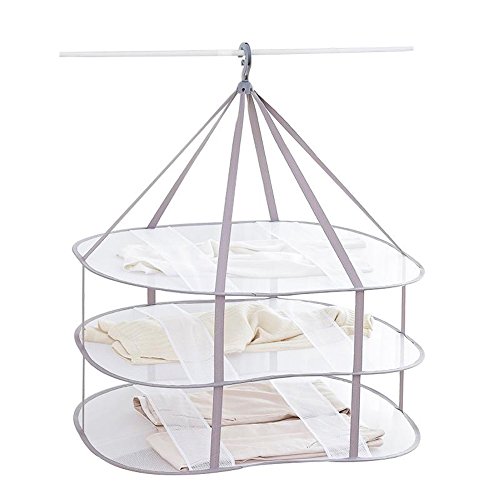
Sometimes you simply don’t have floor space for a drying rack, and that is where a hanging dryer becomes essential. This model clips onto your shower rod or a sturdy door frame, utilizing vertical space that would otherwise go to waste.
The circular or rectangular design is excellent for maintaining the structural integrity of a sweater’s neckline. By keeping the garment suspended but perfectly flat, you eliminate the risk of the garment stretching under its own weight.
This is perfect for delicate hand-dyed yarns that require a gentle, gravity-defying approach. Just ensure your hanging point is secure; a wet, heavy sweater can add significant weight to a tension rod.
Why Flat Drying Is Essential for Hand Knits
When a sweater is wet, the fibers are at their most vulnerable and susceptible to gravity. Hanging a wet wool sweater on a hanger will almost always result in "shoulder bumps" and a distorted hemline as the water weight pulls the fabric downward.
Flat drying allows the garment to retain the exact dimensions you achieved during your blocking process. It ensures the stitch pattern, whether it’s intricate cables or delicate lace, relaxes into its intended shape without being pulled out of alignment.
- Prevents Distortion: Maintains the structural integrity of the knitting.
- Encourages Even Drying: Air flows through the mesh, drying the front and back simultaneously.
- Protects Fiber: Reduces the mechanical stress on delicate fibers like cashmere or alpaca.
Choosing the Right Material for Your Dryer
Not all mesh is created equal, and the material of your dryer can impact your results. You want a material that is non-absorbent and smooth, ensuring that moisture doesn’t get trapped between the garment and the screen.
Synthetic mesh is generally the gold standard because it won’t mildew or hold onto odors. Avoid any dryer with metal components that aren’t coated, as rust can permanently stain your beautiful, light-colored hand knits.
- Look for: Fine-gauge, snag-free polyester mesh.
- Avoid: Rough or loose weaves that can cause pilling on delicate yarns.
- Check: The frame material for rust-proof coatings.
Proper Techniques for Blocking Your Garments
Blocking is the final step of the knitting process, where you use water and heat to "set" your stitches. After soaking your garment in lukewarm water with a no-rinse wool wash, gently roll it in a clean towel to remove excess moisture.
Never wring out your knitting, as this can break the fibers and cause uneven stretching. Once you have removed the excess water, lay the garment flat on your screen and gently pat it into shape, measuring against your schematic to ensure accuracy.
For lace, use blocking wires or pins to open up the stitches, but be careful not to over-stretch. Remember that the goal of blocking is to even out the tension, not to fundamentally change the size of the piece.
Essential Tips for Maintaining Your Dryers
Your drying screen is a tool, just like your needles, and it requires basic care to stay effective. After each use, wipe down the mesh with a damp cloth to remove any residual lint or dust that could transfer to your next project.
If you are using a folding or stackable rack, ensure the hinges are clean and free of debris to prevent sticking. Store your rack in a dry, cool place to prevent any moisture buildup on the frame.
- Clean Regularly: Wipe mesh to prevent lint buildup.
- Inspect Hinges: Ensure moving parts are working smoothly.
- Store Properly: Keep in a dry area to prevent frame corrosion.
Choosing the right drying screen is an investment in the longevity and beauty of your hand-knit garments. Whether you have the space for a massive multi-tier rack or need a compact, foldable solution, there is a tool here to suit your needs. Treat your finished projects with the same care you used to knit them, and they will reward you with years of wear. Happy blocking, and may your sweaters always stay perfectly in shape.