7 Best Needle Sets For Sock Knitting To Try
Discover the 7 best needle sets for sock knitting. We compare materials and grip to help you find the perfect tools for your next pair of handmade socks.
Knitting socks is a journey that starts with the perfect pairing of yarn and needles. Because socks require a tight gauge to withstand the friction of daily wear, your choice of tool significantly impacts both your comfort and the finished fabric. Finding the right needle set is less about finding the "best" in the world and more about finding the one that complements your unique tension and grip. This guide explores seven top-tier options to help you navigate the nuances of small-diameter circular knitting.
ChiaoGoo Red Lace Circulars: Best for Precision
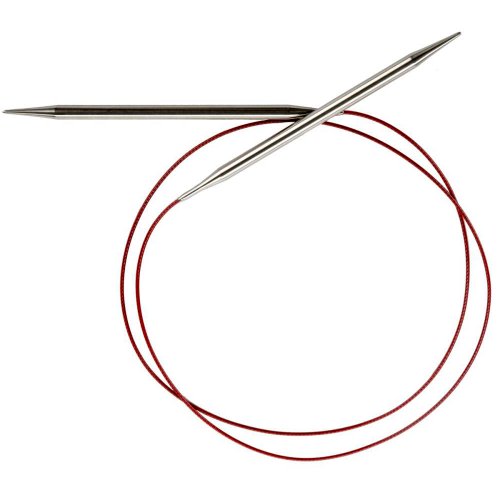

ChiaoGoo Red Lace needles are the gold standard for knitters who prioritize sharp, defined points. The surgical-grade stainless steel tips are exceptionally pointed, making them ideal for executing complex increases, decreases, and cables without splitting your yarn.
The signature red cable is a masterpiece of engineering; it is memory-free, meaning it won’t kink or coil up while you are trying to navigate the tight circumference of a sock heel. If you find yourself constantly wrestling with a springy cable that fights your hands, this is the solution.
However, be aware that these needles are quite slick. If you have a loose tension or are working with a very slippery silk-blend yarn, you might find your stitches sliding off more than you’d like. They are best suited for knitters who have developed a steady, controlled tension.
HiyaHiya Sharp Steel Needles: Best for Speed

HiyaHiya Sharps are favored by speed knitters who want a needle that gets out of their way. The steel is polished to a high sheen, allowing stitches to glide across the needle with almost zero resistance.
The join where the needle meets the cable is remarkably smooth, preventing the dreaded "snag" that can halt your progress mid-row. This fluidity is a game-changer when you are working on a long leg of stockinette stitch and want to maintain a consistent rhythm.
While the sharpness is excellent for lace patterns, it can be a bit aggressive on your fingertips during long sessions. If you are a "pusher" who uses your index finger to drive the needle tip, you may want to keep a bit of adhesive bandage handy to prevent soreness.
Addi Sock Rockets: Best for Smooth Knitting

Addi Sock Rockets combine the best of both worlds: a slightly blunter, more rounded tip than the lace brands, paired with a high-quality nickel-plated finish. This makes them incredibly forgiving for knitters who find ultra-sharp needles too piercing.
The "Rocket" refers to the long, tapered point that feels more ergonomic than standard needles. It provides enough precision to pick up stitches for a gusset, yet it won’t split the plies of a delicate merino-nylon blend.
These needles are particularly excellent for beginners who are still learning to control their tension. The slightly less aggressive point helps prevent accidental yarn splitting, which is a common source of frustration when working with fine, multi-ply sock yarns.
Lykke Driftwood 5-Inch Set: Best Natural Feel

Lykke Driftwood needles offer a warm, tactile experience that metal needles simply cannot replicate. Made from strong birch wood, these needles have a matte finish that provides just enough "grab" to keep your stitches from sliding off unexpectedly.
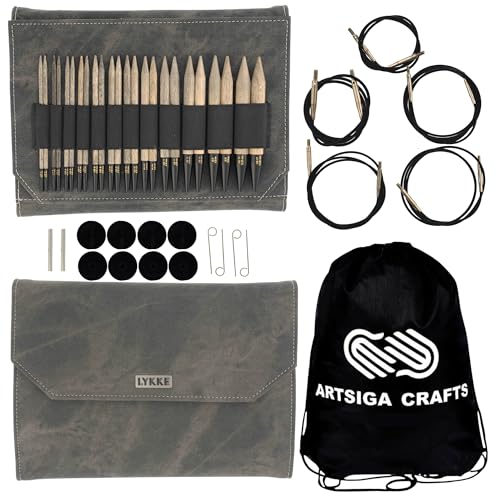
If you are working with a very slippery yarn, such as bamboo or silk, the natural friction of the wood acts as a stabilizer. This makes them a fantastic choice for those who struggle with "laddering"—the unsightly gaps that can appear between needles when using the Magic Loop method.
Keep in mind that wooden needles can be fragile in the very small sizes required for socks, such as 2.0mm or 2.25mm. Always handle them with care and avoid sitting on them or keeping them in a bag where they might be subjected to heavy pressure.
Knitter’s Pride Karbonz: Best for Grip Control
Karbonz needles are a unique hybrid, featuring carbon fiber shafts with plated brass tips. The carbon fiber provides a lightweight, warm-to-the-touch feel, while the brass tips ensure the precision needed for complex stitch work.
The surface of the carbon fiber has a subtle texture that offers excellent stitch control. If you find yourself constantly pushing your stitches back onto the needle, the Karbonz will help you maintain a more relaxed grip.
Because the join between the brass tip and the carbon shaft is very secure, these needles are quite durable despite their fine diameter. They are an excellent middle-ground choice for someone who wants the speed of metal but the control of a textured surface.
Signature Needle Arts: Best Luxury Investment
Signature Needle Arts are the pinnacle of custom, heirloom-quality tools. These needles are machined from high-quality aluminum and are available in different "pointiness" levels, allowing you to choose the exact tip that matches your knitting style.
The weight and balance of these needles are unparalleled, providing a sense of stability in your hands that makes long-term projects feel less fatiguing. They are a significant investment, but for a dedicated sock knitter, they are often the last set they ever feel the need to buy.
Since they are a luxury item, they are best suited for the knitter who has already identified their preferred point style and needle size. If you are still experimenting with your knitting technique, start with a more modular, budget-friendly set before committing to this level of craftsmanship.
Clover Takumi Bamboo: Best for Beginner Socks
Clover Takumi bamboo needles are widely available, affordable, and incredibly reliable. They are the classic "starter" needle for a reason: they are lightweight, quiet, and have a surface that is gentle on both your yarn and your hands.

The bamboo surface is naturally grippy, which helps keep your stitches in place while you focus on learning the anatomy of a sock heel. You won’t have to worry about your stitches "running away" while you are concentrating on your first kitchener stitch.
Once you advance to more complex patterns or faster knitting speeds, you may find the bamboo tips to be a bit too blunt or the surface too slow. However, they remain a staple in every experienced knitter’s kit for those times when you need a little extra friction to manage a difficult yarn.
How to Choose the Right Needle Size for Socks
Choosing the right size is all about your personal gauge and the thickness of your yarn. Most sock patterns call for 2.25mm or 2.5mm needles, but these are just starting points.
- Tight Knitters: If your fabric feels stiff or board-like, go up 0.25mm in needle size.
- Loose Knitters: If your fabric is airy and the stitches look uneven, go down 0.25mm to tighten up your gauge.
- The "Fabric Test": Always knit a swatch. You want a dense fabric that doesn’t show too much light through the stitches when stretched.
Remember that superwash wool tends to grow slightly after the first wash. If your swatch feels "just right" before blocking, it might become too loose after it hits the water.
Metal vs. Wood Needles: Choosing Your Material
The choice between metal and wood often comes down to your knitting speed and the type of yarn being used. Metal needles are generally faster and more durable, making them the preferred choice for long-term production knitters.
Wood needles are quieter, warmer, and offer more control, which can be a lifesaver for your joints if you suffer from hand fatigue. They are also superior for yarns that are prone to sliding, like those with high silk or alpaca content.
Ultimately, your material choice should be dictated by the "drag" of your yarn. If you are fighting your yarn to keep it on the needle, switch to wood; if you are fighting to get the yarn to move, switch to metal.
Essential Tips for Managing Sock Needle Cables
Managing your cables is the secret to a stress-free sock knitting experience. If you are using the Magic Loop method, ensure your cable is long enough (at least 32 inches) to prevent excessive tension at the needle-to-cable join.
If you notice your stitches are getting stuck at the join, check for tiny burrs or debris that can accumulate over time. A quick buff with a soft cloth or a very fine emery board can often restore a smooth transition.
Finally, always store your circulars in a way that allows the cables to hang freely. Coiling them tightly for long periods can cause the cable to develop a permanent "memory," which will only make your next sock project more frustrating.
There is no single "perfect" needle, but there is certainly a perfect needle for your current project and skill level. Whether you need the precision of a sharp steel tip or the reliable grip of bamboo, don’t be afraid to experiment with different materials and brands. Your hands will tell you exactly what they need once you start knitting. Happy sock making, and may your stitches always be even and your heels perfectly turned.