6 Best Project Journals For Record Keeping To Try
Boost productivity with our top 6 project journals. Discover the best tools to organize tasks, track progress, and maintain focus on your professional goals.
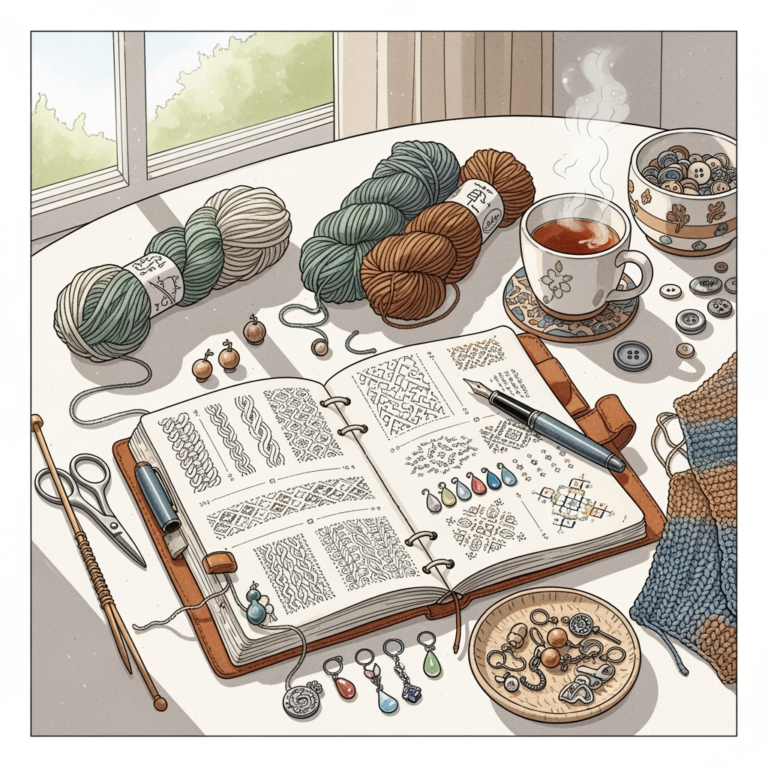
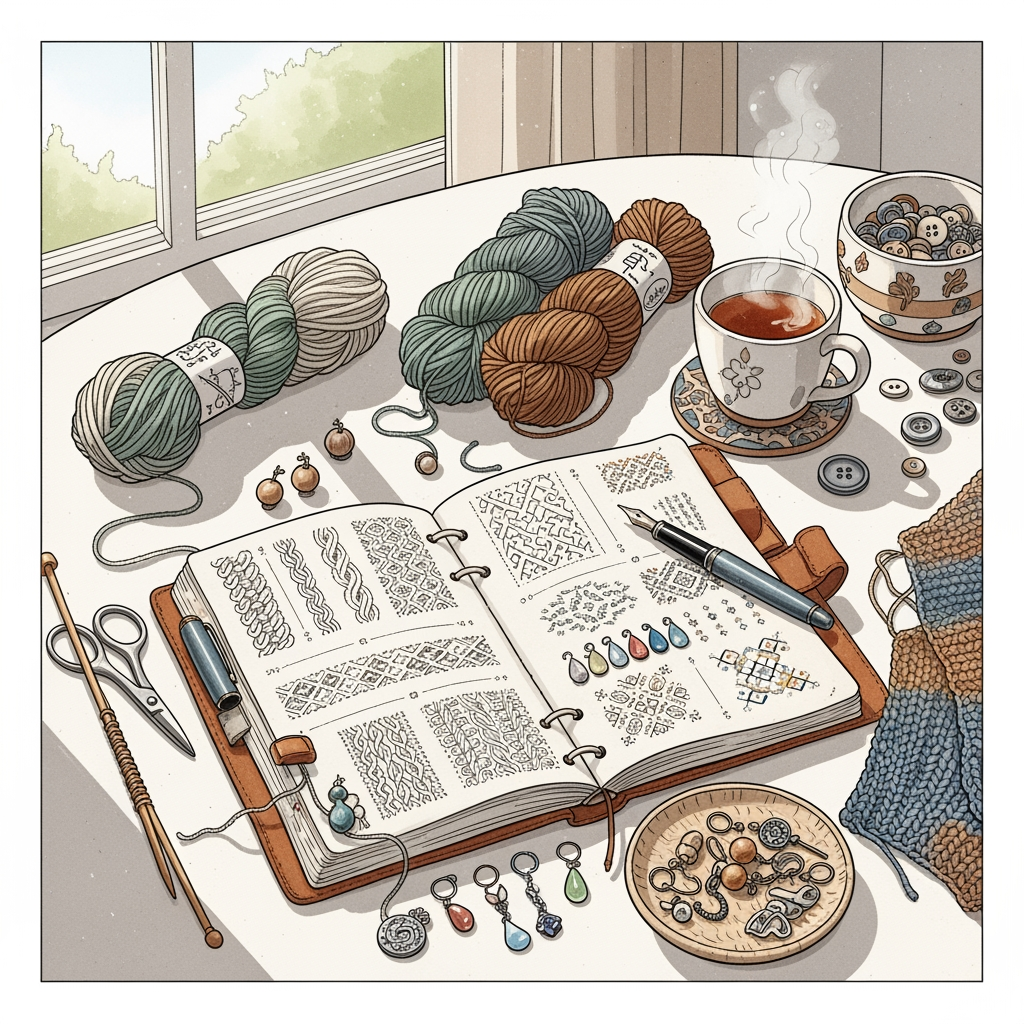
Every knitter knows the sinking feeling of finding a beautiful skein of yarn in their stash without a label, or realizing they can’t remember which needle size they used for a sweater finished three years ago. A dedicated project journal transforms these moments of frustration into a structured record of your creative evolution. By documenting your process, you move from simply following patterns to truly understanding the mechanics of your craft. These six journals offer different pathways to capturing the details that make your handmade wardrobe unique.
The Knitter’s Planner: Best Overall Project Journal
This planner is designed for the knitter who treats their craft like a professional endeavor. It provides a comprehensive framework that balances creative inspiration with the hard data of gauge, yardage, and fiber content.
If you are the type of knitter who juggles three projects at once, the structured project pages are a lifesaver. You can track your modifications, needle changes, and yarn substitutions in one centralized location. It prevents the common mistake of "guessing" your way through a sleeve increase months after you finished the body.
The trade-off here is the sheer volume of paper; it isn’t the most portable option for a small project bag. However, for a major heirloom project, the ability to map out your timeline and budget makes it an invaluable reference tool.
Knit Notes: Best Minimalist Log for Daily Knitting
Sometimes, less is more when you just want to get your needles moving. Knit Notes is perfect for the knitter who finds complex forms intimidating and prefers a clean, uncluttered space to write.
This journal excels because it doesn’t force you to fill out unnecessary data fields. It provides just enough structure to keep your project facts straight without feeling like homework. It is ideal for those who knit mostly accessories or gift items where complex schematics aren’t required.
The downside is that it lacks the deep technical pages found in more comprehensive planners. If you are prone to complex lace charts or stranded colorwork, you might find yourself needing extra graph paper tucked into the back.
Cocoknits Maker’s Journal: Best for Deep Planning
The Cocoknits approach is rooted in the philosophy that a well-planned project is a well-executed one. This journal focuses heavily on the "why" and "how" of your knitting, encouraging you to document your logic for future reference.
It is particularly useful for knitters who like to customize their patterns to achieve a perfect fit. By documenting your body measurements alongside your project notes, you create a personalized library of what works for your specific silhouette.
Because it is quite detailed, it requires a higher time investment per project. It is best suited for the intermediate to advanced knitter who views their journal as a long-term investment in their skills rather than a quick scratchpad.
Sunday Knits Journal: Best for Pattern Details
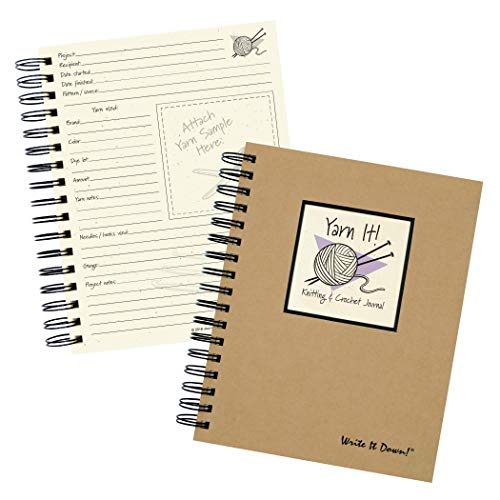

If you are a fan of intricate stitch patterns, this journal provides the necessary space to track complex sequences. It prioritizes the actual construction of the fabric over administrative project details.
This is the best choice for those who frequently modify stitch counts or adapt patterns to different yarn weights. You have ample room to sketch out your own modifications, which is crucial when working with natural, non-superwash fibers that might behave differently than the pattern’s suggested yarn.
The focus is very much on the knitting itself. If you need a place to track yarn purchases or budget, you will likely need to pair this with a separate notebook or digital app.
The Knitting Journal: Best for Project Archiving
Think of this journal as a permanent museum for your finished objects. It is designed to be kept on a shelf, allowing you to look back at your progress over the years.
The layout is excellent for attaching yarn swatches and photos of the final piece. Seeing the evolution of your technique—from your first uneven garter stitch scarf to your most recent complex cable sweater—is incredibly rewarding.
Because it is built for archiving, it is less about the "in-the-moment" tracking of needle sizes and more about the final result. It is a beautiful way to document your journey as a maker.
Fringe Association Field Guide: Best for Portability

For the knitter who takes their projects everywhere, this compact guide is the gold standard. It fits easily into the side pocket of most project bags, ensuring you never lose your notes while traveling.
Despite its small size, it is surprisingly robust. It covers the essential data points—gauge, yarn, and needles—without taking up excess space. It is the perfect companion for a knitter who spends their lunch hour or commute working on socks or hats.
The main trade-off is the limited writing space. If you have large handwriting or like to write long-form notes about your experience with a specific fiber, you may find the pages fill up quite quickly.
Why Keeping a Project Journal Improves Your Skills
A journal forces you to slow down and acknowledge the technical decisions you make during a project. When you write down your needle size and the resulting fabric density, you begin to understand how different metals (like slick nickel vs. grippy bamboo) affect your gauge.
Tracking your yarn choice is equally vital for skill development. You learn the difference between a bouncy wool, a drapey alpaca, and a crisp linen, which helps you make better choices for your next project.
Ultimately, a journal turns your knitting into a feedback loop. You stop making the same mistakes twice because you have a written record of what happened the last time you attempted a specific technique.
Essential Details to Track in Every Knitting Log
To get the most out of your journaling, focus on the data that actually impacts your fabric. Always record these core elements:
- Yarn details: Brand, colorway, dye lot, and fiber content.
- Needle specifications: Size, material, and brand (as different brands vary slightly in diameter).
- Gauge: Both before and after blocking, as this is the most critical factor for garment fit.
- Modifications: Any changes made to the pattern, such as lengthening a body or changing a neckline.
Don’t forget to note the "feel" of the yarn. If a specific wool felt scratchy while you were working with it, you will want to know that before you decide to use it for a sweater again.
Analog vs. Digital: Choosing Your Tracking Method
Analog journals offer a tactile experience that digital apps simply cannot replicate. The act of physically writing down your notes helps with memory retention and provides a permanent, battery-free record of your work.
Digital apps, however, are superior for searching and cross-referencing. If you have a massive stash, being able to search for "worsted weight wool" in a database is much faster than flipping through fifty pages of a paper notebook.
Most experts suggest a hybrid approach. Use a digital tool for inventory management and quick gauge calculations, but keep a physical journal for your project-specific thoughts, sketches, and swatches.

How to Organize Your Stash and Project Notes
Organization is the key to reducing "stash anxiety." Start by grouping your yarn by weight (fingering, DK, worsted) rather than brand. This makes it much easier to find a substitute when you start a new project.
When journaling, always attach a small yarn label or a sample of the yarn to your project page. This creates a visual reference that is far more useful than a written description alone.
Finally, keep your journal with your project at all times. If the journal is sitting on a bookshelf and your knitting is in your bag, you will eventually stop recording your notes. Accessibility is the secret to consistency.
Investing time in a project journal is a transformative step that elevates you from a hobbyist to a true master of your craft. Whether you prefer the tactile nature of a paper notebook or the efficiency of a digital log, the act of documenting your work will inevitably sharpen your eye and improve your knitting. Start small, record the details that matter to you, and watch as your personal library of projects becomes your most valued tool. Happy knitting, and may your gauge always be perfect.