6 Best Knitting Journal Notebooks for Project Logging
Track your stitches and yarn stash with ease. Discover the 6 best knitting journals to organize patterns, log project progress, and master your craft today.
Every knitter knows the sinking feeling of finding a beautiful, half-finished sweater in a project bag with no memory of which needle size was used. Keeping a dedicated log transforms your chaotic stash of scraps and needles into a professional portfolio of your craft. Whether you are a process knitter who loves the rhythm of the needles or a result-oriented maker, tracking your work is the secret to consistent gauge and better-fitting garments. This guide explores the best journals to help you document your fiber journey with precision and joy.
The Knit Notes Journal: Best Overall Tracker
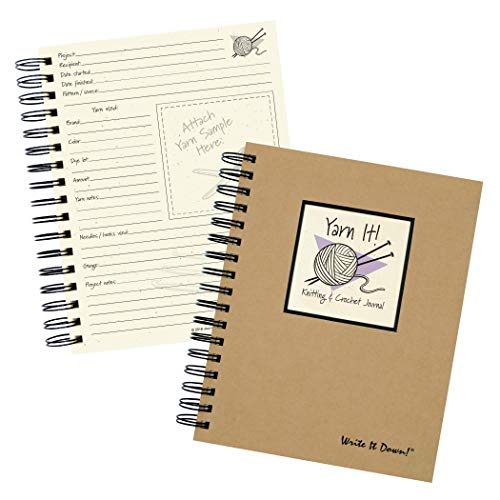

The Knit Notes Journal strikes a rare balance between structured data entry and open space for your own observations. It is designed for the knitter who wants to track the technical side of a project without feeling like they are filling out a tax form.
This journal excels because it includes dedicated sections for swatching—the most important step in ensuring your finished garment actually fits. By logging your stitches per inch before you begin, you avoid the heartbreak of a sweater that ends up two sizes too big after blocking.
The layout is clean, intuitive, and physically sturdy enough to survive being tossed into a project bag alongside sharp needle points and metal stitch markers. It is the gold standard for those who want a reliable, no-nonsense companion for every cast-on.
Cocoknits Maker’s Journal: Best for Planning
If you treat your knitting like an engineering project, the Cocoknits Maker’s Journal is your command center. It is less of a diary and more of a modular system that allows you to swap pages based on the complexity of your current work.
The real beauty here lies in the focus on project planning, including specialized worksheets for calculating yardage and customizing patterns. If you frequently find yourself altering a pattern to fit your unique measurements, this journal provides the structure to do so safely.
It is an investment, but it caters to the advanced knitter who wants to move beyond following instructions to truly understanding garment construction. The trade-off is its size; it’s better suited for a desk or a dedicated knitting station than a small travel tote.
Meadow Yarn Knitting Journal: Best for Details
The Meadow Yarn Knitting Journal is a minimalist’s dream that focuses on the tactile experience of recording your work. It provides ample room to tape in yarn labels, which is vital for remembering fiber content and care instructions years down the line.
Knowing if a yarn is a high-twist wool or a soft, plied alpaca blend is crucial when deciding how to wash your finished project. This journal prompts you to record these details, ensuring you don’t accidentally felt a delicate hand-wash-only sweater in the machine.
It is ideal for the knitter who values aesthetics alongside utility. The paper quality is high, meaning your ink won’t bleed through, even if you like to use fountain pens or colorful markers to sketch your stitch patterns.

The Knitter’s Notebook: Best for Beginners

When you are just starting out, the sheer amount of information—needle materials, fiber types, and gauge—can be overwhelming. The Knitter’s Notebook keeps things simple, offering clear prompts that teach you what actually matters in a project.
It acts as a gentle mentor, reminding you to note down your needle size and the brand of yarn you are using. These small habits prevent the common beginner mistake of losing track of your supplies mid-project, which often leads to "second-sock syndrome" or abandoned WIPs.
While it lacks the deep technical charts of more advanced journals, its simplicity is its greatest strength. It provides just enough structure to keep you organized without making the act of logging feel like a chore.
KnitIQ Project Log Book: Best for Organization

The KnitIQ Project Log Book is built for the knitter who manages multiple projects simultaneously. If you have a pair of socks on DPNs, a lace shawl on circulars, and a bulky hat on the needles all at once, this is the system for you.
Its organizational layout makes it easy to flip to a specific project and immediately see where you left off. It prioritizes the "at-a-glance" view, which is essential when you haven’t touched a specific project in a few weeks and need a quick refresher.
The binding is designed to lay flat, which is a massive quality-of-life upgrade when you are trying to read a pattern or write a note while your hands are busy with yarn. It is a workhorse of a notebook that prioritizes function above all else.
Moleskine Passion Journal: Best for Creativity

The Moleskine Passion Knitting Journal is a blank canvas for the knitter who sees their work as a form of art. It offers a more free-form approach, perfect for those who like to sketch their designs, tape in color swatches, or write reflections on the process.
This journal is less about strict data points and more about the narrative of your knitting life. It is perfect for those who want to track the why behind their projects—the gifts for friends, the personal milestones, or the meditative state of knitting.
Because it is less rigid, you will need to be disciplined about what you choose to record. If you are prone to forgetting your needle size, you might need to develop the habit of writing that data down in the margins consistently.
Why You Should Log Your Knitting Projects Today
Logging your projects is the fastest way to bridge the gap between "following a pattern" and "becoming a designer." When you record your gauge, your modifications, and your yarn choices, you build a personal database of what works for your specific tension and style.
Think of it as a feedback loop. When you look back at a project you finished a year ago and see that the sleeves were too tight, you can check your notes to see if you skipped a row of increases or if the yarn lacked the expected elasticity.
Ultimately, these journals turn your hobby into a legacy. Years from now, you won’t just have a closet full of sweaters; you will have a record of the time, the fiber, and the effort that went into every single stitch.
Essential Details to Track for Every Pattern
Regardless of which journal you choose, there are non-negotiable details you should record for every single project. Without these, your notes will be incomplete when you try to replicate a project or troubleshoot a fit issue later.
- Yarn details: Brand, colorway, dye lot, and fiber content (e.g., 100% Superwash Merino).
- Needle size and material: Note if you used bamboo (grippy) or nickel-plated (slick) needles, as this significantly impacts your gauge.
- Gauge: Record your stitches and rows per 4 inches, both before and after blocking.
- Modifications: Document every change you made to the written pattern, no matter how small.
By tracking these, you create a "recipe" for your knitting. If a friend asks how you made that beautiful scarf, you won’t have to guess the needle size or wonder if you held the yarn double.
Digital Apps vs. Physical Knitting Journals
Digital apps offer the convenience of cloud storage and quick searchability, which is excellent for knitters with hundreds of projects. However, they lack the tactile satisfaction and the "brain-to-hand" connection that comes with writing on paper.
Physical journals don’t require battery life, can’t be lost in a software update, and are always available at your knitting spot. They also provide a peaceful, screen-free moment in a world that is increasingly dominated by digital distractions.
The best approach? Use a digital tool like Ravelry for global pattern searching and stash management, but keep a physical journal for the intimate, day-to-day details of your current project. It is the best of both worlds.
How to Choose the Right Journal for Your Needs
Choosing a journal comes down to your personal knitting personality. Ask yourself if you are a "data-first" knitter who loves charts and math, or a "process-first" knitter who values the creative journey and memory-keeping.
If you are a beginner, prioritize a journal with prompts that guide you through the process of learning. If you are a seasoned knitter who modifies patterns frequently, look for journals that offer blank space for schematics and calculation notes.
Don’t be afraid to experiment; sometimes it takes a few different layouts to find the one that sticks. The "best" journal is the one you actually reach for every time you pick up your needles.
Investing in a knitting journal is an act of respect for your own time and the beautiful materials you work with. Whether you choose a highly technical planner or a creative notebook, the act of documenting your work will inevitably make you a more confident and skilled maker. Start logging your projects today, and you will soon see your knitting practice transform from a series of isolated tasks into a cohesive, rewarding journey. Happy knitting, and may your gauge always be true.