7 Best Notebook Journals For Pattern Drafting
Discover the 7 best notebooks for pattern drafting. Our guide evaluates paper quality and layout features to help designers choose the ideal tool for accuracy.
Designing your own knitwear requires a dedicated space to bridge the gap between a fleeting idea and a finished, wearable garment. Whether you are drafting complex cable motifs or calculating the math for a top-down raglan, the right notebook acts as your most reliable design tool. These seven journals offer the structure necessary to turn creative impulses into technical realities. Finding the perfect match will help you stop losing track of your row counts and start building a professional design library.
Leuchtturm1917 Dot Grid: Best Overall Choice
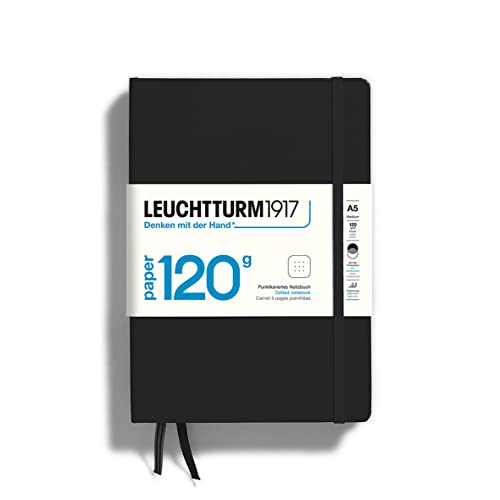

The Leuchtturm1917 is a staple in the design world because it balances structure with freedom. For a knitter, the dot grid provides enough guidance to keep your stitch charts aligned without the rigid confinement of traditional graph paper.
Its numbered pages and table of contents are a godsend for organizing multiple projects. You can easily index your "Socks for Winter" or "Lace Scarf" sections, making it simple to reference your notes months later when you need to replicate a stitch pattern.
However, the paper is relatively thin, which can be a drawback if you prefer heavy felt-tip pens or markers for color-coding your yarn swatches. If you use standard pencils or fine-liner pens, this is the gold standard for long-term project logging.
Moleskine Classic Notebook: Best for Portability

If you are the type of knitter who keeps a project bag in the car or your purse, the Moleskine Classic is your best companion. Its slim profile and durable cover mean it survives being tossed into a bag filled with sharp needles and stray balls of yarn.
The paper is famously thin, which means you will see some "ghosting" if you use heavy ink. For a knitter, this is rarely an issue unless you are doing intense illustrative work; simple pencil sketches of garment silhouettes or written row instructions sit perfectly fine on these pages.
This notebook is about utility rather than artistic presentation. It’s the perfect place to jot down quick gauge notes while you are at the local yarn shop comparing fiber weights.
Rhodia Goalbook: Best for Technical Schematics

Rhodia is legendary for its paper quality, and the Goalbook is specifically designed for people who need to track progress. It features a unique dot grid that is subtle enough to ignore but precise enough to use for complex geometry.
When you are drafting a sweater schematic—calculating decreases for armholes or shaping a V-neck—the precision of this paper ensures your math stays clean. It handles fountain pen ink beautifully, meaning no feathering when you are writing out detailed pattern instructions.
The trade-off is the bulk; it is a substantial book that feels more like a desk reference than a travel companion. Use this if you are sitting down for a dedicated design session at your workbench.
Baronfig Confidant: Best Lay-Flat Experience
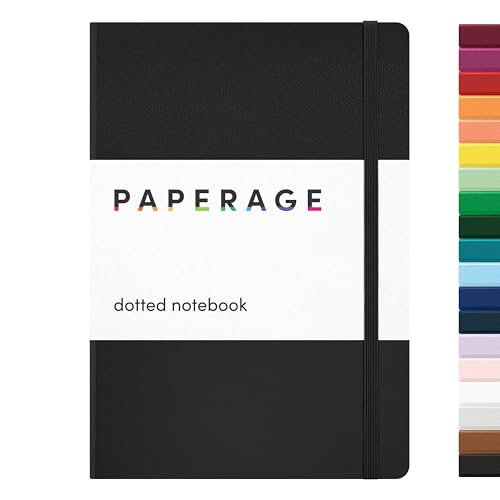
Few things are more frustrating than a notebook that snaps shut while you are trying to copy a chart from a reference book. The Baronfig Confidant is engineered to stay perfectly flat, giving you a wide, unobstructed canvas for your knitting sketches.
This is particularly useful when you are mapping out stranded colorwork. You can spread your work across the gutter of the page without losing any space to the binding, which keeps your charts accurate and easy to read.
The paper has a unique texture that feels substantial under a pencil. If you prefer the tactile feedback of a graphite pencil while you sketch out cable repeats, this notebook provides a satisfying, high-quality surface.
Midori MD Notebook: Best for Fountain Pen Users
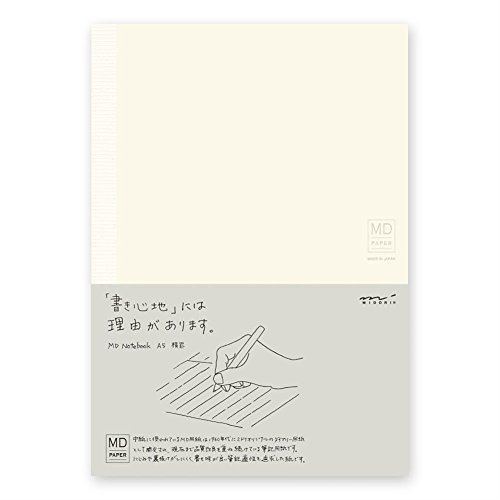
If you are a knitter who loves the ritual of documenting designs with a fountain pen, the Midori MD is unmatched. The paper is specifically treated to prevent ink bleed, ensuring your complex lace charts remain crisp and legible.
The aesthetic is minimalist to the point of being austere, which allows your designs to take center stage. There are no distractions here—just high-quality paper that invites you to focus entirely on your stitch math and fiber notes.
Be aware that the paper has a slight cream tint, which might affect how you perceive color choices for your projects. Always double-check your yarn color against natural light, rather than relying solely on the paper’s background tone.
Dingbats Wildlife Journal: Best Eco-Friendly Pick

For the environmentally conscious knitter, the Dingbats Wildlife Journal offers a guilt-free way to document your craft. These notebooks are vegan-certified and use biodegradable materials, aligning perfectly with the ethos of many natural-fiber enthusiasts.
The paper is surprisingly thick and handles a variety of pens and pencils with ease. It is sturdy enough to hold up to the wear and tear of a busy knitting life, whether you are sketching in the park or at a knitting retreat.
The unique wildlife themes add a touch of personality to your design library. It’s a wonderful choice if you want your design process to feel as thoughtful and sustainable as the wool you choose for your garments.
Archer & Olive Dot Grid: Best for Thick Paper
If you love using markers, watercolors, or heavy ink to illustrate your knitting ideas, Archer & Olive is the clear winner. The paper is exceptionally thick, meaning you can use both sides of the page without any ink bleeding through.
This is the ultimate choice for "knitting journalers" who like to tape in yarn samples, swatch swatches, or create elaborate color palettes. The paper is robust enough to handle the weight of physical fiber samples glued directly to the page.
Because the paper is so heavy, the notebook is thicker than most. It is an investment piece for a designer who wants to create a beautiful, archival-quality record of their work.
Essential Features for Knitting Design Journals
When evaluating a notebook, look for a binding that allows it to lay flat, as you will often need both hands free to hold your knitting or a measuring tape. A dot grid is generally superior to lined paper because it allows for both text and vertical chart alignment.
Consider the paper weight carefully. If you plan to glue in swatches or use markers to highlight different sections of a lace repeat, you need at least 100gsm paper to prevent warping or bleed-through.
Finally, look for internal pockets or elastic closures. These are perfect for tucking away loose ends, such as a paper tape measure, a tapestry needle, or a small swatch of the yarn you are currently using for a project.
Why Grid Spacing Matters for Knitting Charts
Grid spacing is the invisible architecture of your knitting design. A standard 5mm grid is usually ideal for most knitting charts, as it mimics the rectangular nature of a knitted stitch, which is rarely perfectly square.
If you are working with fine-gauge yarn, such as a lace-weight silk or a fingering-weight wool, a tighter grid can help you map out more complex motifs. Conversely, if you are designing chunky-knit sweaters, a wider grid helps you visualize the scale of your cables or bobbles.
Always test your grid by drawing a small 10×10 stitch swatch on paper before committing to a full design. If your drawing looks too cramped, your stitch counts will likely feel overwhelming when you move to the needles.
How to Organize Your Knitting Design Process
Start by dedicating a specific section of your notebook to "Fiber Notes." Record the yarn brand, fiber content, WPI (wraps per inch), and how the yarn behaves after a wet block, as this data is crucial for future design success.
Next, establish a consistent format for your charts. Always note your gauge (stitches and rows per four inches) at the top of every page so you can adjust your math if you swap out your needle size or yarn weight later.
Finally, keep a "Work in Progress" log where you document changes made mid-project. If you decide to add an extra increase row for a better fit, write it down immediately; your future self will thank you when you want to recreate that perfect-fitting garment.
Choosing the right notebook is a personal decision that should reflect the way your mind approaches a pattern. Whether you prioritize portability, paper weight, or the simple joy of a lay-flat binding, your journal will eventually become a treasure trove of your creative evolution. Invest in a tool that encourages you to document your mistakes as clearly as your successes. Once you establish a rhythm of recording your process, you will find that your knitting designs become more intentional and refined.