6 Best Bead Tweezers For Delicate Placement
Mastering intricate beadwork requires precision. We analyze the six best tweezers designed for delicate placement, ensuring accuracy in every jewelry project.
Adding beads to a fine lace shawl or a pair of beaded socks requires a level of precision that your fingers simply cannot provide alone. When you are working with delicate glass seed beads or heavy crystals, the right tool acts as an extension of your hand. Choosing the wrong pair of tweezers can lead to frayed yarn or, worse, dropped stitches that are nearly impossible to recover. This guide explores the best options to ensure your beaded projects remain professional and stress-free.
Beadsmith Fine Point Tweezers: Best Overall Choice


These tweezers are a staple in my kit because they strike the perfect balance between tension and reach. When you are sliding a bead onto a live stitch in a complex lace pattern, you need a tip that closes perfectly flush every single time.
The fine, tapered points allow you to navigate through tight yarn plies without snagging the fibers. If you are working with delicate silk or a high-twist merino, this lack of friction is essential to prevent pilling.
They aren’t the cheapest option on the market, but they are the most reliable for consistent work. The bottom line: Invest in these if you want a "do-it-all" tool that handles everything from tiny 11/0 seed beads to larger decorative accents.
Lindstrom RX Ergonomic Precision Tweezers Set

If you are spending hours beading a wedding veil or an intricate heirloom shawl, ergonomics become a matter of physical comfort. These tweezers feature a specialized handle design that reduces the pressure needed to keep the tips closed.
The construction is top-tier, providing a tactile feedback that helps you "feel" the bead as you pick it up. This prevents the common issue of beads flying across the room because you squeezed too hard.
While the price point is higher, the relief they provide for your hands is worth it during long sessions. The bottom line: Choose these if you suffer from hand fatigue or have long-term projects that require repetitive, precise movements.
Xuron 485 Professional Beading Tweezers
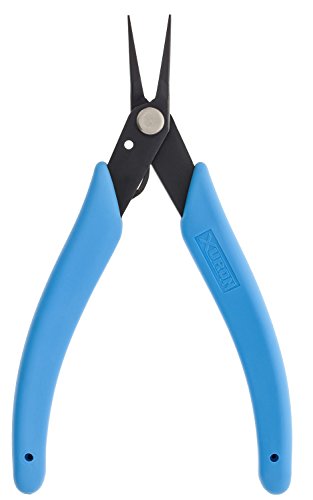
These are unique because they are designed specifically to hold beads securely while you maneuver them onto your knitting needle. The tips have a slight curve and a distinct gripping surface that prevents the bead from rotating or slipping.
This is a massive advantage when you are working with faceted crystals or beads that have a tendency to roll away. They feel substantial in the hand, which provides a sense of control for those who find lighter tweezers too "fiddly."
However, they are slightly bulkier than a standard fine-point tweezer, which can be a drawback in very tight lace work. The bottom line: They are the best choice for larger beads or projects where stability is more important than extreme maneuverability.
Dritz Beading Tool: Ideal for Delicate Placement

The Dritz tool is often found in local craft stores and is a reliable, accessible choice for the casual beader. It is straightforward, lightweight, and gets the job done without any unnecessary bells or whistles.
The tension is moderate, making it easy to open and close without much effort. It is particularly effective for those just starting to experiment with adding beads to their knitting, as it doesn’t require a steep learning curve.
It may not hold up to years of daily industrial-level use, but for a seasonal project, it is perfectly adequate. The bottom line: This is your go-to "starter" tool that performs well across a variety of bead sizes and yarn weights.
Fiskars Micro-Tip Tweezers for Intricate Work
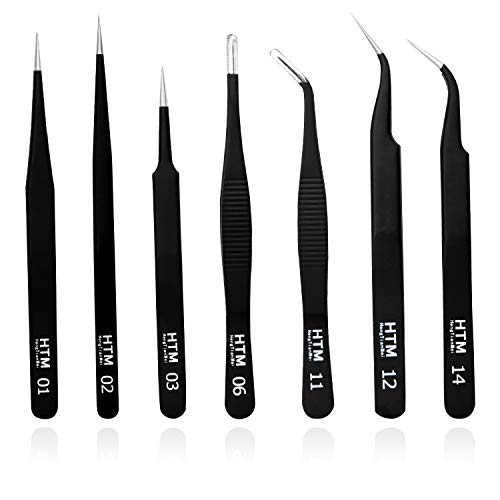
Fiskars is known for their blade precision, and these tweezers translate that reputation into a very sharp, accurate tool. The micro-tip is excellent for picking up the smallest beads, such as 15/0 seed beads, which can be notoriously difficult to handle.
Because the tips are so fine, they are perfect for correcting small errors, like moving a bead that has landed slightly off-center on your stitch. They are also quite slim, allowing you to get into dense stitch patterns without crowding the area.
Be aware that because the tips are so sharp, they can snag delicate yarns if you aren’t careful. The bottom line: Use these for high-detail work where precision is more important than speed.
E6000 Precision Applicator and Tweezer Combo

This combo set is a clever addition to a toolkit because it often includes a specialized tweezer designed to work in tandem with adhesive applications. While we rarely use glue in knitting, these tweezers are excellent for manipulating beads that have been pre-treated.
The grip is secure, and the tweezers are designed to resist the sticky residue that often plagues other tools. If you are doing mixed-media knitting—perhaps attaching beads to a finished piece—this set is incredibly useful.
It is a more specialized toolset, so it might be overkill if you are strictly doing bead-knitting on the needle. The bottom line: Keep this in your drawer for projects that involve decorative embellishments beyond basic bead-knitting.
How to Select Tweezers for Delicate Beadwork
When selecting your tool, consider the relationship between your yarn and the bead. If you are using a fuzzy mohair-blend yarn, you need a tweezer with a very smooth finish to avoid catching the halo of the fibers.
Think about your personal "grip strength" as well. Some knitters have a very light touch, while others tend to squeeze their tools tightly; your choice of material and spring tension should match your natural style.
- Tip shape: Curved for visibility, straight for direct access.
- Spring tension: Light for comfort, heavy for bead security.
- Material: Stainless steel for durability, plastic for non-marring properties.
The bottom line: Test the "feel" of the tool before you commit to a major project; if it feels awkward in your hand now, it will feel twice as awkward after three hours of knitting.
Essential Tips for Bead Placement in Knitting
The most important rule in bead-knitting is to ensure your bead is centered on the stitch before you pull the yarn through. Use your tweezers to hold the bead steady against the needle while you transfer the stitch from the left needle to the right.
Avoid "stretching" the stitch while placing the bead, as this can lead to uneven tension in your finished fabric. If the bead feels too tight, check your yarn gauge; you may need to use a slightly thinner yarn or a larger needle for that specific row.
Always keep your tweezers clean. A buildup of fiber dust or natural oils from your hands can make the tips slippery, leading to dropped beads and frustration.
Comparing Tweezer Materials: Steel vs. Plastic
Steel tweezers are the gold standard for durability and precision. They offer a firm grip and can be sharpened or polished if they become dull over time.
Plastic or nylon-tipped tweezers are a better choice if you are working with fragile materials that might scratch easily. They provide a softer touch, which is beneficial when you are worried about damaging a delicate bead finish, like a metallic coating that might flake off.
However, plastic tweezers often lack the "snap" and responsiveness of steel. The bottom line: Use steel for 90% of your work, and keep a plastic-tipped pair on hand for those precious, delicate beads that require a gentle touch.
Maintaining Your Tools for Precision Crafting
Good tweezers are an investment, and they deserve proper care. Store them in a dedicated case or a tool roll rather than tossing them into your knitting bag, where the tips can get bent or dulled.
If the tips become misaligned, you can often gently nudge them back into place with a pair of pliers. Keep them free of lint by wiping them down with a microfiber cloth after every session.
If you notice your tweezers are snagging the yarn, check the tips under a magnifying glass for any burrs or rough spots. A quick buff with a fine-grit sanding stick can restore them to perfect condition.
Finding the perfect pair of tweezers is a personal journey that depends as much on your hand size as it does on your project requirements. By focusing on tip precision, ergonomics, and material quality, you can turn a tedious beading process into a seamless part of your knitting rhythm. Don’t be afraid to try a few different styles until you find the one that feels like a natural extension of your craft. With the right tool in hand, your beaded lace will reach a new level of professional polish.