6 Best Finishing Pins For Holding Pieces Together
Discover the top 6 finishing pins for secure assembly. This guide explores the best options to ensure your projects remain stable, durable, and professional.
Achieving a professional finish on your knitwear often comes down to the final, crucial step of blocking your pieces into their intended shape. Whether you are working with delicate lace or a structured wool sweater, the right pins act as the foundation for your garment’s final silhouette. Using the wrong tools can lead to distorted edges or, worse, unsightly rust stains on your hard-earned work. This guide explores the best finishing pins to ensure your projects look as polished as a store-bought piece.
Clover T-Pins: The Gold Standard for Blocking
Clover T-Pins are the workhorse of the knitting world for a reason. Their robust, nickel-plated steel construction allows them to penetrate even the densest wool mats without bending or losing their shape.
The T-shaped head provides a secure grip, making them incredibly easy to insert and remove from blocking mats. Because they are rust-resistant, you can confidently pin your wet garments and leave them to dry for days without worrying about metal oxidation.
If you are blocking a heavy, cabled sweater that requires significant tension, these are your best friends. They hold their ground against the natural elasticity of wool, ensuring your edges stay crisp and straight.
Knitter’s Pride Knit Blockers: Best for Speed


If you dread the tedious process of pinning an entire shawl one inch at a time, Knit Blockers are a game changer. These are essentially plastic bars with multiple pins embedded in them, allowing you to secure several inches of fabric in a single motion.
They are particularly effective for straight edges, such as the bottom of a sweater or the spine of a triangular shawl. By reducing the number of individual pins you need to handle, they significantly cut down your blocking time.
However, they are less versatile for curved edges or complex lace motifs. Use them to set your foundation, then switch to individual pins for the intricate shaping.
Susan Bates T-Pins: Reliable Heavy-Duty Choice

Susan Bates pins are slightly thicker than standard options, providing a reassuring sense of stability. When you are working with bulky, heavy-gauge yarns, you need a pin that won’t deflect under the weight of wet, saturated fiber.
These pins are a staple in many long-term knitting kits because they are consistently manufactured to a high standard. They feel substantial in the hand, which helps if you have any dexterity issues or simply prefer a tool that feels solid.
They are an excellent choice for blocking large blankets or heavy rugs. Just ensure your blocking mat is thick enough to accommodate the longer, thicker shaft of these pins.
Cocoknits Maker’s Keep: Best Magnetic Pin Holder
While not a pin itself, the Maker’s Keep is the ultimate accessory for managing your pinning arsenal. It is a silicone bracelet with a magnetic face that keeps your pins organized and accessible right on your wrist.
No more hunting for stray pins on the floor or leaving them scattered across your table. This tool keeps your workspace tidy, which is essential when you are working with delicate yarn that might snag on loose metal.
It also serves as a safe landing spot for pins as you remove them from your finished piece. For any knitter who values an efficient and organized workflow, this is an essential upgrade.
Bohin Extra Fine Pins: Best for Delicate Lace

When working with fine lace or fragile fibers like silk and mohair, you need a pin that won’t stretch or distort your stitches. Bohin pins are exceptionally thin and sharp, allowing them to glide through delicate fabric with minimal resistance.
Their fine gauge ensures that they don’t leave large holes in your work, which is critical for open-work patterns. Because they are so sharp, they require a gentle touch to avoid snagging the yarn.
These are not intended for heavy-duty blocking. Reserve them for your most precious, lightweight projects where precision is more important than raw holding power.
Tulip Etimo Blocking Pins: Best Rust-Resistant

Tulip is renowned for their high-quality manufacturing, and their blocking pins are no exception. They are coated to be highly rust-resistant, making them a safe choice for even the most moisture-intensive blocking sessions.
They feature a smooth finish that prevents them from catching on fine fibers. This is a subtle but important detail that protects your yarn from unnecessary friction or fraying during the drying process.
If you live in a humid climate or frequently block your projects using steam, these pins offer the peace of mind you need. They are an investment in the longevity of your tools and your garments.
Why T-Pins Outperform Standard Sewing Pins
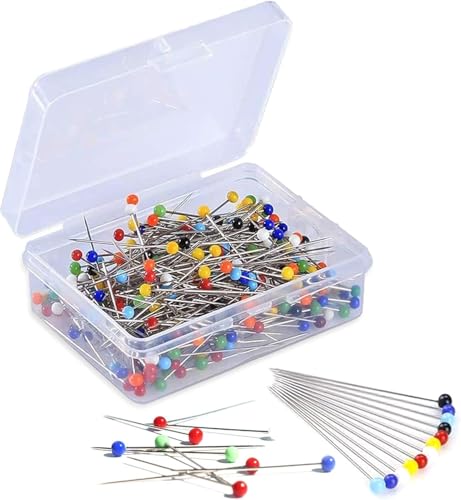
Standard sewing pins are designed for woven fabrics, not the high-tension, elastic nature of knitted textiles. They are often too short and lack the necessary structural integrity to hold a heavy, wet garment in place.
T-Pins, by contrast, offer a wider surface area at the head, which prevents them from slipping through the fabric. Their length allows them to be buried deep into your blocking mat, providing a firm anchor point that won’t shift.
Furthermore, the steel used in T-Pins is generally tempered for strength. Sewing pins are prone to bending, which can leave your blocking uneven and your edges wavy.
How to Choose the Right Pin for Your Fiber Type
Selecting the right pin depends largely on the weight and delicacy of your yarn. Use the following guide to help you decide:
- Heavy Wool/Bulky Yarns: Opt for thick, heavy-duty T-Pins that can withstand significant tension.
- Delicate Lace/Silk/Mohair: Choose fine, ultra-sharp pins to avoid creating large holes or snagging fibers.
- Superwash Wool: These fibers tend to grow significantly when wet, so use pins that offer maximum hold to keep your dimensions accurate.
- Synthetic Blends: These are often less prone to stretching, so you can prioritize ease of use over extreme holding power.
Always consider the "memory" of your fiber. Natural fibers like wool are more forgiving, while plant fibers like cotton or linen have less elasticity and require more precise pinning to ensure the final shape is correct.
Essential Tips for Perfect Seaming Alignment
Pinning is not just for blocking; it is also a vital step in seaming your pieces together. When joining a sleeve to an armhole, use pins to mark your quarter-points to ensure the fabric is distributed evenly.
Avoid the temptation to just start sewing from one end to the other. By pinning at key intervals, you prevent the "puckering" effect that often happens when one piece of fabric is slightly longer than the other.
Use locking stitch markers or T-pins to hold your seams in place while you work. This allows you to focus on your tension rather than struggling to keep the edges aligned.
Common Mistakes When Pinning Your Knit Pieces
The most common error is over-stretching the fabric during the pinning process. While blocking is intended to shape your piece, pulling too hard can permanently distort your stitch gauge and ruin the drape of the garment.
Another mistake is failing to use enough pins. If you leave large gaps between your pins, the fabric will inevitably sag or curve between them, leading to an uneven finished edge.
Finally, never leave your pins in for too long in a humid environment if they aren’t explicitly rust-resistant. Even the best pins can eventually react with moisture, leaving small, permanent marks on your beautiful work.
Mastering the art of blocking is the final bridge between a handmade craft and a professional-grade garment. By selecting the right tools for your specific fiber and project, you ensure that your hard work is displayed to its absolute best advantage. Take the time to experiment with these different pin types to find what works best for your personal knitting style. With the right foundation, your finished pieces will have the structure and elegance they truly deserve.