7 Best Silicone Mats For Non-Slip Crafting To Use
Discover the top 7 silicone mats for stable, non-slip crafting. We review the best heat-resistant, easy-clean surfaces to protect your workspace effectively.
Whether you are blocking delicate lace or organizing a flurry of stitch markers, a stable work surface is as essential as a good pair of needles. Silicone mats provide the grip necessary to keep your tools from sliding off the table while protecting your surfaces from glue, paint, or dye spills. These mats are the unsung heroes of a well-organized craft room, offering a non-slip foundation for every project. Here are seven excellent options to help you keep your workspace as orderly as your yarn stash.
We R Memory Keepers Precision Crafting Mat


This mat is a favorite for those who value a clean, grid-lined workspace. If you are measuring out fringe for a scarf or aligning motifs for a crochet blanket, the printed grid is an invaluable guide.
The surface is remarkably grippy, ensuring that your blocking pins and measuring tapes stay exactly where you put them. It strikes a nice balance between being flexible enough to store away and heavy enough to lay perfectly flat.
However, keep in mind that the grid lines can be distracting if you prefer a blank slate. If you spend your time doing intricate beadwork on your knitting, the subtle lines help with alignment, but they might be overkill for simple stockinette projects.
Fiskars Non-Slip Craft Mat for Precision Work
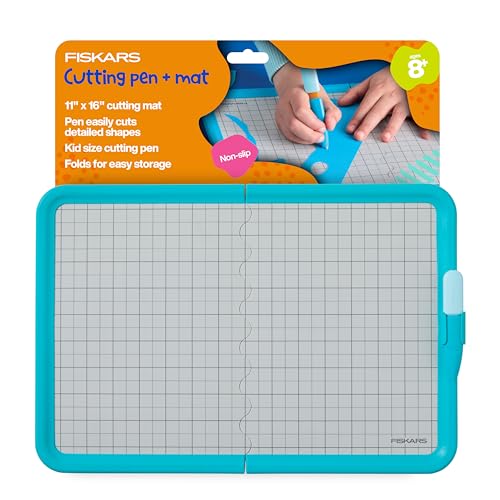
Fiskars brings their legendary reputation for quality tools to this mat, which is built to withstand heavy-duty use. It is particularly useful if you are working with sharp tools like rotary cutters for fabric backing or heavy-duty blocking wires.
The non-slip backing is exceptionally reliable, even on smooth wooden tables. When you are pinning out a large, heavy wool sweater to block, you need a surface that won’t shift under the tension of the pins; this mat provides that necessary stability.
The tradeoff here is the thickness; it’s a bit bulkier than other options. If your crafting space is a small corner of the dining room table, you will need to find a place to store this permanently as it doesn’t roll up quite as easily as thinner sheets.
Arrtx Heat Resistant Silicone Crafting Sheet

Fiber artists often find themselves working with steam irons for blocking or heat-setting dyes on natural fibers. This mat is specifically designed to handle heat, making it a safer choice for those who block items directly on their workspace.
The material feels slightly more "rubbery" than others, which is excellent for keeping small metal tools like tapestry needles or cable needles from rolling away. It is also very easy to wipe clean after a messy project involving fabric paint or dye.
Just be aware that because it is so grippy, it can occasionally attract lint and dust from your yarn fibers. You will need to rinse it off occasionally to maintain that signature tackiness, but it is a small price to pay for such a secure surface.
ArtBin Silicone Craft Mat with Mixing Wells
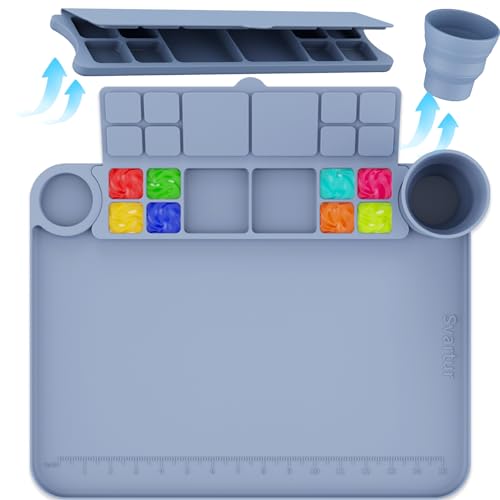
If you are a dyer or someone who likes to experiment with custom colorways, the built-in mixing wells are a game changer. These little indentations are perfect for holding small amounts of dye or even keeping track of different sizes of stitch markers.
The mat itself is quite durable and handles spills like a champ. When you are working with superwash wool or delicate fibers that require careful handling, having a dedicated spot for your tools keeps the work area pristine.
The main downside is the footprint; the wells take up space that could otherwise be used for laying out a garment. Use this if your crafting style is more "active" and involves lots of small tools rather than just the yarn and needles.
Nicpro Extra Large Silicone Crafting Surface

When you are blocking a full-sized adult sweater, standard mats often feel too small. This extra-large surface provides ample room to spread out your work, ensuring that no part of your garment hangs off the edge.
It is surprisingly lightweight for its size, making it easier to move around than a heavy foam blocking board. The silicone material is non-toxic and feels very soft to the touch, which is a nice bonus when you are leaning over your work for long periods.
Because it is so large, it can be a bit unwieldy to clean in a standard kitchen sink. If you choose this size, consider keeping a dedicated spray bottle of mild soapy water and a microfiber cloth nearby for quick spot cleaning.
MEEDEN Non-Stick Silicone Mat for Crafters

This mat is the epitome of "non-stick," which is a blessing if you are working with adhesives or fabric glues. For knitters who also dabble in mixed-media projects or bag construction, this is a versatile addition to the tool kit.
The surface is quite smooth, which makes it easier to slide your project around if you need to reposition it. While it is less "tacky" than some of the others, it still provides enough friction to keep your needles from sliding off the table.
This is an excellent "all-rounder" for a multi-craft workspace. If you switch between knitting and other hobbies, this mat won’t hold onto glue or paint residue, ensuring your yarn stays clean and snag-free.
Bira Craft Silicone Mat for Messy Projects
If your crafting involves dyes, glues, or anything that might stain your table, this mat is designed for heavy-duty protection. It is thick, durable, and essentially impervious to most common craft-room spills.
The texture is slightly embossed, which helps prevent small items from skittering across the surface. It is particularly effective for those who use heavy tools or need a surface that can take a bit of a beating without showing wear.
The tradeoff is that it is not as "pretty" as some of the sleeker options. It is a utilitarian tool meant for the trenches of crafting, so don’t expect it to serve as a decorative centerpiece for your desk.
How to Choose the Best Mat for Your Craft Space
When choosing a mat, first consider the size of your typical projects. If you are strictly a sock knitter, a smaller, high-grip mat is perfect; if you block sweaters, you need the largest surface you can find.
Think about your environment as well. If you have a dedicated craft room, a large, permanent mat is ideal, but if you are a "traveling" knitter who works on the go, look for something that rolls up tightly.
- Check the grip: Ensure it won’t slide on your specific table surface (wood vs. glass).
- Evaluate heat resistance: Essential if you use steam for blocking.
- Assess ease of cleaning: Can you wipe it down, or does it need a full wash?
Maintaining Your Silicone Mat for Longevity
Silicone is incredibly durable, but it will lose its "tack" if it gets covered in dust or fiber debris. Regularly wiping your mat with a damp, lint-free cloth will keep it performing like new.
If your mat starts to feel less grippy, a quick wash with warm water and a drop of mild dish soap is usually all it takes. Let it air dry completely before rolling it up to prevent any moisture buildup.
Avoid using harsh chemicals or abrasive scrubbers, as these can damage the silicone surface over time. Treat your mat with the same care you would show your favorite set of wooden needles, and it will last for years.
Why Silicone Mats Are Essential for Crafters
For any fiber artist, the workspace is an extension of the project itself. A silicone mat provides a stable, protected, and organized foundation that allows you to focus on your tension and stitch patterns rather than worrying about your gear.
These mats prevent the frustration of lost tools and damaged furniture, making your crafting time more relaxing and efficient. They are a small investment that significantly improves the quality of your time spent at the needles.
Investing in a quality silicone mat is one of the simplest ways to upgrade your crafting experience. By providing a stable, heat-resistant, and easy-to-clean surface, these mats allow you to focus entirely on the joy of creating. Choose the one that fits your specific project needs, and enjoy a more organized and stress-free workspace. Happy making!