6 Best Warping Boards For Large Projects To Consider
Selecting the right warping board is vital for large projects. Explore our top six picks to ensure stability, efficiency, and ease for your complex weaving.
Preparing a long warp is often the most daunting stage of any large-scale weaving project, turning a living-room floor into a tangled web of frustration if you aren’t equipped correctly. Whether you are planning a set of table linens or a multi-yard wool blanket, the right warping board acts as the structural foundation for your entire piece. Choosing the wrong tool can lead to uneven tension, which ruins the drape and integrity of your finished fabric. This guide breaks down the best options to help you maintain sanity and precision while measuring your warp.
Schacht Flip Folding Loom Warping Board


This board is a masterclass in space-saving engineering for the weaver who doesn’t have a dedicated studio space. It is specifically designed to attach directly to the Flip rigid heddle loom, meaning you don’t need extra wall space or a bulky floor stand.
Because it folds, it is incredibly easy to store in a closet or under a bed when you aren’t actively winding a warp. However, the trade-off is a slightly more limited maximum length compared to dedicated wall-mounted units.
If you are a weaver who works in batches—measuring a warp, weaving, and then clearing the space—this is your best friend. Just ensure you double-check your loom width before purchasing to ensure a perfect fit.
Ashford 11-Yard Adjustable Warping Board
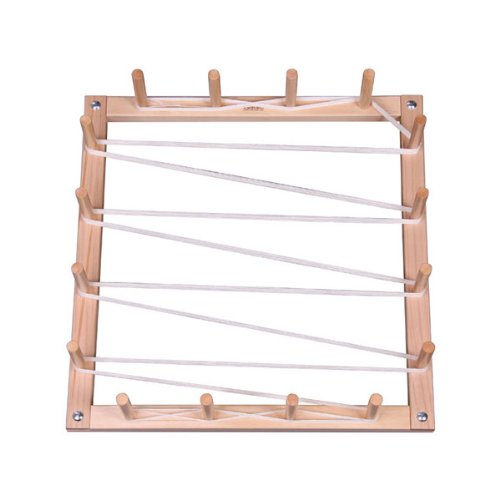
The Ashford 11-Yard board is a reliable workhorse that offers a significant amount of length in a relatively compact footprint. It is ideal for those projects that push past the "small scarf" phase and into the territory of full-length yardage.
The adjustable nature of the pegs allows you to customize your path, which is helpful if you are working with different fiber weights. If you are using a sticky wool or a delicate silk, having the ability to adjust the tension path slightly can save you from unnecessary breakage.
Be aware that "11-yard" refers to the maximum path length; you will rarely use the full capacity for every project. It is a solid, mid-range choice that balances accessibility with enough capacity for most home-based weavers.
Leclerc 14-Yard Wall-Mounted Warping Board
Leclerc has been a staple in the weaving community for decades, and this wall-mounted board is built to last a lifetime. It is a serious piece of equipment for the weaver who is ready to commit to a permanent station in their home.
Because it mounts to the wall, you gain back valuable floor space, which is essential if you are working on a large floor loom. The 14-yard capacity is generous, allowing you to warp for multiple projects at once or create very long, continuous warps for heavy-duty textiles.
The downside is the installation; you need a sturdy wall and the confidence to drill into studs. Once it’s up, however, the stability it provides makes the winding process feel much more professional and controlled.
Kromski 5-Yard Peg-Style Warping Board
If you are primarily a hobbyist who focuses on smaller projects like wall hangings or table runners, the Kromski 5-yard board is a charming and functional choice. It is beautifully crafted from European alder, making it a piece you won’t mind leaving out in your living space.
The peg-style construction is intuitive, making it a fantastic learning tool for those new to warping. It doesn’t overwhelm you with excessive length or complex geometry, keeping the focus on learning how to maintain even tension.
While it isn’t meant for massive yardage, its simplicity is its greatest strength. It is perfect for testing new yarn blends or experimenting with different color sequences before committing to a larger project.
Harrisville Designs Traditional Warping Board
Harrisville Designs is synonymous with traditional craftsmanship, and their warping board is as sturdy as they come. This is a classic design that feels like it belongs in a historic weaving guild, prioritizing durability above all else.
The spacing of the pegs is optimized for consistent tension, which is crucial when working with hand-spun yarns that might have slight variations in diameter. If you are working with luxury fibers like alpaca or cashmere, the smoothness of these pegs helps prevent snagging or fiber damage.
This is an investment piece. If you find yourself gravitating toward complex patterns and longer warps, the build quality here will pay for itself in the lack of frustration during the setup process.
Louët Vertical Warping Mill for Large Warps
A warping mill is a different beast entirely compared to a flat board, and the Louët vertical mill is the gold standard for high-volume work. If you are planning to weave a large-scale project, such as curtains or multiple sets of blankets, this is the only way to go.
The vertical rotation allows you to wind your warp much faster than you could on a flat board. It keeps the yarn moving smoothly, preventing the "snag-and-tug" cycle that often happens when you have to walk back and forth across a flat board.
It does require a significant amount of floor space and a bit of a learning curve to master the rotation. Once you get the rhythm down, however, you will never want to go back to a standard board for long warps.
Key Factors for Choosing a Large Warping Board
When selecting a board, you must consider your available square footage versus the length of the projects you intend to create. A 14-yard board is useless if you only have room for a 5-yard setup.
Consider the material of the pegs as well; smooth, finished wood is essential for preventing fiber abrasion. If you work with delicate, high-twist yarns, you need a board that won’t snag or fray your warp threads.
Finally, think about your physical comfort. If you have back or joint issues, a vertical mill that allows you to stand in one spot is infinitely better than a wall-mounted board that requires constant pacing.
Wall-Mounted vs. Floor-Standing Board Designs
Wall-mounted boards are the ultimate space-savers, keeping your studio footprint small and organized. They are excellent for weavers who share their space with other activities or who live in smaller apartments.
Floor-standing models, or mills, offer better accessibility and often higher capacity, but they demand a dedicated "weaving zone." They are best suited for those with a permanent studio space where the equipment can stay set up.
- Wall-Mounted: Best for limited space, permanent setups, and medium-length warps.
- Floor-Standing/Mill: Best for high-volume production, ergonomic comfort, and long, complex warps.
Essential Tips for Managing Long Warp Lengths
When working with long warps, the biggest enemy is tension inconsistency. Always wind your warp with a steady, rhythmic pace, and never stop mid-cross if you can avoid it.
Use "lease sticks" or "tie-offs" at regular intervals along your warping path to keep the threads from tangling. If you are working with a long warp, break it into smaller, manageable bouts to ensure that each section is tensioned correctly before moving to the next.
Keep a notebook nearby to track the number of ends and the length of each bout. There is nothing worse than finishing a long warp only to realize you miscounted your threads halfway through.
How to Maintain Your Wooden Warping Equipment
Your warping board is an heirloom tool that deserves proper care. Dust it regularly, as accumulated debris can act like sandpaper on your delicate warp yarns over time.
If the wood begins to feel dry or splintery, a light application of food-grade mineral oil or a high-quality furniture wax will keep the pegs smooth. Avoid harsh cleaners that can strip the natural oils from the wood and cause it to crack.

Check the pegs periodically to ensure they are tight and secure. A loose peg can ruin your tension and cause your warp to slip, potentially leading to a tangled mess that takes hours to fix.
Investing in a high-quality warping board is one of the most significant steps you can take toward becoming a more confident and efficient weaver. While it might seem like a simple piece of wood and pegs, the right tool will drastically reduce the time you spend on setup and increase the time you spend at the loom. Choose the design that fits your space and your ambition, and you will find that even the longest warps become a meditative part of your craft. Happy weaving, and may your tension always be perfectly even.