6 Best Rustproof T-pins For Intricate Edges
Discover the 6 best rustproof T-pins for intricate edges. Our guide reviews top-rated, durable options that ensure precision and fabric safety in every project.
Achieving a professional finish on a hand-knit garment often comes down to the quality of the tools used during the final blocking stage. While many knitters focus on luxury yarns and precise needle sizing, the humble T-pin is the unsung hero that dictates the final shape of your work. Using the wrong pins can lead to disastrous rust stains on delicate fibers or snapped points that damage your stitches. This guide explores the best rustproof options to ensure your hard work remains pristine from the blocking board to the wardrobe.
Clover T-Pins: The Gold Standard for Blocking
Clover T-Pins are widely considered the benchmark for a reason. Their consistent manufacturing means you won’t encounter burrs or jagged edges that might catch on fine silk or mohair fibers.
The T-shaped head is exceptionally ergonomic, making it easy to push these pins into dense blocking mats without straining your thumbs. For those who frequently block lace shawls with hundreds of points, this comfort factor is a game-changer.
While they are slightly more expensive than generic hardware store alternatives, the investment is worth it. You are paying for a smooth finish that won’t compromise your tension or snag your yarn.
Knitter’s Pride Stainless Steel Blocking Pins


If you are working with light-colored yarns or expensive hand-dyed wools, stainless steel is non-negotiable. Knitter’s Pride offers a high-grade stainless option that is virtually impervious to the moisture involved in wet blocking.
These pins are remarkably stiff, which is essential if you are blocking heavy, water-logged cotton or wool sweaters. They resist bending even when you are pulling firmly to open up lace patterns or straighten out cables.
The tradeoff here is weight; they are heavier than cheaper aluminum pins. However, this weight provides a sense of stability that helps keep your edges perfectly straight during the drying process.
Susan Bates Rust-Resistant T-Pins for Lace

Lace knitting requires a fine touch and, more importantly, a fine-gauge pin. Susan Bates offers a thinner profile that is ideal for delicate lace edges where a thicker pin might distort the stitch geometry.
Because these are specifically designed for fiber arts, the points are sharp enough to glide between fibers without splitting them. This is critical when working with high-twist yarns where a blunt pin could easily pierce a ply and leave an unsightly mark.
Keep in mind that because they are thinner, they can be more prone to bending if you try to anchor them at a sharp angle. Use them for delicate shaping rather than heavy-duty tensioning.
Boye Nickel-Plated T-Pins for Heavy Projects

Nickel-plated pins are a classic choice that offers a very slick surface. This smoothness allows them to slide into dense, felted, or tightly knit projects with minimal resistance.
These pins are incredibly durable, making them a solid choice for "workhorse" projects like wool blankets or thick aran-weight sweaters. They are built to withstand the pressure of being pushed into tough surfaces repeatedly.
The primary caution here is for knitters with nickel sensitivities. If you have a known metal allergy, it is best to stick to stainless steel options to avoid skin irritation during the long process of pinning out a large project.
Beadsmith Stainless Steel T-Pins for Detail

Though often found in jewelry supply aisles, Beadsmith pins are an excellent secret weapon for knitters. They are manufactured to a high level of precision, ensuring that every pin in the box is uniform in length and sharpness.
Their extreme sharpness makes them perfect for "pico" edges or intricate picot bind-offs. When you need to pin out tiny, individual loops, the fine point of these pins provides the necessary accuracy.
Because they are designed for jewelry, they are often slightly shorter than standard blocking pins. Use these for detailed edge work rather than anchoring the main body of a large garment.
Dritz Extra-Long T-Pins for Intricate Edges
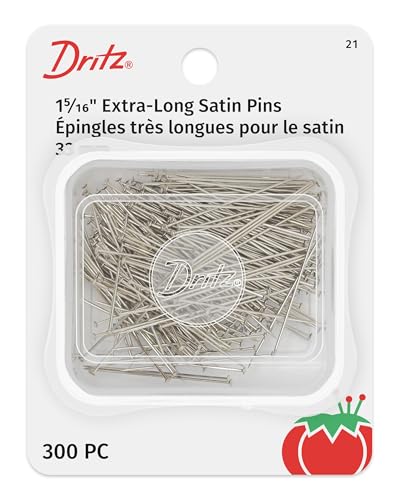
Sometimes, you simply need more length to catch multiple layers of fabric or to pin through a thick hem. Dritz Extra-Long T-Pins provide that extra reach, which is invaluable when blocking garments with complex construction.
The extra length acts as a lever, making it easier to adjust your tension once the pin is already in the mat. If you find your pins popping out of the board when you pull on your lace, the added depth of these pins will solve the problem.
These are particularly useful for blocking heavy, damp garments where you need to penetrate deep into the blocking mat for a secure hold. Just be mindful of the extra weight, which can cause the pins to lean if the mat is soft.
Why Rustproof Pins Are Vital for Wet Blocking
Wet blocking involves saturating your finished piece with water, which creates the perfect environment for oxidation. If you use standard, non-coated steel pins, the moisture will inevitably react with the metal.
This results in ugly, brownish-orange rust spots that are nearly impossible to remove from natural fibers. Even a small amount of "bleeding" can ruin hours of work, especially on white or pastel yarns.
Always check the packaging for "stainless" or "rustproof" labels. If a pin is magnetic, it is likely steel and prone to rusting; if it is non-magnetic, it is likely stainless or a rust-resistant alloy.
Understanding Wire Gauge for Delicate Textiles
The gauge of your pin refers to its thickness, and it matters more than you might think. A pin that is too thick will physically stretch your stitches, leaving permanent holes or distortion in your finished fabric.
- Fine Gauge (0.5mm – 0.7mm): Best for lace, silk, and fingering weight yarns.
- Medium Gauge (0.8mm – 1.0mm): The standard for most sweaters, socks, and accessories.
- Heavy Gauge (1.2mm+): Reserved for heavy wool blankets or thick, rug-weight projects.
When in doubt, choose the thinnest pin that can still hold the tension of your piece. It is always better to use more thin pins than one thick pin that distorts your work.
Best Storage Solutions for Your Blocking Tools

Pins are notoriously easy to lose and even easier to accidentally step on. A dedicated storage solution is not just about organization; it is about protecting your tools from moisture and damage.
Avoid storing your pins in the original cardboard boxes, which can trap humidity. Instead, use a glass jar with a screw-top lid or a magnetic pin cushion that keeps them accessible but contained.
If you travel with your knitting, a small, hard-sided plastic case is essential. It prevents the pins from poking through your project bag and keeps them from bending while in transit.
How to Prevent Snags When Pinning Fine Fibers
Snagging occurs when a dull pin tip catches a strand of yarn and pulls it out of alignment. To prevent this, always inspect your pins for burrs or rough spots before you begin.
If you are working with delicate fibers like mohair or angora, consider "sliding" the pin into the fabric at an angle rather than pushing it straight down. This technique helps the pin find the space between the stitches rather than piercing the yarn itself.
If you do accidentally snag a strand, don’t panic. Use a tapestry needle to gently coax the pulled thread back into place before you finish pinning, as the blocking process will help set the fibers in their original position.
Investing in high-quality, rustproof T-pins is one of the most practical upgrades you can make to your knitting toolkit. By choosing the right gauge and material for your specific project, you ensure that your beautiful, hand-knit garments maintain their integrity for years to come. Remember that careful blocking is the final act of creation, and your tools should be as reliable as your stitches. Happy blocking, and may your edges always be sharp and your fibers forever rust-free.