6 Best Sewing Pins For Garment Assembly You Can Trust
Selecting the right pins is vital for garment construction. Discover the six best options that ensure fabric stability and precision for all your sewing needs.
Achieving a professional finish on a hand-knit garment often comes down to the subtle, invisible work performed during assembly. While we obsess over yarn choice and needle size, the humble sewing pin is the unsung hero that ensures our seams align and our edges remain crisp. Selecting the right pin prevents distortion and protects your hard-earned stitches from unnecessary stress. Here are the six best sewing pins to elevate your knitting projects from homemade to heirloom quality.
Clover Patchwork Pins: Best Overall for Knitting


Clover Patchwork Pins are the gold standard for a reason: they strike the perfect balance between flexibility and structural integrity. These pins are thin enough to slide between delicate fibers without splitting the yarn, yet they remain rigid enough to hold heavy sweater pieces in place.
When you are seaming a mattress stitch on a wool-blend cardigan, you need a pin that glides through the fabric without snagging. These pins feature a sharp, tapered point that respects the integrity of your knitting, ensuring you aren’t creating accidental ladders or runs.
The tradeoff here is their length; they are slightly shorter than standard quilting pins. While this makes them excellent for maneuverability in tight spots, they might not be the best choice for extremely thick, lofty cables. For most standard garment assembly, however, they are a reliable, everyday workhorse.
Dritz Extra Fine Glass Head Pins for Delicate Knits

When working with fine-gauge luxury fibers like silk, alpaca, or cashmere, standard pins can leave permanent, unsightly holes. Dritz Extra Fine Glass Head Pins are designed specifically to mitigate this risk, offering a thinner gauge that preserves the delicate structure of high-end yarns.
The glass heads are a crucial feature for the forgetful knitter, as they are heat-resistant and won’t melt if your iron accidentally brushes against them during a steam block. They are also highly visible against dark or variegated colorways, preventing the dreaded "leftover pin" incident.
Be aware that because these pins are so fine, they can bend if you try to force them through dense, felted, or heavy-gauge fabrics. Save these for your lightweight lace shawls or fingering-weight sweaters where protecting the fiber is your primary concern.
Bohin Extra Fine Steel Pins for Precision Seaming

Bohin pins are manufactured in France and are renowned for their exceptional nickel-plated steel quality. They feel remarkably smooth in the hand, which is essential when you are pinning a long side seam that requires absolute alignment.
These pins are incredibly sharp, making them perfect for piercing through multiple layers of fabric without pushing or distorting the knitting. If you are aligning horizontal stripes or complex colorwork motifs, the precision of a Bohin pin is unmatched.
Because they are made of high-quality steel, they resist bending better than many other fine-gauge pins on the market. They are an investment, but for a knitter who spends dozens of hours on a single garment, the consistency they provide is worth the price.
Singer Silk Pins: Best for Slippery Fiber Blends

Slippery fibers like bamboo, rayon, or silk-blend yarns can be a nightmare to seam because the pieces tend to slide out of alignment. Singer Silk Pins are specifically engineered with a shorter, ultra-fine shaft that grips these temperamental fibers more effectively.
The secret lies in the finish of the metal, which provides just enough friction to keep your stitches locked in place while you work. They are specifically designed to penetrate tightly woven or delicate fabrics without causing runs or snags.
While these are excellent for slippery blends, they are not intended for bulky or super-bulky weight yarns. If you try to use them on a heavy wool coat or a chunky sweater, you will likely find the pins bending under the weight.
Tulip Hiroshima Quilt Pins for Heavyweight Wool
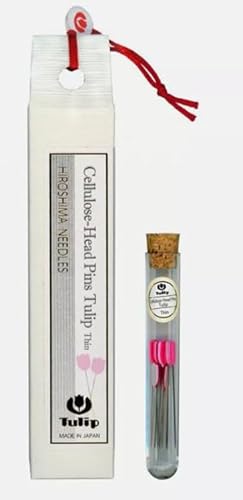
Tulip Hiroshima pins are widely considered the finest pins in the world due to their unique manufacturing process and superior steel density. When you are assembling a heavy-duty fisherman’s sweater or a dense, boiled-wool jacket, these pins are the only ones that won’t buckle.
The needle-sharp point is polished to perfection, allowing it to slide through dense, multi-ply yarn with almost zero resistance. This reduces hand fatigue significantly when you are pinning a heavy garment that requires a high volume of pins to maintain tension.
These are an investment, but they are incredibly durable and resistant to rust. If you frequently work with heavy, rustic wools that require a firm hand, Tulip pins will become your go-to tool.
Collins Flower Head Pins for High Visibility

Flower head pins are a favorite among knitters who struggle with eye strain or who are working on complex patterns that require frequent checking. The flat, colorful flower heads lie perfectly flush against the knitting, making it easy to see exactly where your seam alignment starts and stops.
Because the heads are flat, they don’t get caught on your yarn as you move the garment around your lap. This is a massive advantage when you are working on a large piece, like a coat or a heavy sweater, where catching a pin on your clothing can cause a sudden, frustrating pull.
The tradeoff is that the plastic heads are not heat-resistant; you must be very careful when using an iron near these pins. Use them for the pinning process, but remove them before you begin any aggressive steam blocking or pressing.
Why Pinning is Vital for Professional Knit Finish
Pinning is not just about holding two pieces of fabric together; it is about controlling the tension of your seams. If you don’t pin, the weight of your garment can cause the pieces to shift, leading to uneven seams and a lopsided fit.
Proper pinning allows you to distribute the "ease"—the difference between your garment measurements and your body measurements—evenly across the seam. This ensures that your sleeve heads sit correctly and your side seams hang straight.
Think of pinning as the "scaffolding" for your assembly. By taking the time to secure your edges, you are essentially telling the yarn exactly where it needs to sit, which leads to a clean, professional look that holds its shape over time.
Choosing the Right Pin Gauge for Your Yarn Weight
The general rule of thumb is that the finer the yarn, the finer the pin should be. Using a thick pin on a fingering-weight sock yarn is like trying to sew with a nail; it will inevitably damage the fibers and create permanent gaps in your work.
- Fingering/Sock Weight: Use extra-fine pins (0.5mm or smaller).
- DK/Worsted Weight: Standard-gauge pins are generally sufficient.
- Bulky/Super-Bulky: Use long, sturdy steel pins to ensure they don’t bend.
Always test your pin on a swatch before diving into the actual garment. If the pin leaves a visible hole that doesn’t close up when you gently tug the fabric, you need a thinner pin.
Best Practices for Pinning Delicate Hand Knits
When pinning hand knits, always insert the pin parallel to the seam line rather than perpendicular to it. This allows you to sew your seam without having to remove every single pin as you go, which keeps the fabric stable until the very last stitch.
Avoid over-stretching your fabric while pinning. It is natural to want to pull the pieces taut to make them fit, but this can cause the garment to lose its intended drape and shape. Instead, let the fabric lie naturally and use more pins to secure the alignment.
If you are working with delicate fibers like mohair or angora, be extra careful. These fibers are prone to snagging, so ensure your pins are perfectly smooth and free of any burrs or rough spots before you start.
How to Prevent Rust Marks on Your Finished Garments
Rust is the enemy of every knitter, especially those who live in humid climates or who block their garments with water. The most effective way to prevent rust is to never leave your pins in your knitting for extended periods, especially if the garment is damp.
After you have finished your assembly, remove all pins immediately and store them in a dry container. If you notice a pin starting to look dull or discolored, discard it immediately; a single rusty pin can ruin hundreds of hours of work.
If you are concerned about rust, look for high-quality stainless steel or nickel-plated pins, which are much more resistant to oxidation. A little bit of maintenance goes a long way in ensuring your hand-knitted treasures remain in pristine condition for years to come.
The right sewing pin is a small investment that pays dividends in the quality and longevity of your hand-knit garments. By matching the pin gauge to your yarn weight and choosing the right material for your project, you ensure that your seams are as beautiful as your stitch patterns. Take the time to pin with intention, and your finished sweaters will reflect the precision and care you poured into every loop. Happy seaming, and may your seams always lay perfectly flat.