6 Best Seam Gauges For Hem Measurements To Own
Achieve professional hems with our top 6 seam gauges. This guide compares essential tools to ensure precise measurements and perfect finishes for every project.
Achieving a professional finish on a hand-knit garment often comes down to the quality of your hem. While we spend hours perfecting our tension and stitch definition, a wobbly or uneven hem can undo all that hard work. Investing in a reliable seam gauge transforms a tedious chore into a precise, satisfying step in your finishing process. These six tools represent the gold standard for ensuring your knitwear looks as polished on the inside as it does on the outside.
Clover 5-in-1 Sliding Gauge: Best Overall Choice


This tool is the Swiss Army knife of the sewing room, and it earns its place in every serious knitter’s notions bag. Its versatility allows you to measure hems, create buttonhole spacing, and even mark circles with ease.
The sliding marker stays exactly where you set it, which is a lifesaver when you are working with slippery fibers like silk or bamboo blends. If you are prone to "eyeballing" your measurements, this gauge forces the discipline needed for a consistent, professional-looking hem.
Because it combines multiple functions into one slim profile, it reduces the clutter in your project bag. It is the most reliable choice for a knitter who wants one tool that does everything well.
Dritz Ezy-Hem Gauge: Best for Curved Hems

Knitted garments often feature subtle shaping at the hemline, making a rigid, straight ruler frustrating to use. The Dritz Ezy-Hem is designed specifically to handle those slight curves without distorting your delicate fabric.
The heat-resistant material is a massive advantage if you are using a steam iron to block your hem into place. You can press your iron directly against the edge of the gauge, ensuring the fold is crisp and permanent.
This is particularly useful when working with wools that have a high memory, as it helps "set" the hem permanently. Just be careful not to press too hard, as you want to encourage the fibers to relax rather than flatten them into a lifeless state.
Collins Metal Hem Gauge: Best Durable Option

If you are the type of knitter who keeps their tools for decades, a metal gauge is an essential investment. The Collins Metal Hem Gauge won’t warp, crack, or melt if you accidentally leave it too close to your iron.
The markings are etched directly into the metal, meaning they won’t rub off after years of friction against your yarn. For those working with heavy, rustic wools that can be abrasive, this tool stands up to the wear and tear beautifully.
While it lacks the sliding mechanism of plastic versions, its simplicity is its greatest strength. It is a "set it and forget it" tool that provides a solid, immovable edge for folding your hem exactly where you want it.
Dritz Sewing Gauge: Best for Precise Measuring
Precision is non-negotiable when you are working with fine-gauge knitting or intricate lace borders. This classic sliding gauge offers a level of accuracy that makes it the go-to for measuring small, repetitive hems.
The sliding pointer is incredibly responsive, allowing you to move it by increments of a millimeter. When you are folding a delicate hem on a fingering-weight cardigan, this level of control prevents the "stair-step" effect that can occur with less precise tools.
It is lightweight and unobtrusive, making it easy to keep on your lap while you work. If your project requires absolute symmetry, this gauge is your best defense against uneven finishing.
Singer Sewing Gauge: Best Budget-Friendly Pick
You don’t need to spend a fortune to get a high-quality result, and the Singer Sewing Gauge proves that point. It is a straightforward, no-frills tool that performs its primary function perfectly every single time.
It is ideal for the beginner knitter who is just starting to build their collection of finishing tools. It handles basic hem folding and seam allowance marking with the same reliability as tools that cost twice as much.
While it may not have the bells and whistles of a 5-in-1 tool, it is durable enough to last for many projects. If you tend to lose your notions, this is the one you won’t mind replacing.
Nancy Zieman Point 2 Point: Best for Corners
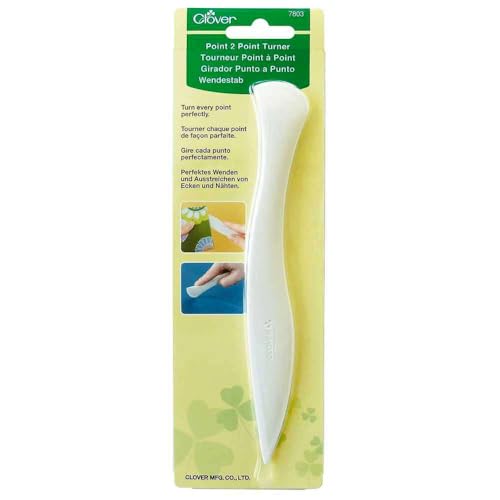
Knitted corners can be notoriously difficult to keep square, especially when you are folding over a heavy, bulky weight yarn. The Point 2 Point gauge is designed to help you turn perfect corners every time you fold a hem.
It acts as a template for your corners, ensuring that your folds are perfectly mitered and consistent. This is a game-changer for finishing blankets or structured jackets where a sloppy corner would be immediately obvious.
It takes the guesswork out of the geometry, allowing you to focus on the tension of your stitches rather than the math of the fold. It’s a specialized tool, but for those who value clean edges, it is indispensable.
Why Accurate Hemming Matters for Your Knits
A hem is the frame for your knitting, and a poorly executed frame ruins the entire picture. When your hem is uneven, the weight of the garment hangs incorrectly, leading to unsightly pulling or rippling in the fabric.
Accurate hemming is especially critical for knits because of their inherent elasticity. If you fold a hem unevenly, you are essentially "locking in" that distortion, which can cause the garment to twist as it is worn.
By using a gauge, you ensure that the hem has a uniform depth, which allows the fabric to drape naturally. A well-measured hem supports the structure of the garment and prevents it from losing its shape over time.
Essential Features to Look for in a Hem Gauge
When shopping for a gauge, prioritize tools that offer clear, high-contrast markings that are easy to read in low light. You want a tool that feels comfortable in your hand and doesn’t slip against the texture of your yarn.
- Heat resistance: Essential if you plan to steam-press your hems.
- Clear markings: Look for etched or deeply printed numbers.
- Adjustability: A sliding marker is superior for repetitive measurements.
- Material density: It should be rigid enough to act as a firm folding guide.
Consider the weight of your projects as well. If you work primarily with bulky wools, a thicker, more rigid gauge will provide better leverage than a flimsy, thin one.
Metal vs Plastic Gauges: Which Should You Use?
Metal gauges are the workhorses of the knitting world, offering unmatched durability and heat resistance. They are perfect for the knitter who uses steam blocking on every project and wants a tool that will never deform.
Plastic gauges, conversely, are often lighter and sometimes feature more complex, multi-functional designs. They are excellent for travel or for knitters who prefer a softer touch on their delicate fibers to prevent snags.
Ultimately, the choice comes down to your personal workflow and how you handle your tools. If you are hard on your gear, go metal; if you value versatility and lightweight convenience, a high-quality plastic gauge will serve you well.
How to Achieve Perfect Hems Every Single Time
Start by blocking your piece flat before you even attempt to fold the hem. A relaxed, blocked piece of knitting is much easier to measure and fold than one that is still tight from the needles.
Use your gauge to mark the fold line with a tailor’s chalk or a removable pin, rather than trying to measure and fold in one go. This two-step process ensures that you aren’t fighting the natural stretch of the knit while trying to maintain your measurement.
Finally, always use a gentle hand when pressing. Let the steam do the work of relaxing the fibers into the new shape, and never drag your iron across the hem, as this will stretch out your hard-earned stitches.
Choosing the right seam gauge is about respecting the time and effort you have poured into your knitting. Whether you opt for a versatile sliding tool or a sturdy metal guide, the goal is to create a finish that elevates your work. Take the time to measure properly, and your hand-knits will possess that elusive, professional quality we all strive for. Happy knitting, and may your hems always be perfectly straight.