6 Best Sewing Tweezers For Delicate Thread Work
Struggling with tiny stitches? Discover the 6 best sewing tweezers for delicate thread work to boost your precision. Read our expert guide and upgrade your kit.
Fraying ends, split plies, and elusive yarn tails are the silent enemies of a polished finished object. While a tapestry needle is the primary tool for weaving, a high-quality pair of tweezers provides the surgical precision required for fine lace or slippery silk blends. Mastering the art of the fiber finish often comes down to the quality of the small accessories stashed in a project bag. Selecting the right implement can mean the difference between a seamless join and a frustrating, visible knot.
Dumont Style 7SP Tweezer: The Ultimate Precision


The Dumont Style 7SP is the gold standard for those who demand absolute accuracy. These tweezers feature an incredibly fine, curved point that excels at grabbing individual fibers without damaging surrounding stitches.
For knitters working with lace-weight mohair or fine silk, this tool is indispensable. It allows for the retrieval of dropped stitches buried deep within an intricate cable or a delicate lace repeat.
The price point is higher, reflecting the specialized manufacturing required for such high-end metalwork. However, for those who spend months on a single heirloom project, the ability to manipulate fibers with this level of control is an investment in the final aesthetic.
Gingher Curved Tip Tweezers: Best for Sergers
Gingher is a name synonymous with quality in the sewing world, and their curved tip tweezers are no exception. The intentional bend in the tip provides an ergonomic advantage when reaching into tight machine mechanisms.
These are essential for those who use sergers or coverstitch machines for garment construction. Clearing lint from looper areas or re-threading needle eyes becomes significantly less cumbersome with the offset angle provided by this design.
While primarily intended for machine maintenance, these also work well for picking out machine-sewn seams. The curve allows for better visibility, ensuring the fabric remains unscathed during the delicate process of unpicking.
iFixit Precision Tweezers: A Great Budget Pick

Originally designed for electronics, the iFixit precision set is a surprisingly effective addition to any knitting kit. These tweezers offer high-grade steel construction at a fraction of the cost of boutique fiber tools.
The variety of tips included in the set makes this a versatile choice for a multi-craft household. Having both blunt and fine-pointed options ensures that whether you are manipulating chunky wool or thin mercerized cotton, the right tool is always within reach.
Budget-friendly does not have to mean flimsy. These tools are durable enough to handle heavy-duty fibers like linen or hemp without bending or losing their alignment.
Excel Blades K7 Tweezer: Best Self-Closing
Self-closing tweezers, often called cross-action tweezers, operate on a unique principle: they hold the item securely without constant finger pressure. This feature is a game-changer when attempting to thread needles with extremely small eyes.
For knitters who struggle with dexterity or hand fatigue, the K7 alleviates the need to maintain a firm grip on the tool. Simply squeeze to open, release to grab, and focus entirely on the delicate alignment of the yarn tail.
This design is particularly useful when grafting stitches using the Kitchener stitch. It provides a steady, hands-free hold on the yarn, allowing for precise placement through the live stitches of the fabric.
Xuron 450 Tweezer: The Angled Tip Champion
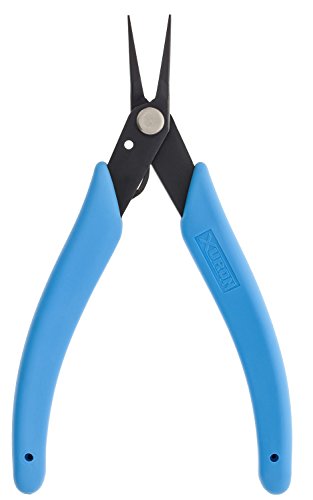
The Xuron 450 features a uniquely angled tip that offers a superior line of sight compared to straight varieties. This geometry is vital when you need to see exactly where your yarn is being positioned within a dense knit fabric.
The ergonomic handle design reduces strain, making them an excellent choice for long finishing sessions. If the goal is to weave in a large number of ends on a stranded colorwork sweater, these will minimize hand cramping.
The grip is secure, which is essential when working with superwash wool or other slippery fibers that tend to slide out of standard metal tools. It is a reliable workhorse for the serious maker.
Clover Bent Tip Tweezers: For Weaving In Ends

Clover is a staple brand for a reason, and their bent tip tweezers are specifically engineered for the needs of the hand-crafter. The angled design is optimized for maneuvering yarn tails into the back of knitting work.
These are the ideal companion for securing loose ends on intricate intarsia or Fair Isle projects. They reach behind the colorwork floats to pull the yarn tail through, hiding the finish completely.
They are lightweight and comfortable, making them easy to toss into a small project bag. If you prioritize portability and a tool that does exactly what it promises, this is the practical choice.
How to Choose the Best Tweezers for Your Craft
When choosing a tweezer, start by evaluating the fiber weight and project type. Heavy wools require more grip and a wider tip, while fine alpaca or silk demands a sharper, more delicate point.
Consider the material of the tool itself. Stainless steel is preferred for its rust resistance, especially if you live in a humid climate or frequently store your tools near liquids like blocking water.
Finally, think about your hand comfort. Ergonomic handles are worth the extra cost if you frequently engage in long sessions of finishing work, such as weaving in ends for a full-sized sweater or afghan.
Straight vs. Curved vs. Angled Tips Explained
Straight tweezers are best for general tasks like picking out a stray thread or grabbing a single, loose fiber. They offer the most direct tactile feedback but can obstruct your view of the work.
Curved tips are superior for reaching into deep crevices, such as the space between a stitch and a cable crossing. They provide a better angle for pulling yarn through layers of fabric without stretching the stitches.
Angled tips provide the best combination of visibility and reach. By offsetting the handle from the tip, these tools allow the knitter to see the exact point of contact, which is critical when working with dark-colored yarns.
Beyond Threading: Uses for Tweezers in Your Kit
Tweezers have many lives beyond just weaving in ends. They are excellent for removing stubborn bits of debris, such as hay or grass, from hand-spun or rustic wool yarns.
They also act as an emergency crochet hook for snagged stitches. If a snag appears on a garment, you can use the tweezers to pull the loop back to the interior of the knit, effectively repairing the issue without needing to re-knit the section.
Keep a pair in your blocking kit as well. They are perfect for adjusting pins or nudging the edge of a lace project into the exact shape needed for perfect symmetry.
Keeping Your Tweezers Sharp and Rust-Free
Treat your tweezers as precision instruments. Avoid using them to pry or pull apart tight knots, as this can misalign the tips and render them useless for grabbing thin fibers.
Wipe the tips clean after each use with a dry cloth to remove oils, moisture, or fiber debris. If they become sticky from handling dyed yarn, a quick wipe with a small amount of rubbing alcohol will restore their grip.
Store them in a dedicated case or a tool roll rather than tossing them loosely into a notions pouch. A protected tip ensures that your tool remains as effective on its hundredth use as it was on its first.
The right pair of tweezers is a small but mighty addition to any project bag, providing the control needed for a truly professional finish. Whether tackling intricate lace or everyday sweater construction, these tools allow for the precision that sets handmade items apart. Invest in the right tool for your specific fiber habits, and enjoy the ease of a perfectly finished project.