7 Best Needle Threaders For Small Eye Needles
Struggling with tiny eyes? Discover the 7 best needle threaders designed for precision, ease, and efficiency to make your sewing projects frustration-free.
We have all been there: sitting in the perfect light, ready to weave in those final ends, only to spend twenty minutes squinting at a tiny needle eye. Whether you are working with delicate lace-weight mohair or fine silk, the right tool turns a moment of frustration into a seamless finish. A quality needle threader is not just a convenience; it is an essential piece of equipment for preserving your eyesight and your patience. Let’s look at the best tools to help you master those tiny needle eyes once and for all.
Clover Desk Needle Threader: Best for Efficiency


If you are working on a project that requires frequent color changes or constant switching between tapestry needles, this desk-bound unit is a game changer. It functions as a stationary hub, allowing you to thread your needle with a single, swift motion.
This tool is particularly helpful for knitters who struggle with hand tremors or diminished fine motor skills. Because the device does the heavy lifting, you don’t need the steady hands required to guide a thin wire through a microscopic opening.
However, keep in mind that this is not a portable tool. If you are a traveling knitter who likes to finish ends on the train or at a knit-night, you will need a secondary, smaller option for your notions bag.
Dritz Deluxe Needle Threader: Best for Precision

The Dritz Deluxe model stands out because it utilizes a fine, high-tension wire that resists bending even under pressure. When you are threading a blunt-tipped tapestry needle, that structural integrity is everything.
I often recommend this to knitters who use high-twist, multi-ply yarns that tend to fray easily. The precision of the Dritz mechanism ensures the yarn is pulled through the eye cleanly, without catching or splitting the fibers.
The tradeoff here is the wire’s delicacy. While it is precise, it is still a wire; if you force it through an eye that is physically too small for the thickness of your yarn, the wire will eventually kink or snap.
Bohin Wire Needle Threader: Best for Small Eyes
Bohin is a heritage brand that understands the nuance of needle gauge better than almost anyone. Their wire threaders are designed specifically for the ultra-fine eyes found in beading or delicate embroidery needles.
If you are incorporating beads into your lace shawls or using fine silk thread for sewing on buttons, this is your go-to. The wire is exceptionally thin, fitting into gaps that would cause other threaders to buckle.
Because these are so slim, they can be easy to lose in a cluttered knitting basket. I suggest keeping them attached to a magnet or a dedicated notions tin so they don’t disappear into the abyss of your project bag.
Singer Assorted Threaders: Best Budget Option

These classic aluminum-tab threaders are the "workhorse" of the fiber arts world. You get a variety of sizes in one pack, which is perfect for a beginner who hasn’t yet settled on their preferred needle brand or size.
They are inexpensive enough that you can stash one in every project bag you own. If you lose one, you aren’t out much money, and the simplicity of the design means there is very little that can go wrong mechanically.
The downside is longevity. The aluminum tab is prone to snapping off the wire after repeated use, especially if you are threading thicker wools. Think of these as reliable, disposable essentials rather than heirlooms.
Colonial Embroidery Threader: Best Ergonomic Pick
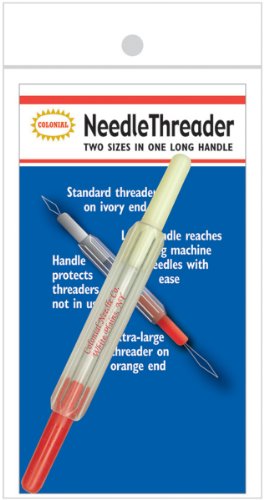
When you have been knitting for hours, your hands can become stiff and fatigued. The Colonial Embroidery Threader features a larger, more substantial handle that provides a secure grip, making it much easier to hold than the standard thin metal tabs.
This ergonomic design is a godsend for knitters with arthritis or carpal tunnel issues. It allows you to use your whole hand to manipulate the tool rather than relying on a delicate "pinch" grip.
It is slightly bulkier than other options, which might be a consideration if you are trying to pack light. However, for home use or long sessions at your favorite knitting chair, the comfort it provides is well worth the extra space.
Tulip Steel Needle Threader: Best for Durability

Tulip is legendary for their high-quality steel tools, and their needle threader is no exception. It is built with a level of craftsmanship that makes it feel like a permanent part of your toolkit rather than a consumable item.
The steel construction means it won’t bend or warp as easily as cheaper alternatives. If you are a frequent knitter who works with heavier, more stubborn yarns, this tool will withstand the tension without failing.
The investment is higher upfront, but it is a "buy it once" scenario. If you are tired of throwing away flimsy threaders every few months, upgrading to a Tulip steel model will save you money and frustration in the long run.
Prym Comfort Needle Threader: Best for Beginners

The Prym Comfort threader features a unique, user-friendly design that guides the thread into place with minimal effort. It is intuitive, removing the guesswork that often makes beginners feel like they are doing something "wrong."
It is particularly effective for those new to finishing techniques who haven’t yet developed the "knitter’s touch" for threading needles. It handles the alignment for you, so you can focus on the actual weaving of the ends.
Like the Clover desk model, it is a bit more substantial than a simple wire loop. It is a great choice for your primary sewing station, though you might still want a flat wire threader tucked into your travel kit.
How to Select the Right Threader for Your Needles
- Consider the Eye Size: Always match the threader wire thickness to the needle eye; if the wire is tight, you risk damaging both the tool and your yarn.
- Evaluate Portability: Do you need something for your travel bag, or will this stay on your craft table?
- Assess Hand Comfort: If you have hand fatigue, prioritize threaders with larger, ergonomic handles.
- Match to Yarn Weight: Thicker, fuzzy yarns (like mohair or lofty wool) require a slightly larger needle eye and a more robust threader.
Tips for Threading Fine Yarn Through Small Eyes
When working with fine yarns, the biggest challenge is the tendency for the yarn to "fuzz" or fray at the cut end. I recommend a tiny dab of beeswax on the end of the yarn to hold the fibers together before you attempt to thread it.
Another pro-tip is to cut your yarn at a sharp, 45-degree angle rather than straight across. This creates a tapered point that is much easier to guide through the eye of the needle.
If you are still struggling, try "folding" the yarn over the wire loop rather than trying to poke the end through. By creating a small loop of yarn and pulling that through the needle eye, you bypass the issue of a fraying yarn end entirely.
Essential Maintenance for Your Needle Threading Tools
Treat your threaders with the same care you give your favorite knitting needles. Keep them in a dry, clean environment to prevent any oxidation on the metal components.
Avoid using force if you feel resistance. If the threader doesn’t slide through the eye easily, stop and check if the yarn is too thick or if the needle eye is clogged with lint or fiber debris.
Periodically check the wires for kinks or bends. A damaged wire can snag your yarn and cause it to break mid-weave, which is the last thing you want after finishing a complex project.
Finding the right needle threader is a small but significant step toward making your fiber arts practice more enjoyable and sustainable. By choosing a tool that aligns with your specific needs—whether that is ergonomic comfort or high-end durability—you remove one more barrier between you and your finished project. Don’t settle for tools that frustrate you; invest in the right gear, and your hands will thank you. Happy knitting, and may your ends always be woven in with ease.