7 Best Knitting Pattern Planners For Design Sketches
Discover 7 top knitting planners to streamline your design sketches. These tools help organize patterns, track yarn, and refine your creative workflow easily.
Every knitter eventually reaches the point where a scrap of paper or a digital note simply isn’t enough to capture their creative vision. Whether you are modifying a sweater pattern to fit your unique measurements or drafting an original lace motif, having a dedicated space for your sketches is essential. A good planner acts as a bridge between your initial inspiration and the final, blocked garment. Here are seven of the best tools to help you organize your design process and keep your knitting life on track.
The Knitters Planner: Best Overall Design Tool


The Knitters Planner is a powerhouse for those who treat knitting as a serious craft rather than just a weekend hobby. It integrates the logistical side of project management with the creative side of design, making it a comprehensive companion for your year.
What sets this planner apart is how it balances space for calendar management with detailed project pages. You get specific areas to track your yarn stash, needles, and gauge swatches, which is vital when you are working with different fiber types like wool, alpaca, or cotton.
The tradeoff here is size; it is a substantial book that isn’t meant to be tossed into a small project bag. If you want one central hub for all your fiber arts data, this is the gold standard.
Mindful Making Journal: Best for Pattern Notes
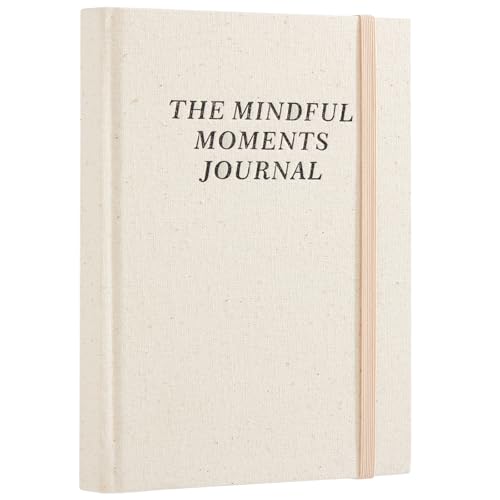
If you struggle with remembering why you made a specific change to a pattern midway through a project, the Mindful Making Journal is your best friend. It focuses heavily on the process of knitting rather than just the final product.
The journal encourages you to document your thoughts, feelings, and technical adjustments as you go. For example, if you decide to swap a cable pattern for a simple knit-purl texture to save yarn, you can document exactly where that change occurred.
It’s perfect for the knitter who values the meditative aspect of the craft. Just be aware that it offers less structure for complex mathematical drafting compared to more technical planners.
The Knitting Pattern Sketchbook: Top Choice

For those who view knitting as a form of architecture, The Knitting Pattern Sketchbook provides the perfect canvas. It offers a clean, uncluttered space for you to draw out your garment silhouettes and stitch patterns.
The grid paper is specifically designed to help you map out stitch counts and increase/decrease rows. It’s an invaluable tool when you are calculating how to shape a neckline or taper a sleeve for a custom fit.
The simplicity is its greatest strength, but it requires you to be disciplined about your own note-taking. It doesn’t hold your hand with pre-filled templates, so it’s best for designers who already have a basic understanding of garment construction.
Fringe Association Field Guide: Best for Layouts

The Fringe Association Field Guide is a masterclass in minimalist design and functional layout. It is less of a "planner" and more of a structured space for recording the technical details of your knitting projects in a highly organized way.
Its layout is particularly good for tracking multiple projects simultaneously, which is a common reality for many of us with "multiple-project syndrome." It allows you to see the progression of your work at a glance.
This is a fantastic choice if you prefer a streamlined, professional aesthetic. It won’t give you space for long-form journaling, but it excels at keeping your technical data clear and accessible.
Cocoknits Maker’s Journal: Best for Organization
Cocoknits has a legendary reputation for creating tools that solve actual problems for knitters, and their journal is no exception. It is designed with the modularity that defines their entire brand, focusing on how different parts of a project fit together.
The journal includes pages for recording your gauge, yarn yardage, and even the specific needle type used. This is crucial because a metal needle will produce a different gauge than a wooden one, even with the same yarn.
If you are a fan of the Cocoknits method of construction, this journal will feel like a natural extension of your workflow. It is highly structured, which is a blessing for those who get overwhelmed by a blank page.
The Knitter’s Handy Book: Best for Calculations

Sometimes you don’t need a journal for your feelings; you need a tool that handles the math. The Knitter’s Handy Book is essentially a reference manual that doubles as a workspace for your own pattern drafting.
It provides the formulas you need to calculate stitch counts for various yarn weights and garment sizes. It takes the guesswork out of resizing patterns, which is a common hurdle for knitters moving from standard sizes to custom fits.
This isn’t a "pretty" journal for your sketches, but it is a functional tool that will save you from ripping out your work. Treat it as a technical manual for your design library.
My Knitting Journal: Best for Design Sketches

My Knitting Journal strikes a lovely balance between artistic expression and technical record-keeping. It provides generous space for sketching out your ideas, whether you are designing colorwork charts or complex cabling.
The paper quality is usually high enough to handle pencils and pens without bleeding, which is important for those who like to color-code their charts. It allows you to visualize your project before you ever pick up a needle.
It is a great choice for the creative knitter who wants to see their ideas come to life on paper first. It’s less about rigid data entry and more about the creative process of design.
How to Choose a Planner for Your Knitting Style
Choosing the right planner depends entirely on what you want to achieve as a maker. If your goal is to finish more projects, look for a planner with strong progress-tracking features.
If you are interested in designing your own patterns, prioritize a planner with graph paper and room for mathematical notes. Don’t be afraid to mix and match; some knitters use a technical notebook for math and a separate, smaller journal for project memories.
Remember that a planner is a tool, not a chore. If you find yourself avoiding it, it’s likely the wrong format for your brain, so don’t hesitate to switch to something simpler.
Key Features to Look for in Design Sketchbooks
When evaluating any sketchbook for your knitting projects, look for specific features that make the drafting process easier. High-quality paper is non-negotiable if you plan on erasing and redrawing your stitch patterns.
- Grid Paper: Essential for mapping out stitches and rows.
- Project Templates: Pre-filled sections for gauge, yarn info, and needle size.
- Stash Tracking: Space to record fiber content, yardage, and dye lots.
- Portability: A size that actually fits in your project bag.
Always check the binding as well. A lay-flat binding is significantly more useful when you are trying to sketch while your hands are busy with a project.
Essential Tools for Drafting Knitting Patterns
Beyond the planner itself, you need a few core tools to translate your ideas into a finished garment. A good set of calipers or a reliable tape measure is vital for taking accurate body measurements.
You will also need a variety of drafting supplies, such as high-quality mechanical pencils and erasers that won’t smudge your work. If you are designing colorwork, a set of colored pencils is essential for visualizing your motifs.
Finally, keep a calculator nearby. No matter how good your planner is, the math of knitting—calculating increases, decreases, and yarn requirements—is the foundation of every successful design.
Finding the right planner is a personal journey that evolves alongside your skills as a knitter. Whether you prioritize deep technical calculations or a space to record your creative inspirations, the best tool is the one that you actually enjoy using. Take the time to consider how you think about your projects, and choose a planner that supports your unique design process. Happy knitting, and may your swatches always match your patterns.