6 Best Fountain Pen Friendly Notebooks For Artists
Elevate your sketching with our top 6 fountain pen friendly notebooks for artists. Discover paper that prevents feathering and bleeding. Shop your favorite now!
Fountain pen ink interacts with paper much like dye interacts with fiber. Just as a high-twist superwash wool resists felting while a loosely spun singles yarn drinks up moisture and blooms, fountain pen paper dictates whether ink stays crisp or feathers into a fuzzy mess. Selecting the right notebook ensures that every stroke remains as intentional as a perfectly executed kitchener stitch. These six options provide the structure and surface quality necessary for any artist or note-taker to thrive.
Rhodia DotPad: Best for Sketching and Ink Tests


The Rhodia DotPad is the workhorse of the stationery world, much like a reliable bamboo needle that offers just enough grip to keep slippery mohair in check. Its signature orange branding hides an exceptionally smooth surface that prevents ink from feathering, even when using broader, wetter nibs.
The dot grid pattern acts as a subtle guide, providing structure for technical sketching without interfering with freehand movement. It is the ideal medium for testing ink properties like shading and dry times.
Think of this paper as a high-quality, plied merino yarn; it is consistent, predictable, and holds its shape under pressure. If the goal is rapid iteration or logging ink combinations, the detachable pages make it easy to organize swatches or discard mistakes without disrupting a bound journal.
Tomoe River Paper: The Ultimate for Ink Sheening
Tomoe River paper is the silk of the notebook world: incredibly thin, slightly translucent, and capable of displaying colors in ways thicker papers simply cannot match. It is uniquely engineered to keep ink sitting on the surface rather than soaking into the fibers.
Because the ink stays on top, this paper is the undisputed champion for showcasing sheen—the metallic or contrasting color that appears when ink pools on the page. It requires patience, however, as longer dry times are the price paid for such high-end results.
Just as one handles delicate lace-weight silk with care to avoid snagging, pages in a Tomoe River notebook require a gentle touch to prevent smudging. It is the premier choice for artists who prioritize vibrant, long-form journaling where the character of the ink is just as important as the drawing itself.
Leuchtturm1917: Best Overall for Art Journaling

The Leuchtturm1917 is a staple for a reason, offering a sturdy, reliable foundation that mimics the versatility of a classic worsted-weight wool. It balances paper quality with a robust binding, making it the perfect companion for daily carry and long-term project planning.
The paper handles most fountain pen inks without significant bleed-through, provided the nib size is not excessively broad. It features numbered pages and a table of contents, which are invaluable for tracking the progress of an extended art series or maintaining a repository of design ideas.
While it lacks the ultra-smooth finish of specialized papers, it provides a tactile experience that suits pencil sketching and ink linework equally well. For those who want one notebook that handles a bit of everything without needing specialized care, this is the practical, well-rounded choice.
Midori MD Notebook: A Minimalist Artist’s Choice
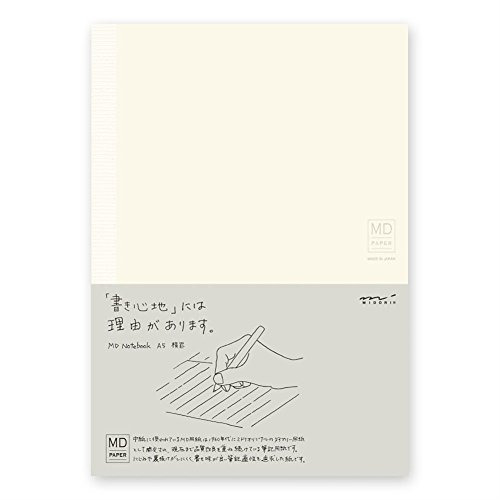
Midori MD paper feels distinctively organic, with a slightly textured, cream-colored surface that makes writing or drawing feel grounded and intentional. It lacks the slickness of coated papers, offering a subtle feedback that is reminiscent of working with untreated woolen yarn.
This notebook is designed for the minimalist who wants the focus to remain entirely on the marks being made on the page. The lay-flat binding allows for expansive drawings that span across the center crease without any disruption to the composition.
It handles a wide range of inks with minimal feathering, proving that texture does not have to come at the expense of ink performance. If the aesthetic of the workspace leans toward clean lines and simple tools, this notebook provides the perfect canvas.
Canson XL Mix Media Pad: For Heavy Ink and Washes
The Canson XL Mix Media pad is the heavy-duty needle of the bunch, capable of handling materials that would shred thinner, lighter sheets. It is designed to withstand liquid, making it the superior choice for artists who incorporate watercolor washes or heavy ink layers alongside their fountain pens.
Unlike standard fountain pen paper, this surface has enough tooth to grab pigment and control the spread of water. It is thicker and more forgiving, providing the structural integrity needed for mixed-media experimentation.
Using this pad is similar to choosing a high-ply, sturdy yarn for a cabled sweater; it is built to hold up under weight and complexity. When the project calls for layering or significant moisture, this paper prevents the curling and buckling that thinner alternatives often suffer.
Clairefontaine Triomphe: Best for Smooth Linework
Clairefontaine Triomphe is synonymous with a frictionless writing experience, featuring a satin-like finish that allows nibs to glide effortlessly. It is the closest equivalent to a polished nickel needle, where speed and precision are paramount.
This paper is exceptionally white and smooth, which makes the color of any ink pop with high contrast. It is a favorite among calligraphers and illustrators who demand perfectly defined, razor-sharp lines that never spread into the fibers.
The lack of tooth means that ink takes a bit longer to dry compared to more porous papers, so a blotting paper is a helpful accessory. For refined, detail-oriented work where the line quality must remain absolute, nothing else performs with such consistent, clinical accuracy.
What to Look for in Fountain Pen Friendly Paper
When selecting paper, prioritize surface sizing—the coating that prevents ink from sinking deep into the wood pulp. A well-sized paper ensures the ink stays crisp and dark, much like choosing a tightly plied yarn prevents the fuzziness of haloed fibers.
- Absorbency: Too much makes the ink feather like a loose, fuzzy wool.
- Smoothness: Essential for preventing nib friction or “scratchy” feedback.
- Texture: Decide if a bit of “tooth” is needed for artistic control or if a slick surface is preferred.
- Coating: Look for papers labeled for fountain pens to ensure they are designed to resist capillary action.
Paper Weight (GSM) Explained for Ink Artists
GSM (grams per square meter) measures the density of the paper, but it is not a direct indicator of quality. A heavy paper can still be porous, while a thin, high-quality sheet like Tomoe River can be surprisingly resilient.
Think of GSM in terms of yarn weight; a heavier GSM is like a bulky weight yarn that offers weight and substance, while lower GSM is like lace weight. For most fountain pen artists, a paper in the 80–100 GSM range provides a good balance of durability without becoming too bulky for a portable notebook.
Ghosting vs. Bleeding: What’s the Difference?
Ghosting occurs when the ink is visible from the reverse side of the paper, but does not penetrate through to the next page. This is common in thin, high-quality papers and is usually a minor aesthetic trade-off.
Bleeding, however, is a mechanical failure where ink pools through to the other side, often creating dots or streaks on the following sheet. This is the equivalent of a yarn break in a project; it ruins the utility of the surface and makes it nearly impossible to use both sides of the page.
Binding Types: Spiral, Stitched, and Glued
The binding mechanism directly influences how the notebook behaves during a creative session. Stitched bindings are durable and allow for a clean, professional aesthetic, but they require the paper to be broken in to lay truly flat.
Spiral bindings are the ultimate in convenience, allowing the book to fold back on itself and take up minimal desk space, much like circular knitting needles in a small travel project. Glued or “perfect” bindings are often the most affordable but can be prone to pages coming loose if the glue quality is poor or if the book is forced open too aggressively.
Choosing the right notebook for fountain pens is an exercise in balancing performance, texture, and physical format. By understanding how paper weight, sizing, and binding affect the final result, you can ensure your tools never hinder your creative process. Whether you need the heavy-duty support of a mix-media pad or the delicate, sheening capabilities of fine paper, the perfect surface is waiting to hold your next project.