6 Best Sewing Awls for Punching Holes in Leather
Need to punch leather? We review the 6 best sewing awls for precision, durability, and ease of use to help you find the perfect tool for your craft projects.
Just as selecting the right needle size for a delicate lace shawl changes the drape of your fabric, choosing the correct awl determines the integrity of your leather projects. Leatherwork and knitting share a deep respect for tools that feel like an extension of your own hands. Whether you are punching holes for a leather bag handle or securing a strap on a knitting project bag, precision is paramount. This guide explores the best tools to ensure your leatherwork is as durable and polished as your finest hand-knit sweater.
Speedy Stitcher Sewing Awl: The Best Overall Choice


The Speedy Stitcher is essentially the "circular needle" of the leather world—it is the tool everyone reaches for when they need to get the job done efficiently. It carries the thread inside the handle, allowing you to lock stitches in place much like securing a yarn tail at the end of a long row.
For someone used to the rhythmic pace of knitting, this tool offers a similar flow. It is perfect for heavy-duty repairs, such as reinforcing the base of a project bag or attaching thick leather straps to a garment.
The trade-off here is bulk. Because it holds a spool, it can feel a bit clunky for delicate work, but for structural integrity, it is hard to beat.
Tandy Leather Stitching Awl: Best for Professionals
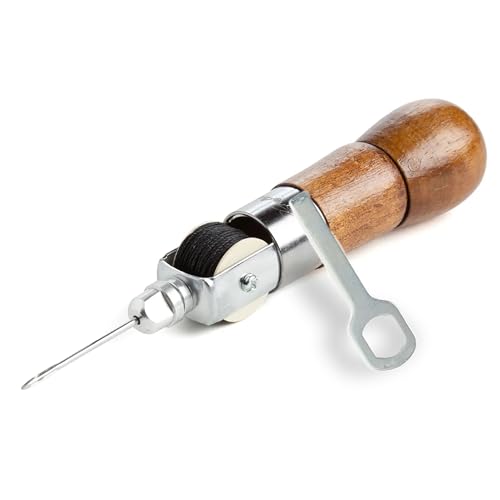
When you move from simple repairs to crafting heirloom-quality goods, you need a tool that offers consistent tension. The Tandy stitching awl is the professional’s choice because it allows for a custom fit of the blade to the handle.
Think of this like choosing between interchangeable needle tips; you can swap out blades to match the thickness of your leather, just as you swap needles to match your yarn weight. It requires a bit more skill to master the angle of the punch, but the results are significantly cleaner.
If you are serious about long-term leather crafting, invest in this. It is a workhorse that rewards patience and practice.
Weaver Leather Diamond Awl: Best for Heavy Projects

If you have ever tried to knit with thick, unspun roving, you know that the friction can be immense. The Weaver Leather Diamond Awl is designed for that same kind of "heavy lifting" where the leather is thick and resistant.
The diamond-shaped blade creates a specific hole geometry that makes pulling a thick waxed thread through much easier. It is aggressive, sharp, and designed to penetrate multiple layers without stalling.
Use this only for heavy-duty projects like belts or thick saddle leather. Using it on thin, delicate hides would be like using a size 10mm needle for fingering weight yarn—it will simply leave holes that are far too large for your thread to fill.
C.S. Osborne Scratch Awl: Best for Precision Work

Sometimes you don’t need to stitch; you just need to mark a spot or guide a needle through a tight space. The C.S. Osborne scratch awl is the equivalent of a fine-point tapestry needle for marking your place in a complex cable chart.
It is incredibly sharp and slender, making it ideal for layout work or starting a hole in delicate, vegetable-tanned leather. You won’t use this for heavy stitching, but you will use it every single time you measure and mark your patterns.
It is a simple, elegant tool. Like a good set of steel DPNs, it is a staple that you will reach for constantly without even thinking about it.
Kyokuto Japanese Awl: Best for Delicate Leatherwork
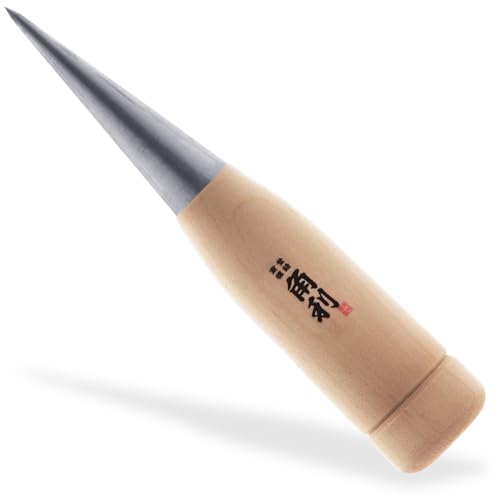
Japanese tools are legendary for their edge retention and refinement, much like high-end Japanese knitting needles. The Kyokuto awl is incredibly polished, allowing it to glide through leather with almost no resistance.
If you are working with thin, soft leathers—perhaps for a purse lining or a delicate accessory—this is the tool you want. It doesn’t tear the fibers; it parts them cleanly, ensuring your stitch line remains straight and professional.
Treat this tool with care. Because the tip is so fine, it can be damaged if you hit a hard surface, so always use a proper cutting mat underneath your work.
WUTA Professional Stitching Awl: Best Value Pick

The WUTA awl is a fantastic entry point for the maker who wants professional results without the high-end price tag. It features a comfortable, ergonomic handle that prevents hand fatigue, which is a major concern if you’ve spent hours hand-sewing a long seam.
It is a balanced tool, offering enough sharpness for clean holes while maintaining a sturdy feel. It bridges the gap between a hobbyist’s kit and a professional’s workshop.
If you are just starting your leather journey, start here. It is forgiving enough for a beginner but capable enough to stay in your kit as your skills grow.
How to Choose the Right Awl for Your Leather Craft
Choosing an awl is all about matching the tool to the fiber—or in this case, the leather. Consider the thickness of your leather: thin, supple leathers require a fine-tipped awl, while heavy, stiff leathers demand something more robust.
Think about your stitching method, too. Are you using a saddle stitch, or are you just punching holes for rivets?
- Fine leathers: Use a round or very fine diamond awl.
- Heavy leathers: Use a wider diamond awl to accommodate thicker thread.
- Marking: A scratch awl is essential for layout before you ever make a permanent hole.
Essential Tips for Punching Clean Leather Holes
Always use a proper surface, such as a self-healing mat or a poly cutting board. Punching against a hard table will dull your awl instantly, much like knitting with needles that have been chewed by a pet.
Maintain a consistent angle. If you tilt the awl while punching, your holes will be uneven, which will make your stitch line look chaotic rather than uniform.
Take your time. Leather has a "memory" of sorts; once you punch a hole, it is difficult to hide it if you make a mistake.
Maintaining and Sharpening Your Leather Awl Tips
A dull awl is a dangerous tool because it requires more force, which increases the likelihood of slipping. You should sharpen your awl regularly using a fine-grit honing stone.
Keep the original angle of the bevel consistent. If you change the angle, the tool won’t penetrate the leather as smoothly, leading to frayed edges.
After sharpening, use a leather strop with some polishing compound to remove any microscopic burrs. A mirror-polished tip will glide through leather like a hot needle through butter.
Safety Best Practices for Using Manual Sewing Awls
Always point the awl away from your body. It sounds obvious, but when you are deep in the "flow state" of a project, it is easy to become complacent.
Keep your fingers clear of the path of the awl. If you are holding a piece of leather down, ensure your fingers are well away from the area you are piercing.
Store your tools securely. An awl left on a table can easily roll off or become a hazard, so consider a dedicated tool roll or block to keep your sharp edges protected and accounted for.
Mastering the awl is a journey of patience, much like learning to master your tension or perfecting your kitchener stitch. By selecting the right tool for the specific project, you ensure that your leatherwork is built to last for generations. Remember that even the best tools require practice, so grab some scrap leather and start experimenting. Your hands will eventually learn the rhythm, and your projects will be all the better for it.