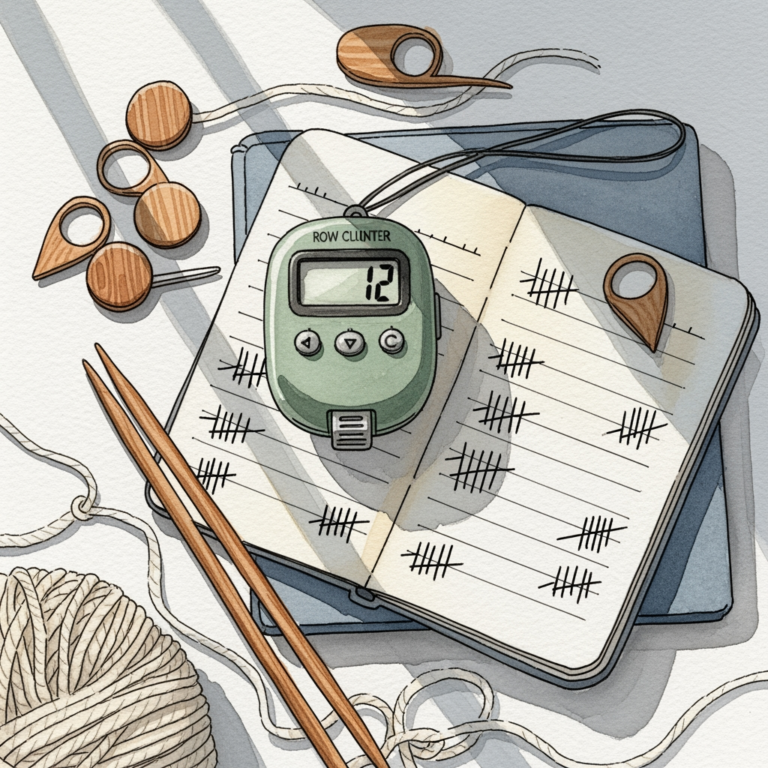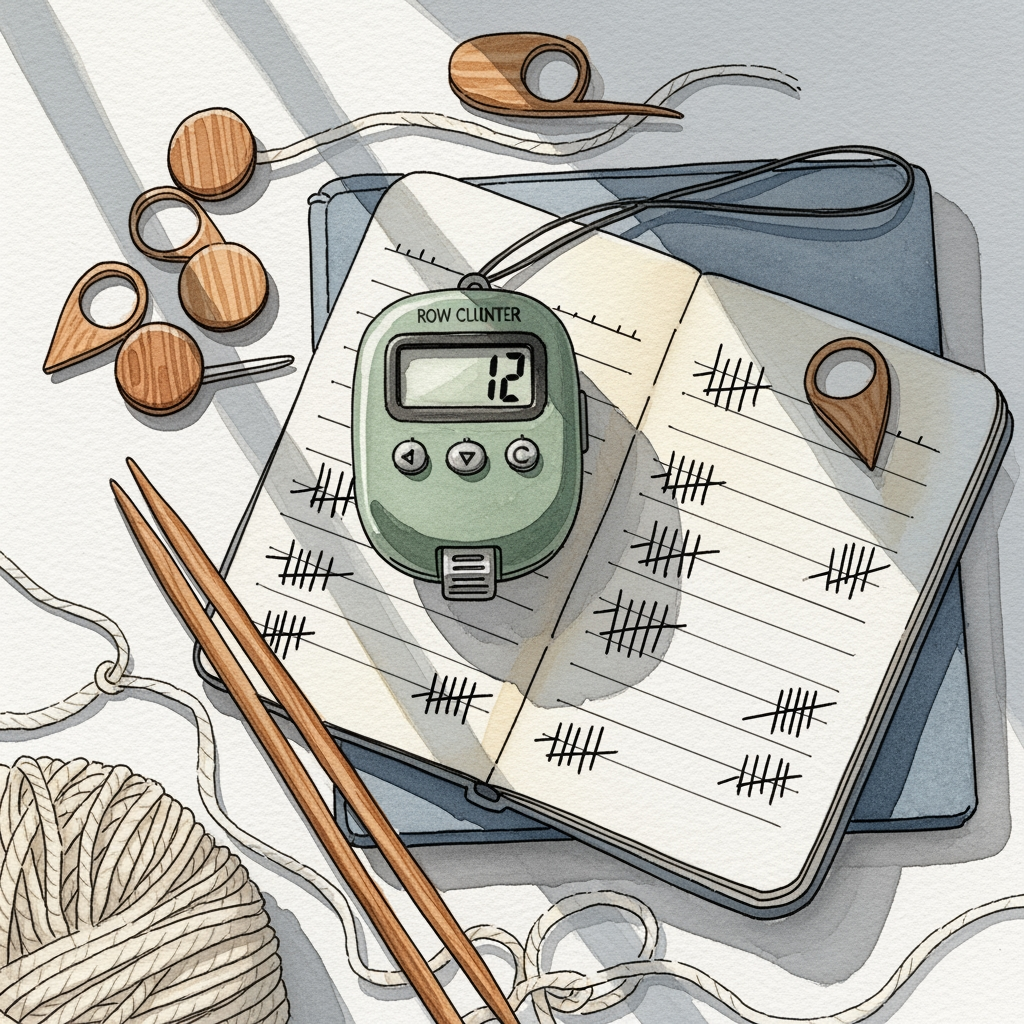
7 Best Stitch Counters For Increase Rows To Try
Tracking increase rows is vital for shaping. Explore our top 7 stitch counters that simplify complex patterns and ensure your knitting projects remain precise.
Tracking increases in a knitting project is often the difference between a perfectly shaped garment and a frustrating exercise in frogging. Whether you are shaping a raglan sleeve or expanding a complex lace shawl, keeping an accurate tally of your rows is non-negotiable. With so many tools available, finding the right method for your personal rhythm can transform your crafting experience. Here are the seven best stitch counters to help you stay on track and maintain your sanity.


Clover Kacha-Kacha: The Best Ergonomic Counter
The Clover Kacha-Kacha is a staple in many knitting bags for a reason: it is incredibly tactile and satisfying to use. The large button on the top provides a crisp, audible "click" that confirms your input without you needing to look away from your needles.
For knitters who struggle with hand fatigue, the ergonomic design is a significant advantage. Its rounded shape fits comfortably in the palm, making it easy to engage even during long sessions of lace knitting where your hands are already working hard.
However, the main drawback is its size; it is not as portable as a ring counter and can easily get lost in the bottom of a project bag. If you are prone to misplacing your tools, keep this one tethered to your yarn bowl or a specific spot on your side table.
KnitPicks Knitter’s Pride Ring Counter: Best Wearable

If you prefer to keep your hands on your needles at all times, the ring counter is a brilliant, unobtrusive solution. It sits right on your finger, allowing you to advance the count with a quick flick of your thumb.
This tool is particularly helpful when you are working on complex colorwork where looking away for even a second could result in a dropped stitch or a missed yarn-over. Because it stays on your hand, you don’t have to break your flow or search for a misplaced counter.
The trade-off here is the fit; if your hands are particularly small or large, the sizing can feel slightly awkward. It is best suited for knitters who don’t mind a bit of extra weight on their finger while navigating intricate patterns.
Cocoknits Maker’s Keep: Best Magnetic Wrist Tool
The Maker’s Keep is more than just a counter; it is a wearable command center for your knitting notions. By using a magnetic slap-bracelet base, it keeps your stitch markers and needles within reach while you manage your row counts.
This is a game-changer for knitters who frequently switch between different needle sizes or need to keep track of multiple markers during an increase row. The magnetic surface is strong enough to hold your metal tools, meaning you spend less time hunting for supplies under the sofa.
While it is a higher-end investment, the utility it offers for complex projects is hard to beat. It is ideal for the knitter who values organization and wants to keep their workspace clutter-free.
Row Counter App by Looping: Best Digital Solution
In the digital age, sometimes the best tool is the one already in your pocket. A dedicated app like Looping allows for multiple active projects, meaning you never have to worry about accidentally bumping a physical counter.
Digital apps are superior for complex patterns because they often allow you to save notes or attach photos of your progress. If you are working on a large sweater, you can keep track of your sleeve increases and body length simultaneously without needing a dozen different physical counters.
The downside is the reliance on a battery-powered device. If your phone dies mid-row, you might lose your place, so always have a backup manual method if you are traveling or attending a long knitting retreat.
Cocoknits Leather Stitch Markers: Best Manual Aid
Sometimes, the simplest tools are the most reliable. Using leather stitch markers to track increases is a low-tech, highly effective way to manage your rows without the risk of mechanical failure.
By placing a distinct marker at the start of an increase row, you create a visual milestone that is impossible to ignore. This is especially useful for beginners who might find digital or mechanical counters distracting or confusing.
This method requires a bit more mental math, as you are counting the markers rather than reading a display. It is perfect for those who enjoy the tactile nature of knitting and want to keep their process as analog as possible.
Susan Bates Quick-Count: Best Budget Dial Counter

The Susan Bates Quick-Count is a classic for a reason: it is affordable, durable, and does exactly what it promises. The simple dial mechanism is easy to operate, even if you are working with slippery silk or delicate mohair.
Because it is so inexpensive, you can buy several and dedicate one to every active project you have on the needles. It is the ultimate "set it and forget it" tool for the knitter who has multiple projects in the works simultaneously.
Be aware that the dial can sometimes turn accidentally if it is loose in your bag. A quick tip is to keep it in a small, dedicated notions pouch to ensure your count stays accurate between sessions.
Addi Click Counter: Best Needle-Attached Option
The Addi Click Counter attaches directly to your needle, making it a seamless part of your knitting rhythm. It is perfect for those who find that stopping to reach for a counter disrupts their gauge or tension.

This tool is particularly effective for circular knitting, where you are constantly moving in a round. By having the counter right on the needle, you can click it as you pass the marker, keeping your counting perfectly synced with your work.
Keep in mind that this can add a slight bit of weight to one side of your circular needles. If you are using very thin needles for lace, this might feel a bit unbalanced, so test it out on a swatch before committing to a long project.
Why Accurate Row Counting Matters for Increases
Increases are the architecture of your knitting; they define the shape of sleeves, the depth of a neckline, and the drape of a shawl. If your count is off by even one row, the symmetry of your garment will suffer.
When you fail to track increases accurately, you often end up with a piece that is uneven or ill-fitting. This is particularly noticeable in garments made from superwash wool, which can grow significantly during blocking; any errors in shaping will become magnified once the fabric relaxes.
Precision in counting allows you to follow the designer’s intent exactly. It gives you the confidence to trust your work, knowing that the final result will match the schematic provided in your pattern.
How to Choose the Best Counter for Your Knitting
Choosing the right counter depends heavily on your personal knitting style and the complexity of the project. If you are a "process" knitter who enjoys the rhythm of clicking, a physical counter is likely your best friend.
Consider your environment as well; if you knit mostly in quiet, stationary settings, a desk-based counter is fine. If you are a commuter knitter, you need something that is secure, portable, and unlikely to reset itself in your bag.
- For complex lace: Use a digital app to track multiple pattern repeats.
- For simple stockinette: A basic dial counter is more than sufficient.
- For intricate colorwork: A finger-mounted counter keeps your focus on the yarn.
Essential Tips for Tracking Complex Lace Patterns
Complex lace patterns often require you to track both the row number and the current stitch repeat. Never rely on your memory alone, as the complexity of the yarn-overs and decreases makes it easy to lose your place.
Use a "master" counter for the total row count and a secondary method, like a row-by-row written checklist, for the specific lace sequence. This dual-layer approach ensures that even if you get distracted mid-row, you can easily pick up exactly where you left off.
Always verify your count at the end of every repeat before moving on to the next section. It is much easier to fix a mistake in the current row than it is to rip back four inches of intricate, delicate lace.
Finding the right stitch counter is a personal journey that evolves alongside your knitting skills. Whether you prefer the satisfying click of a manual tool or the convenience of a digital app, the goal remains the same: accuracy and peace of mind. Experiment with these options to see which fits your unique rhythm and project needs. Happy knitting, and may your increases always remain perfectly symmetrical.