7 Best Knitting Needles For Lace Projects To Try
Mastering lace knitting requires the right tools. Explore our top 7 needle picks, focusing on sharp tips and smooth joins for effortless, delicate stitching.
Lace knitting is a delicate dance between your hands, the yarn, and the tools you choose to guide the stitches. When you move into complex charts and fine-gauge lace, the standard needles in your kit may suddenly feel cumbersome or imprecise. Finding the right needle isn’t just about preference; it’s about choosing a partner that makes executing intricate decreases and yarn-overs feel effortless. Here are seven top-tier choices that can transform your lace-knitting experience.
ChiaoGoo Red Lace Stainless Steel Circular Needles
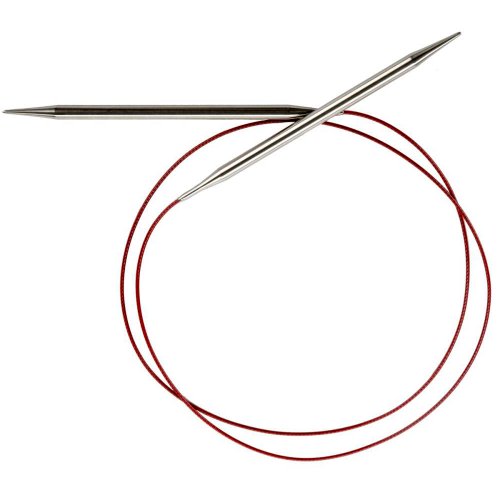

These needles are widely considered the gold standard for lace enthusiasts who prioritize a smooth, snag-free experience. The surgical-grade stainless steel provides a surface that allows yarn to glide effortlessly, which is essential when you are working with thin, high-twist lace yarns.
The signature red cable is perhaps the most celebrated feature of this line. It is memory-free, meaning it won’t coil up or fight you while you are trying to manage a large shawl project. This reduces the strain on your wrists and keeps your focus entirely on the pattern.
The tips are impressively sharp, allowing you to pick up multiple loops with ease during complex decreases like a K3tog. However, because they are so slick, they can be challenging for beginners who haven’t yet mastered their tension. If you find your stitches sliding off too easily, try slowing your pace until you get used to the speed.
Addi Rocket Lace Circular Needles for Precision

Addi Rocket needles are designed for knitters who need a bit more "bite" at the tip without sacrificing the speed of metal. They feature a slightly sharper point than standard Addi needles, making them an excellent middle ground for lace projects that involve frequent cabling or complex stitch manipulation.
The join—where the needle meets the cable—is famously seamless. In lace knitting, even the smallest bump at the join can snag a delicate silk or mohair thread, ruining the flow of your work. These needles are engineered to prevent that frustration entirely.
One thing to note is that these tips are brass-plated, which gives them a distinct feel compared to stainless steel. They are slightly warmer to the touch and offer a tiny bit more friction, which can be a lifesaver if you are working with slippery materials like bamboo or silk blends.
HiyaHiya Sharp Steel Interchangeable Needle Set

HiyaHiya Sharps are the go-to for knitters who find themselves constantly battling "blunt" needles when trying to execute intricate lace maneuvers. The tips are exceptionally tapered and pointed, which is a massive advantage when working through dense lace patterns or correcting mistakes.
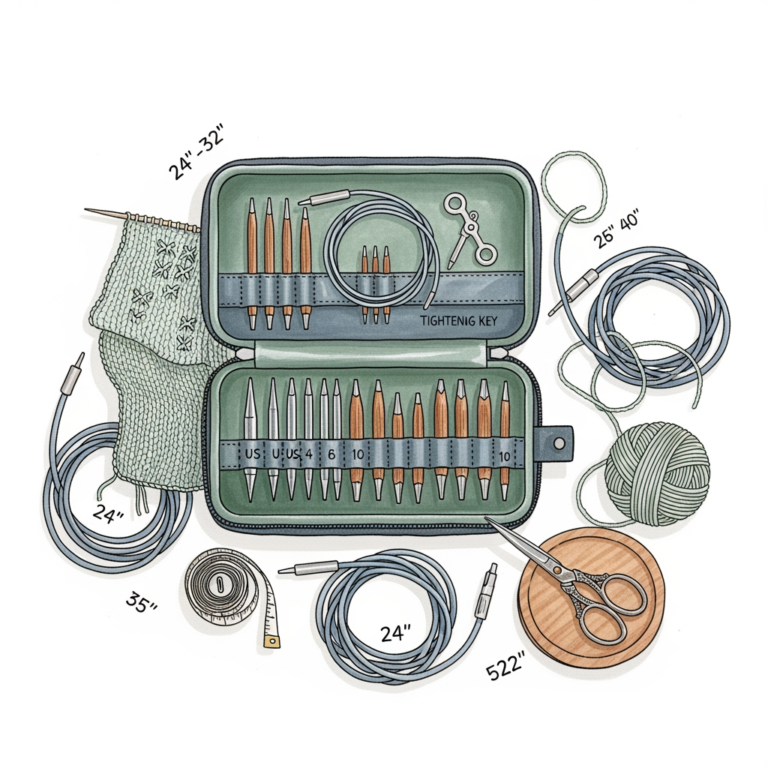
The interchangeable system is incredibly robust, featuring a swivel cable design that prevents the needle from unscrewing while you knit. This is a game-changer for long-term projects where you don’t want to worry about your needle tips detaching mid-row.
Because the points are so sharp, they can sometimes feel a bit "pokey" against your fingertips. If you have a habit of pushing the needle tip with your index finger, you might want to use a leather thimble or a bit of tape to protect your skin during long sessions.
Lykke Cypra Copper Interchangeable Needle Set

Lykke’s copper needles are a unique addition to the fiber artist’s toolkit, offering a weight and warmth that metal and wood simply cannot replicate. As you use them, the copper develops a natural patina, which provides a slightly grippier surface over time.
This makes them an excellent choice for lace yarns that are exceptionally slick, such as 100% silk or mercerized cotton. The copper gives you just enough control to keep your yarn from flying off the needles while still maintaining a professional, high-end feel.
Keep in mind that copper is a reactive metal. If you have a high skin pH, you might notice the needles darkening or leaving a slight scent on your hands. This is a natural characteristic of the material and does not affect the performance of the needles.
KnitPicks Options Nickel Plated Lace Tips

For those who want high-performance lace needles without the premium price tag, KnitPicks Options are a reliable workhorse. The nickel plating provides a smooth, fast surface that is ideal for rapid-fire lace knitting where speed is the primary goal.
The tips are quite sharp, making them perfectly capable of handling complex lace charts. They are lightweight, which is a significant benefit if you are knitting a massive lace tablecloth or an elaborate wedding shawl that requires long, repetitive hours of work.
The trade-off here is durability; the nickel plating can eventually wear down if you are a very frequent knitter. However, for the price, they offer an accessible entry point into the world of specialized lace needles that punch well above their weight class.
Signature Needle Arts Stiletto Point Needles

Signature Needle Arts needles are the luxury choice, offering a level of precision engineering that is hard to find elsewhere. Their "Stiletto" point is, quite literally, the sharpest on the market, making them the ultimate tool for lace projects involving extremely fine, cobweb-weight yarn.
These needles are machined from high-grade aluminum, making them incredibly lightweight and perfectly balanced. They are designed to be a lifetime investment, and the quality control on the finish is impeccable, ensuring no snags or burrs.
Because they are so sharp, they are not for the faint of heart. If you have a loose tension, you may find that the tips pierce your yarn rather than sliding through the stitch. These are best reserved for advanced lace knitters who have precise control over their needle placement.
Kollage Square Aluminum Lace Circular Needles
Kollage brings an ergonomic twist to lace knitting with their square-shaped needles. The theory is that the flat sides of the needle provide a more comfortable grip, reducing hand fatigue during long knitting sessions.
In terms of lace, the square shape can actually help with stitch uniformity. Many knitters find that the corners of the square help "lock" the yarn in place, preventing the uneven tension that can sometimes occur when working with round, slippery metal needles.
The aluminum finish is soft and slightly matte, providing a nice balance between speed and control. If you struggle with hand cramping or arthritis, these are arguably the most comfortable lace needles you can choose, regardless of the pattern complexity.
Why Sharp Tips Matter for Complex Lace Knitting
In lace knitting, you are frequently performing decreases that involve knitting three or four stitches together at once. A blunt needle tip will struggle to penetrate these dense clusters, often leading to split yarn or dropped stitches.
Sharp tips act as a precision tool, allowing you to slide into tight stitch formations without distorting the surrounding fabric. This is essential for maintaining the clean, geometric lines that define beautiful lace work.
However, sharpness is a double-edged sword. If you are a "pusher"—someone who uses their finger to push the needle tip—a very sharp needle can become painful after an hour or two. Always consider your personal knitting style before opting for the sharpest tip available.
Choosing Between Wood and Metal for Lace Projects
The choice between wood and metal often comes down to the fiber content of your yarn. Metal needles are generally preferred for lace because they are slicker, allowing for faster movement and easier manipulation of thin, delicate threads.
Wood needles, conversely, offer more grip. If you are working with a very slippery silk or a superwash wool that has a tendency to "grow" or slide, a wooden needle can provide the necessary friction to keep your stitches under control.
- Metal: Use for wool, alpaca, and non-superwash fibers.
- Wood: Use for pure silk, bamboo, or very high-twist, slippery yarns.
- Composite: Some knitters use a metal needle in their right hand for speed and a wooden one in their left for control.
Essential Tips for Managing Lace Needle Tension
Lace knitting often requires you to work with very thin yarn on relatively large needles to create an open, airy fabric. This can lead to uneven tension, especially when transitioning between yarn-overs and decreases.
If you find your lace looks "messy," try to maintain a consistent rhythm. Focus on keeping your yarn-overs uniform; it’s easy to pull them too tight, which can make the next row’s stitches difficult to work.
Finally, remember that blocking is the secret weapon of every lace knitter. No matter how perfect your tension is, lace only reveals its true beauty once it has been soaked and pinned out. Don’t judge your knitting until you see the finished, blocked result.
Selecting the right needle for your lace project is a deeply personal process that balances your physical comfort with the technical demands of the pattern. Whether you choose the surgical precision of a sharp metal tip or the ergonomic comfort of a square needle, the key is to experiment until you find what works for your unique hand. Remember that even the best tools cannot replace the patience and practice required to master lace. Happy knitting, and may your yarn-overs always be perfectly placed.