6 Best Swivel Swifts For Smooth Yarn Feeding
Find the best swivel swifts for your knitting projects. Our guide reviews 6 top-rated models to ensure tangle-free, smooth yarn feeding for every crafter.
Winding a fresh, hand-dyed skein of yarn into a neat center-pull cake is one of the most satisfying rituals in a knitter’s day. However, without a reliable swivel swift, that same process can quickly devolve into a frustrating, tangled mess of knots. Choosing the right tool depends on your workspace, the frequency of your winding, and the types of fibers you typically use. Here are the top performers that will keep your yarn moving smoothly from hank to hook.


Stanwood Needlecraft Tabletop Swift: Best Overall
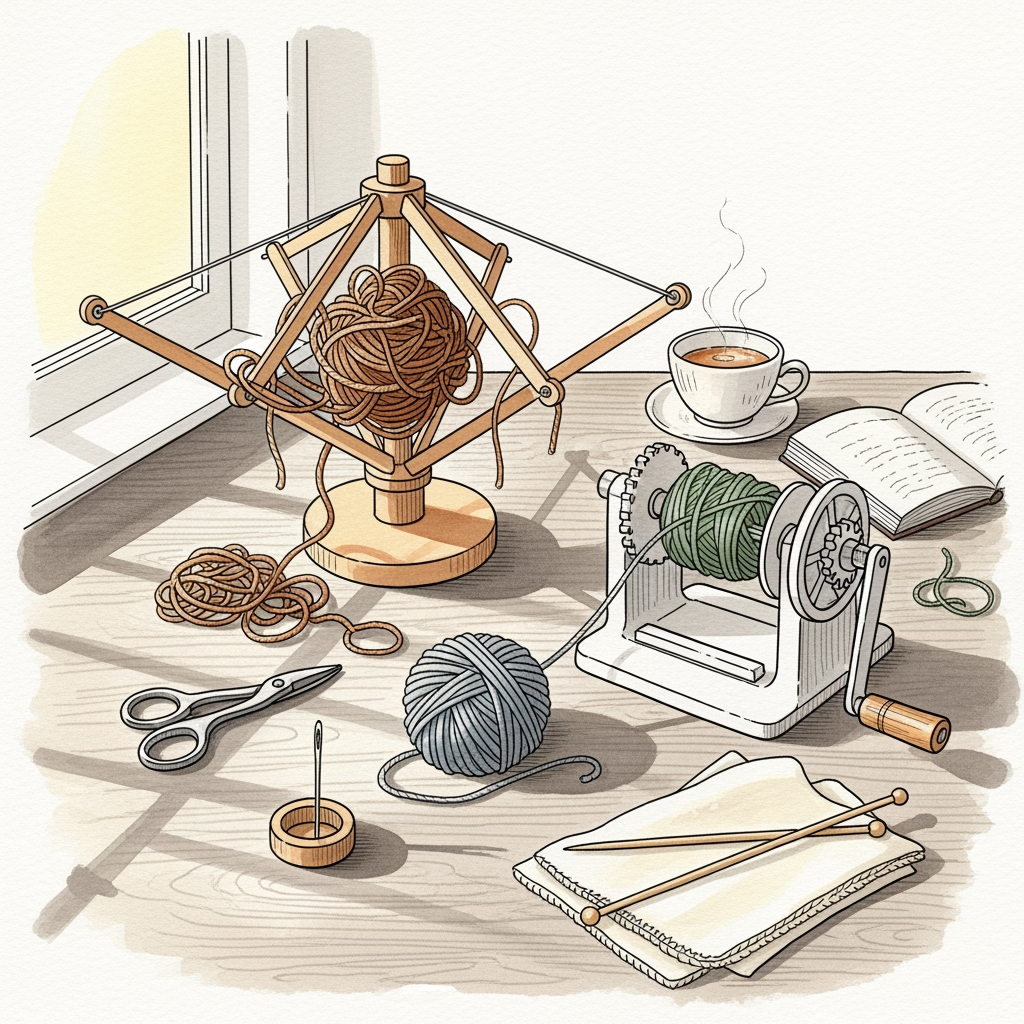
The Stanwood tabletop model is the gold standard for most home knitters because of its exceptional balance and smooth rotation. It features a heavy-duty metal clamp and a well-engineered swivel mechanism that responds to even the lightest tension from your ball winder.
If you frequently work with delicate lace-weight yarns or slippery silks, this swift is a lifesaver. The smooth finish of the wood ensures that fibers don’t snag, while the adjustable arms accommodate a wide range of skein circumferences.
Its primary strength lies in its consistency. Whether you are winding a small 50-gram skein for a pair of socks or a massive 200-gram hank of bulky wool, the rotation remains steady and predictable.
Amish-Style Wooden Swift: The Best Budget Choice
Amish-style swifts are a brilliant departure from the traditional umbrella design, relying on a simple, peg-based assembly. They consist of two crossed pieces of wood that sit flat on your table, allowing the yarn to rotate around a central spindle.

These are ideal for knitters who want a tool that is easy to store and virtually indestructible. Because they lack the complex hinges and screws of umbrella-style swifts, there is very little that can break or wear out over time.

The trade-off is that they take a moment longer to set up, as you must manually adjust the pegs to match the diameter of your yarn loop. However, for the price, they offer a level of reliability that is hard to beat.
Lacis Wooden Umbrella Swift: Best For Longevity
When you invest in a Lacis umbrella swift, you are purchasing a tool designed to last for decades. These are crafted with high-quality hardwoods and precision-machined metal hardware, making them a staple in professional studios.
The umbrella mechanism opens and closes with a satisfying, fluid motion that feels sturdy in your hands. If you are a heavy user who winds yarn multiple times a week, the durability of the joints and the stability of the central shaft will pay for themselves.
Don’t be fooled by cheaper imitations that look similar; the weight and finish of the wood on a Lacis model prevent the "wobble" that often occurs during high-speed winding. It is a premium choice for the knitter who treats their tools as heirlooms.
KnitPicks Yarn Swift: Best For Portable Option
If your knitting life happens in different rooms or you often travel to knitting groups, the KnitPicks umbrella swift is a fantastic, lightweight solution. It is designed to be highly functional without the extra bulk of heavier, professional-grade models.
It clamps easily onto most table edges and folds down into a slim profile for storage in a project bag or drawer. While it may not be as heavy-duty as some larger models, it is perfectly adequate for standard-weight yarns and occasional winding.
It is a great entry point for beginners who aren’t ready to commit to a permanent, dedicated winding station. Just be mindful not to over-tighten the clamp, as the lightweight wood requires a gentle touch.
Strauch Jumbo Ball Winder Swift: Best For Bulk

For the knitter who buys yarn in massive, sweater-quantity hanks, the Strauch system is the undisputed heavy hitter. This swift is designed to handle the weight and diameter of jumbo skeins that would cause smaller swifts to collapse or spin erratically.
The engineering here is focused on stability; it is built to hold up under the torque generated by large-capacity ball winders. If you are winding five or six skeins for a large project, this tool will save you from the constant stops and starts caused by yarn slippage.
It is certainly an investment, but for those who work with heavy, high-yardage yarns, it provides a seamless experience. It turns the chore of prepping a sweater’s worth of yarn into a quick, effortless task.
U-nitt Tabletop Swift: Best For Heavy Skeins
The U-nitt tabletop swift strikes a perfect middle ground between portability and rugged performance. It features a sturdy metal base and a smooth-spinning umbrella frame that handles heavy, rustic wools with ease.

What sets this model apart is its responsiveness to tension. Even with heavy, sticky yarns like unwashed wool or long-staple mohair, the swift spins freely enough to prevent the yarn from stretching or snapping during the winding process.
This is an excellent choice for the knitter who works with a wide variety of fiber types. It is robust enough to handle the weight of a thick, heavy skein, yet sensitive enough to manage a delicate, single-ply fingering weight.

How to Properly Set Up Your Swift for Winding
The secret to a perfect cake starts before you even touch your ball winder. First, ensure your swift is clamped securely to a stable surface; any movement in the table will translate into uneven tension in your yarn.
Place your skein on the swift and expand the arms until the yarn is taut, but not stretched. If the yarn is too loose, it will slip off the arms; if it is too tight, you risk stretching the fiber, which can lead to gauge issues later.
Finally, align your ball winder so that the yarn feeds at a slight upward angle. This gravity-fed alignment ensures that the yarn flows off the swift without catching on the central post or the individual arms.
Essential Tips for Preventing Yarn Tangling
Even with the best swift, tangles can happen if the yarn has a "twist" from the way it was dyed or skeined. Always remove the ties from your skein slowly, and check for any "cross-overs" where one strand of yarn is looped over another.
If your yarn is particularly prone to tangling, wind it slowly. It is much faster to spend an extra minute winding carefully than it is to spend an hour detangling a "yarn barf" mess.
Keep your ball winder and swift in a clear, open space. If the yarn brushes against a chair leg or a pile of books on its way to the winder, it will create friction that causes the yarn to snag and pull.
Comparing Umbrella vs. Amish Style Swifts
Umbrella swifts are the most common choice because they are fast to deploy and collapse. They are excellent for knitters who want to get straight to the winding process, but they do have more moving parts that can potentially snag if they get loose.
Amish-style swifts are, by contrast, stationary and simple. They are superior for yarns that are prone to tangling because the yarn is less likely to get caught in the mechanical joints of the umbrella ribs.
Your choice should depend on your storage space and your patience level. If you have a dedicated craft room, a sturdy Amish swift is a dream; if you are working on a small kitchen table, an umbrella swift is much more space-efficient.
Maintenance Tips for Your Wooden Yarn Swift
Wooden swifts are natural tools and respond well to a little bit of care. If your swift begins to feel "sticky" or doesn’t spin as freely as it once did, check the central swivel point for any accumulated dust or stray fibers.
A tiny drop of sewing machine oil or a little bit of beeswax on the moving parts can restore that smooth, silent spin. Avoid using heavy lubricants that might attract more dust or stain your yarn.
Periodically check the screws and bolts to ensure they are tight. If you notice any rough spots on the wood, a light sanding with a high-grit sandpaper will keep your yarn safe from snags and pulls.
Investing in a quality swift is one of the most practical upgrades you can make for your knitting practice. By choosing a model that matches your typical yarn weight and project volume, you eliminate the biggest hurdle between you and your next cast-on. Take the time to set up your workspace properly, and your yarn will reward you with a smooth, stress-free winding experience every time. Happy knitting, and may your cakes always pull from the center without a hitch.