7 Best Knitting Row Counters For Circular Projects
Master your circular knitting with our top 7 row counters. Discover reliable tools that ensure precision, prevent dropped stitches, and simplify your workflow.
Keeping track of row counts is the difference between a perfectly symmetrical pair of socks and a frustrating exercise in frogging back your hard work. Circular knitting, in particular, demands a reliable rhythm to ensure increases, decreases, and pattern repeats land exactly where they should. Whether you are working on a simple stockinette cowl or a complex lace circular shawl, the right tool can save your sanity. Here are seven of the best row counters designed to keep your project moving forward without the guesswork.
Knitter’s Pride Mindful Collection Row Counter
This tool is as much about the aesthetic experience as it is about utility. Its sleek, minimalist design fits seamlessly into the workspace of a knitter who appreciates tactile, high-quality tools.
The swivel mechanism is smooth and satisfying, providing a subtle tactile click that confirms your input without disrupting your flow. Because it is compact, it doesn’t get in the way when you are maneuvering circular needles or managing long, heavy cables.
If you find that digital screens strain your eyes during late-night knitting sessions, this manual dial is a refreshing alternative. It’s a reliable, low-tech solution that never requires a battery change.
ChiaoGoo Digital Ring Row Counter for Accuracy


For knitters who prefer to keep their hands on the needles at all times, this ring-style counter is a game changer. You wear it like a piece of jewelry, meaning your index finger is always ready to tap the button.
The digital display is bright and clear, which is helpful if you are working with dark-colored yarns or in low-light conditions. Since it sits on your finger, it eliminates the need to reach for a separate device sitting on a side table.
One thing to keep in mind is the sensitivity of the button. It is designed to be responsive, but you may occasionally hit it by accident if you have a very active knitting style.
Clover Kacha-Kacha Clicker: The Reliable Classic
The Kacha-Kacha is a staple in almost every seasoned knitter’s notions bag for a reason. Its iconic, loud click provides an auditory confirmation that is impossible to ignore or forget.
The design is incredibly robust, often surviving years of being tossed into project bags alongside sharp needles and metal cables. It’s perfect for those who worry about accidentally bumping a dial and losing their place.
While it is a bit bulkier than ring-style counters, the large button is easy to press even if you are working with stiff wool or heavy-duty cotton. It is the gold standard for reliability in a manual counter.
Cocoknits Method Maker’s Keep Magnetic Counter
This is a sophisticated system that integrates into the broader Cocoknits ecosystem. By using a magnetic base, it stays exactly where you put it, which is a massive advantage when working on circular projects that tend to slide around.
The counter itself is easy to manipulate, and the magnetic backing allows you to attach it to the Maker’s Keep wristband. This keeps your count right at your pulse point, making it incredibly accessible during long sessions of repetitive knitting.
It is particularly useful for knitters who suffer from hand fatigue, as you don’t need to grip a device to change the number. It is an investment, but for those who value organization and efficiency, it is worth every penny.
Susan Bates Handheld Plastic Row Counter Tool

This is the no-nonsense, budget-friendly option that has been used by generations of knitters. It is lightweight, simple, and does exactly what it promises without any unnecessary bells or whistles.
Because it is made of plastic, it won’t snag on delicate fibers like mohair or silk. It’s a great choice for beginners who aren’t quite ready to invest in high-end electronic tools but need something more reliable than a pen and paper.
The primary downside is the lack of a locking mechanism. If it gets jostled in your bag, the dial can sometimes rotate, so it’s best to keep a backup note of your row count in your project journal.
KnitPro Electronic Row Counter Ring Accessory

This electronic ring offers a more modern take on the finger-mounted counter. It features a simple, intuitive interface that allows you to advance your count with a single, gentle press.
The silicone strap is adjustable, making it comfortable for a variety of finger sizes. This is a significant improvement over rigid rings that can pinch or become uncomfortable during long knitting marathons.
It is an excellent choice for knitters working on complex cable patterns where you need to track multiple repeats simultaneously. The digital memory holds your count even if the device powers down, which is a vital feature for long-term projects.
Boye Aluminum Row Counter for Needle Attachment
This classic tool clips directly onto your knitting needles, ensuring your count is physically attached to your work. It is a brilliant solution for those who are prone to misplacing their notions.
Because it stays on the needle, you are forced to interact with it every time you finish a row. It acts as a physical reminder to update your progress, making it nearly impossible to forget to count.
The trade-off is that it can add a small amount of weight to your needle, which might be noticeable if you are using thin, lightweight needles for lace work. It’s best suited for medium-to-large gauge projects where the extra weight won’t affect your tension.
How to Choose the Best Counter for Your Projects
Selecting a counter depends largely on how you knit and what you are knitting. If you are working on a complex lace shawl with hundreds of stitches, you need a counter that is easy to reach and impossible to trigger accidentally.
Consider your personal habits: do you prefer a tactile click, a digital display, or a physical attachment? If you tend to knit in public, a silent digital counter might be more polite than a loud, clicking manual one.
- For sock knitters: A ring-style counter is usually best because it doesn’t interfere with the small circumference of the project.
- For sweater knitters: A larger, handheld, or needle-attached counter is often easier to manage during long sessions.
- For lace knitters: A digital counter with a locking feature is essential to ensure your row count remains accurate through complex pattern repeats.
Manual vs Digital: Which Counter Fits Your Style
Manual counters are the workhorses of the knitting world. They are battery-free, durable, and offer a satisfying physical connection to your progress that many knitters find grounding.
Digital counters, conversely, offer precision and additional features like multiple memory slots or backlighting. They are superior for intricate colorwork or lace where you might be juggling several different row counts at once.
Ultimately, the choice comes down to whether you prefer the reliability of simple mechanics or the convenience of modern technology. Many knitters keep one of each in their kit, switching based on the complexity of the project at hand.
Tips for Keeping Track of Rows in Circular Work
When knitting in the round, your row count is the only thing keeping your pattern consistent. Always place a locking stitch marker at the beginning of the round to ensure you know exactly where your count starts and ends.
If you find yourself forgetting to click your counter, try to build a habit of clicking it before you move your stitch marker to the next needle. This creates a physical sequence: finish the row, click the counter, move the marker, start the next row.
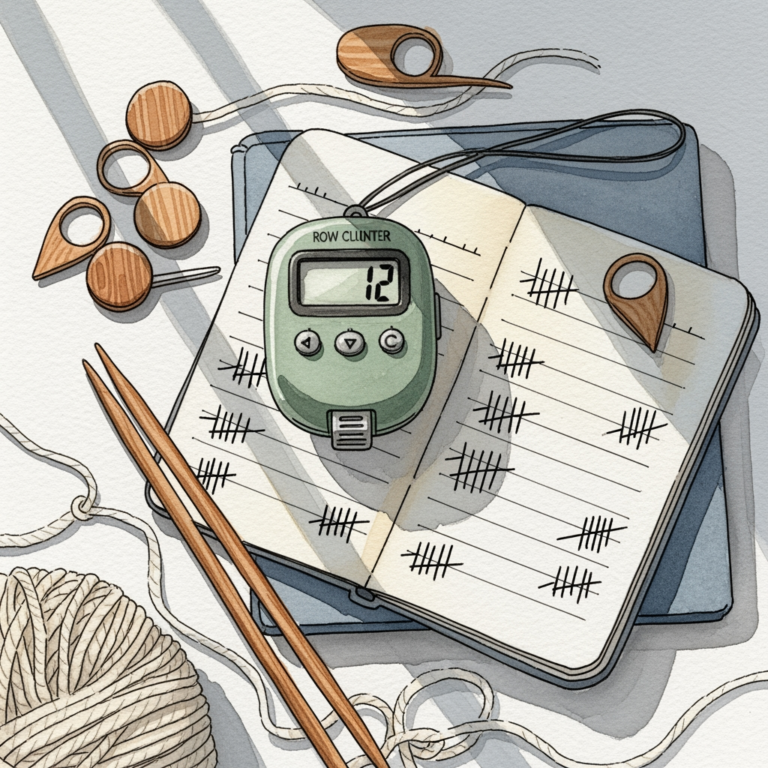
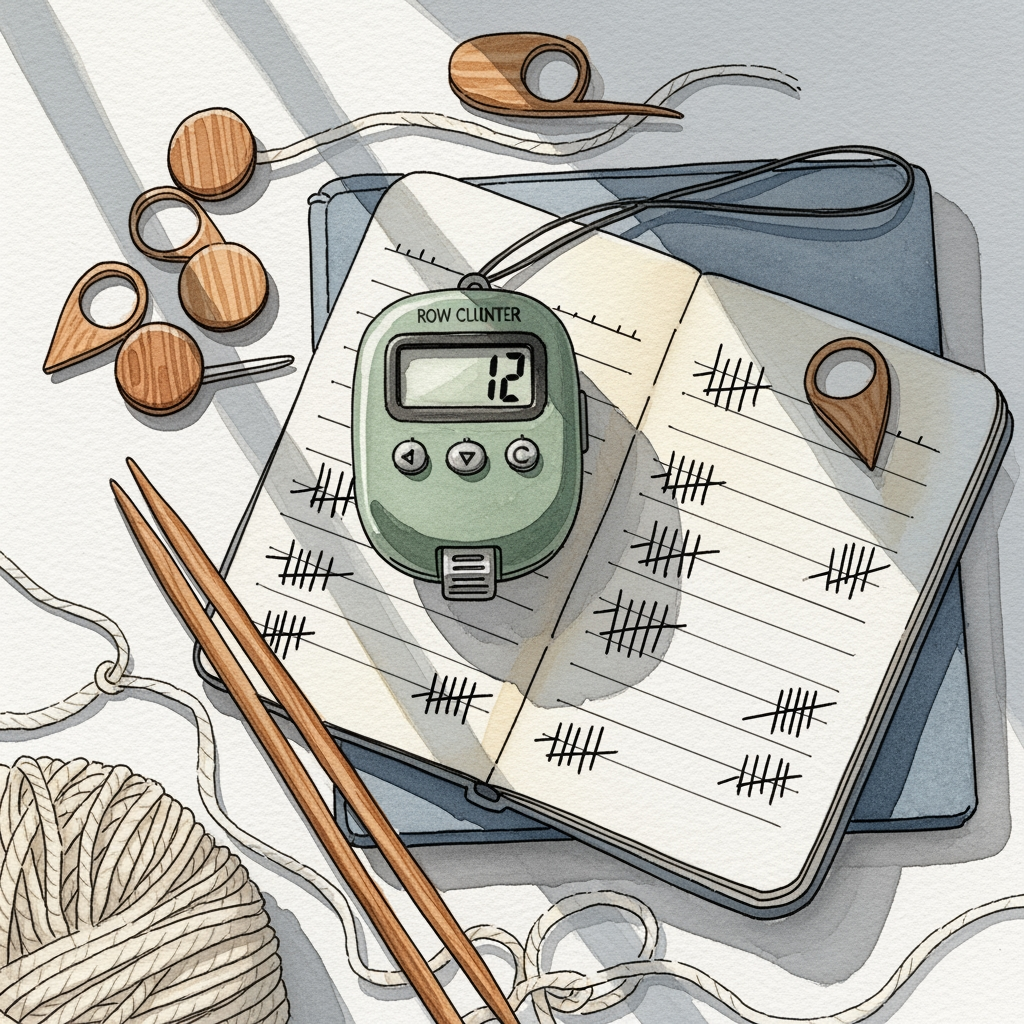
Don’t be afraid to use a secondary tracking method for complex projects, such as a paper chart or a smartphone app. Using a combination of a row counter and a physical tally on your pattern ensures that even if you have a "counter mishap," your project progress remains safe.
Finding the right row counter is a personal journey that evolves alongside your skills and the complexity of your patterns. Whether you gravitate toward the satisfying click of a classic manual tool or the sleek convenience of a digital ring, the goal remains the same: peace of mind while you create. Don’t settle for a tool that frustrates your rhythm; experiment with these options to see which one feels like a natural extension of your hands. Happy knitting, and may your rows always be counted correctly.