7 Best Knitting Light Magnifiers for Detail Work
Struggling with intricate stitches? We review the top 7 knitting light magnifiers to improve clarity, reduce eye strain, and perfect your detail work today.
Knitting intricate lace or working with dark, fuzzy mohair in low light can turn a relaxing hobby into a frustrating strain on your eyes. A high-quality magnifier acts as a second set of eyes, allowing you to catch dropped stitches or miscrossed cables before they ruin your row. By combining proper magnification with focused lighting, you can extend your knitting sessions well into the evening without fatigue. This guide explores the best tools to keep your stitches crisp and your vision sharp.
Brightech LightView Pro: Best Overall Magnifier
The Brightech LightView Pro stands out because it balances a large, crystal-clear lens with a highly stable base. For those working on complex charts or tiny 2.25mm sock needles, the 2.25x magnification provides just enough clarity without causing motion sickness or dizziness.


The integrated LED ring light is the real hero here, casting even, shadow-free illumination directly onto your work. When you are knitting with dark navy or black wool—where stitch definition often vanishes—this light makes every loop pop.
The tradeoff is the footprint; it takes up a fair amount of desk space. If you have a dedicated knitting station, this is the gold standard for long-term comfort.
Carson DeskBrite 200: Best for Tabletop Use
If you prefer to knit in a comfy armchair with a side table, the Carson DeskBrite 200 is a fantastic, compact solution. It is small enough to tuck away when you are finished, yet powerful enough to illuminate a detailed cable pattern.
The dual-power magnification allows you to switch between a general view and a high-zoom spot for checking tension or fixing a split ply. Its portability means you can easily move it from your living room to your travel bag.
However, because it is smaller, it doesn’t cover a massive area. It works best for those who knit in one specific spot and don’t mind a slightly smaller field of vision.
Fancii LED Magnifying Lamp: Best Adjustable Arm

The Fancii LED lamp features a highly flexible neck that allows you to position the lens at almost any angle. This is essential if you are working on a large project like a cabled sweater where you need to move the magnifier across different sections of the garment.
The lens itself is made of real glass, which is far more scratch-resistant than the acrylic lenses found on cheaper models. When you are dealing with wool that sheds, you want a lens that can be wiped clean repeatedly without clouding.
The clamp-style base is secure, but it does require a sturdy table edge. Ensure your side table has a flat, stable surface before mounting this, or it may wobble during intense knitting sessions.
Neatfi XL LED Magnifying Lamp: Best Wide View
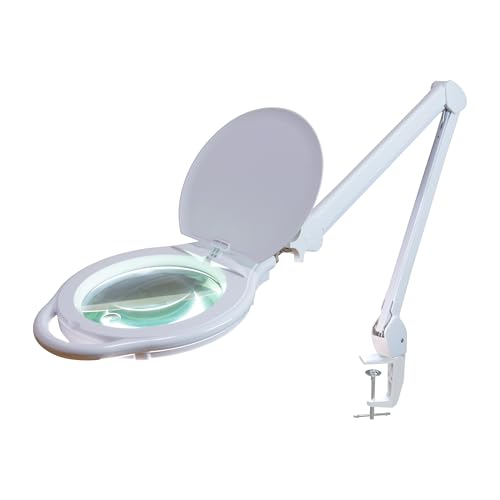
The Neatfi XL offers a massive lens that provides a panoramic view of your knitting. If you are working on a wide shawl or a complex stranded colorwork project, you won’t have to constantly shift the lamp to see the full row.
The light output is remarkably bright and adjustable, which is a major benefit for those with aging eyes. It mimics daylight, ensuring that the colors of your hand-dyed yarns appear exactly as they are.

Because of its size, this lamp is a significant investment. It is best suited for the dedicated fiber artist who spends hours every day at a craft table or desk.
Tomons Swing Arm Lamp: Best Budget Choice

The Tomons Swing Arm Lamp is a classic, no-nonsense choice that gets the job done without breaking the bank. It uses a traditional desk lamp design with a magnifying attachment, making it perfect for those who want a multi-purpose tool.
It is ideal for beginners who are just starting to experiment with lace or intricate stitch patterns. You get the benefit of a focused light source and basic magnification without the high price tag of professional-grade lamps.
Keep in mind that the build is lighter than more expensive models, so it may vibrate slightly if bumped. It is a functional, entry-level tool that bridges the gap between a standard lamp and a specialized magnifier.
Donegan OptiVisor: Best Hands-Free Headset
The OptiVisor is a staple in the world of fine crafts because it leaves both of your hands completely free to manipulate your needles. If you are a fan of complex brioche or intricate lace, this headset allows you to lean in close without losing your posture.
Because it is head-mounted, the magnification is always exactly where you are looking. You don’t have to worry about the "sweet spot" of a desk lamp; the lens moves with your head.
It does take a little time to get used to the weight on your forehead. If you have neck sensitivity, consider shorter sessions or taking frequent breaks to stretch.
MagniPros 3X Magnifier: Best Portable Option

The MagniPros 3X Magnifier is a handheld tool that is perfect for throwing into your project bag. Whether you are at a knit night or waiting at the doctor’s office, this provides an instant boost for your vision.
It features a built-in light, which is a lifesaver when you are knitting in dim public spaces. It is lightweight, durable, and fits easily alongside your spare needles and stitch markers.
It is not a replacement for a stationary lamp for long-term work, but it is the best companion for the mobile knitter. It is the ultimate "emergency" tool for catching a dropped stitch on the go.
How to Choose the Right Magnifier for Knitting
Choosing the right tool depends entirely on your project complexity and your physical setup. If you work on small-gauge items like socks, you need higher magnification; if you work on blankets, a wider lens is more important.
Consider the following factors before you buy:
- Magnification Power: 2x to 3x is usually the "sweet spot" for knitting.
- Lens Material: Glass is clearer and harder to scratch, while acrylic is lighter and cheaper.
- Mounting Style: Clamps are stable but restrictive; headsets offer freedom but can be heavy.
- Light Quality: Look for "daylight" bulbs (5000K-6000K) to ensure accurate color perception.
Always remember that your posture matters as much as the lens. Position your magnifier so that you can maintain a neutral neck position while you work.
Lighting Tips for Reducing Eye Strain at Night
Knitting at night is a joy, but it can wreak havoc on your eyes if your ambient lighting doesn’t match your focused lighting. Always use a secondary light source in the room to avoid a harsh contrast between your bright work area and the dark surroundings.
Adjust the angle of your lamp to prevent glare on the lens, especially if you use metallic needles. Glare is one of the fastest ways to cause eye fatigue, even with a high-quality magnifier.
Try to take a "20-20-20" break: every 20 minutes, look at something 20 feet away for 20 seconds. This simple habit prevents your eyes from locking into a near-focus state for too long.
Maintaining Your Magnifying Lens for Clarity
A dirty lens is worse than no lens at all. Over time, dust and natural oils from your fingers can build up on the surface, creating blurriness that you might mistake for vision issues.
Use a microfiber cloth specifically designed for camera lenses or eyeglasses. Avoid using paper towels or tissues, as these can contain wood fibers that cause micro-scratches on your lens over time.
If the lens is very dirty, use a dedicated lens cleaning solution or a drop of mild dish soap and water. Always dry it gently with a soft cloth to ensure it stays crystal clear for your next knitting marathon.
Investing in a good magnifier is one of the smartest decisions a knitter can make to preserve their eyesight and improve their craft. Whether you opt for a heavy-duty desk lamp or a portable handheld magnifier, the ability to see your stitches clearly will transform your experience. Choose the tool that fits your specific knitting habits and environment, and you will find yourself tackling more complex patterns with newfound confidence. Happy knitting, and may your stitches always remain clear and perfectly tensioned.