7 Best Adjustable Finger Guides For Consistent Tension
Achieve perfect, even stitches with our top 7 adjustable finger guides. These tools ensure consistent tension, improving your sewing precision and efficiency.
Achieving perfectly even stitches is the hallmark of a professional-looking project, yet many knitters struggle with fluctuating tension caused by hand fatigue or varying yarn textures. Adjustable finger guides act as a mechanical anchor, ensuring your yarn flows at a consistent rate regardless of your speed or the complexity of the pattern. Whether you are battling slippery silk or stubborn wool, these tools provide the stability needed to elevate your craft. This guide explores the best options to help you find the perfect partner for your knitting journey.
Clover Adjustable Yarn Guide: Best Overall Choice
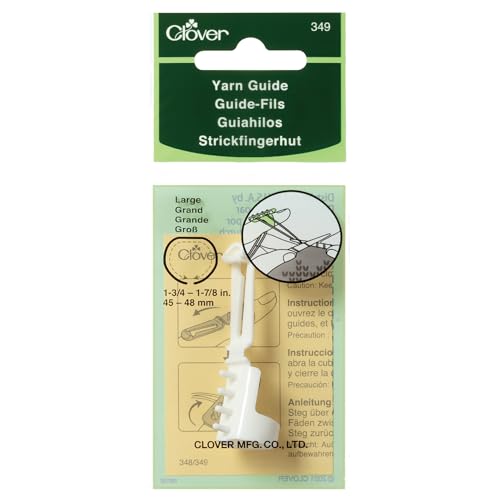

The Clover Adjustable Yarn Guide is a staple in many knitting bags because it balances simplicity with reliable performance. It features a plastic ring design that sits comfortably on the finger, allowing the yarn to glide through a small, controlled eyelet.
This tool is particularly effective for those who struggle with "death gripping" their yarn during long sessions. By offloading the tension management to the guide, your hands can remain relaxed, which naturally prevents the tightening that often happens as you grow tired.
While the plastic can feel slightly bulky for those with very slender fingers, its adjustability is top-tier. It works well with a variety of yarn weights, from lace to worsted, making it a versatile addition to your toolkit.
Pony Knitting Tension Regulator: Best for Beginners

If you are just starting your knitting journey, the Pony Knitting Tension Regulator offers a gentle introduction to managing yarn flow. Its design is straightforward, focusing on a simple coil that keeps the yarn positioned correctly above your needle.
Beginners often find that their tension swings wildly as they focus on the mechanics of the stitch itself. This regulator acts as a training wheel, providing a consistent physical barrier that prevents the yarn from slipping too loosely or pulling too tight.
Keep in mind that this tool is best suited for standard-weight yarns. If you try to force a bulky, roving-style yarn through the coil, you may find the friction causes the yarn to fray or catch.
Tulip Knitting Thimble: Best Ergonomic Design

The Tulip Knitting Thimble stands out for its thoughtful, refined construction that prioritizes long-term comfort. Unlike bulkier plastic alternatives, this thimble is designed to mimic the natural curve of the finger, reducing the risk of repetitive strain.
For knitters tackling large garments like sweaters or blankets, ergonomics are not just a luxury; they are a necessity. This tool allows for hours of uninterrupted knitting without the irritation or pressure points often caused by cheaper, rigid materials.
It is an excellent choice for those who suffer from mild arthritis or hand fatigue. Just be aware that the sleek metal design may require a brief adjustment period to find the perfect angle for your specific holding style.
Prym Knitting Finger Guide: Best Value Option
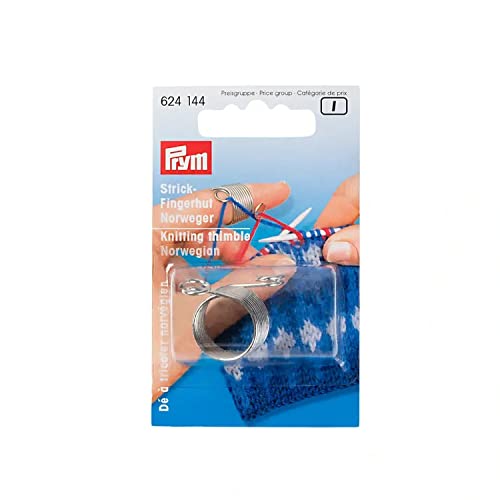
The Prym Knitting Finger Guide is a testament to the fact that you don’t need to overspend to achieve professional results. It is a no-nonsense, functional tool that clips securely onto the finger and provides a stable channel for your working yarn.
This is the ideal option for the knitter who wants to experiment with tension tools without a significant financial commitment. It performs the essential task of keeping the yarn elevated, which is especially helpful when switching between different yarn colors or textures.
While it lacks the premium feel of some higher-end models, its durability is surprising given the price point. If you tend to lose your notions frequently, having a few of these in your stash is a practical, low-risk strategy.
Cocoknits Yarn Tension Ring: Best Metal Choice
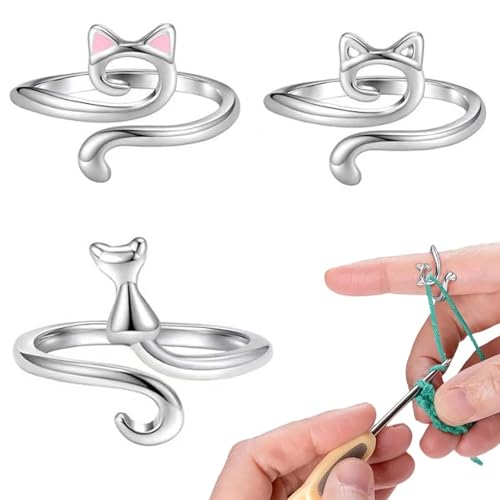
The Cocoknits Yarn Tension Ring is a favorite among minimalist knitters who prefer a sleek, unobtrusive tool. Made from high-quality metal, it features a unique design that guides the yarn without the need for cumbersome plastic components.
Metal tools offer a distinct advantage: they don’t wear down or develop grooves over time like plastic can. This ensures that your tension remains consistent project after project, regardless of how much you use it.
Because it is a ring, it feels more like a piece of jewelry than a mechanical device. It is perfect for those who want the benefits of a tension guide without the feeling of wearing a bulky plastic accessory.
Addi Knitting Thimble: Best for Colorwork Style

The Addi Knitting Thimble is specifically engineered for the challenges of stranded colorwork, where managing two yarns at once is essential. It features multiple eyelets, allowing you to keep two different colors separated and tensioned perfectly simultaneously.
Colorwork often fails when one strand is pulled tighter than the other, resulting in puckered fabric. By using this thimble, you ensure that both yarns maintain the same "float" length, leading to a much cleaner, more professional finish.
It is a game-changer for projects like Nordic sweaters or intricate fair isle hats. While it takes a little practice to feed two yarns through the guides efficiently, the improvement in your stitch quality will be immediately apparent.
Susan Bates Yarn Guide: Best Budget Friendly Tool
The Susan Bates Yarn Guide is a classic, reliable tool that has been helping knitters for generations. Its simple, functional design makes it easy to use right out of the package, with no complex setup required.
If you are a knitter who prefers a utilitarian approach, this guide is hard to beat. It does exactly what it promises: it keeps the yarn at a consistent distance from the needle, preventing the common issue of loose or uneven stitches.
It is particularly useful for beginners who are still learning how to hold their yarn properly. While it may not have the bells and whistles of more expensive models, its longevity and ease of use make it a staple for a reason.
How Tension Guides Improve Your Knitting Uniformity
Tension guides work by creating a consistent friction point for the yarn before it reaches your needles. When you knit, your hands naturally fluctuate in their grip based on your mood, fatigue, or the complexity of the stitch pattern.
By routing the yarn through a guide, you remove the human error variable from the equation. The yarn is fed at a steady rate, which helps keep your gauge consistent across an entire row or even an entire garment.
This is particularly important when working with different fiber types. For instance, slippery fibers like silk or bamboo tend to slide off the needles if your tension isn’t perfectly controlled; a guide keeps that yarn taut and manageable.
Key Factors to Consider When Selecting Your Guide
When choosing a guide, start by considering the weight of the yarn you use most often. A guide with a very small eyelet will struggle with chunky or bulky yarns, while one with a wide opening might not provide enough tension for lace-weight mohair.
Think about your personal knitting style as well. If you are a "flicker" who keeps the yarn very close to the needles, you might prefer a ring-style guide. If you wrap the yarn around your fingers, a thimble-style guide that sits further back may be more comfortable.
Lastly, consider the material of the tool. Metal is durable and slick, allowing for fast knitting, while plastic or rubberized grips offer more friction, which can be helpful if you find your yarn is slipping off your needles too easily.
Troubleshooting Common Tension Issues With Tools
If you find that your stitches are still uneven even with a guide, check your yarn path. Sometimes, the yarn is catching on a rough edge of the guide, which creates intermittent tension spikes; a quick buff with a fine-grit nail file can often solve this.
Another common issue is placing the guide too close to your needle tip, which can actually restrict your movement and cause you to knit tighter. Try adjusting the position of the guide slightly further back on your finger to allow for a more natural, fluid motion.
Finally, remember that tools are meant to assist, not dictate. If a guide feels like it is working against your natural rhythm, don’t be afraid to experiment with different tensioning techniques, such as wrapping the yarn around your index finger differently before it enters the guide.
Investing in an adjustable finger guide is one of the most effective ways to refine your knitting technique and achieve a professional, uniform look. By reducing hand fatigue and stabilizing your yarn flow, these tools allow you to focus on the joy of the craft rather than the mechanics of the stitch. Remember that every knitter’s hands are unique, so take the time to test which style feels most natural to you. With the right tool in your kit, you will find that even the most challenging projects become significantly more manageable and rewarding.