6 Best Cutting Rulers For Straight Edges To Own
Achieve precision with our top six cutting rulers. This guide highlights durable, accurate tools essential for clean, straight edges in every craft project.
Precision in fiber arts isn’t just about the tension of your stitches, but the accuracy of the fabric you prepare for your projects. Whether you are cutting strips for a quilt backing or squaring up hand-dyed wool for a garment, the quality of your edge determines the final finish. A reliable cutting ruler is as essential to your toolkit as a set of high-quality circular needles. Here are the top six rulers to ensure every cut you make is perfectly straight and professional.

Omnigrid 6×24 Inch Ruler: The Quilter’s Standard
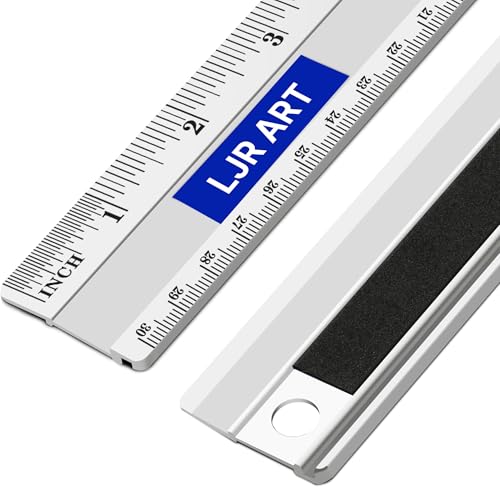
The Omnigrid 6×24 is the workhorse of the sewing room, much like a classic set of nickel-plated needles that never lets you down. Its yellow and black grid markings provide high contrast, making it easy to align against fabric grain lines or printed patterns.
For those of us who spend hours measuring fabric for complex patchwork, the clarity of these markings is a lifesaver. It is the industry standard for a reason: it is reliable, predictable, and widely available.
However, keep in mind that the plastic can be quite slick on certain surfaces. If you are cutting slippery silk or rayon blends, you may find it shifts slightly if you don’t apply firm pressure.
Fiskars Acrylic Ruler: Best For Precise Cutting

Fiskars is known for ergonomics, and their acrylic rulers are no exception. They feature a unique grid pattern that helps you see exactly where your blade will travel before you make the commitment.
When you are working with expensive hand-dyed wools or delicate linens, you don’t get a second chance at a cut. The precision of these markings gives you the confidence to slice through fabric without worrying about a stray millimeter ruining your yardage.
The tradeoff here is the thickness; these rulers are sometimes thinner than professional-grade alternatives. Use a light touch with your rotary cutter to avoid "nicking" the edge of the acrylic over time.
Creative Grids 6.5×24 Inch: Non-Slip Grip Choice

If you have ever had a ruler slide while you were halfway through a long cut, you know the frustration of a ruined piece of fabric. Creative Grids solves this with embedded grippers that hold the fabric firmly in place once you apply pressure.
This is the "grip" equivalent of choosing bamboo needles over metal when you are working with a slippery mohair blend. It provides that extra bit of friction that keeps your work stable and secure.
The 6.5-inch width is also a brilliant design choice, as it allows you to cut standard 6-inch strips with a little room to spare. It is an investment, but it saves you from the waste caused by accidental slips.
Westcott Beveled Edge Ruler: Durable Metal Option

Sometimes, you need a tool that can handle the abuse of a heavy-duty shop environment. The Westcott metal ruler is built for longevity, featuring a beveled edge that guides your blade perfectly without the risk of shaving off plastic.
While acrylic is standard for quilting, metal is superior if you find yourself cutting heavy-weight fabrics like canvas or dense wool felt. It won’t warp, crack, or chip, even if it takes a tumble off your cutting table.
The downside is that you cannot see the fabric underneath the ruler. It is best suited for when you are trimming edges rather than fussy-cutting specific motifs from a print.
Quilter’s Select 6×24 Ruler: Best For Stability

The Quilter’s Select line is designed for those who value a premium experience in their craft. These rulers feature a specialized coating that clings to the fabric, providing stability that feels almost like a magnetic lock.
When you are squaring up a large quilt top or a piece of heavy fabric, this stability is unmatched. It feels substantial in the hand, much like the weight of a well-balanced pair of wooden needles.
Be aware that the tacky backing can collect lint over time. Keep a lint roller nearby to maintain the grip, just as you would keep your needles clean of natural oils.
Olfa Frosted Advantage Ruler: Glare-Free Surface

Lighting in a craft room can often cause frustrating reflections on clear acrylic rulers. The Olfa Frosted Advantage uses a matte, frosted finish that eliminates glare, allowing you to see your measurements clearly under any lamp.
This is a massive benefit if you are working late at night or in a room with harsh overhead lighting. It reduces eye strain significantly, letting you focus on the accuracy of your grain lines.
The frosted finish does slightly obscure the fabric underneath compared to clear acrylic. It is a balancing act between visibility and glare reduction, but for most, the comfort of the matte surface is worth the compromise.
How To Select The Right Ruler For Fabric Cutting
Choosing a ruler is a lot like choosing a needle material; it depends on the fabric you are working with. For delicate, slippery fabrics, prioritize rulers with built-in grippers or non-slip backings.
Consider the size of your projects as well. A 24-inch ruler is versatile for most tasks, but if you are only cutting small squares for intricate piecing, a 6×6 or 12×12 square ruler might offer more control.
Always look for clear, high-contrast markings that won’t fade with heavy use. If you can’t read the measurements clearly, you are more likely to make errors that will impact your final gauge or fit.
Essential Features For Accurate Straight Edges
Accuracy starts with the quality of the grid lines. Look for rulers that feature both horizontal and vertical lines, as these are vital for aligning fabric grain and ensuring your cuts are perfectly square.
The edge of the ruler must be perfectly smooth. Any burrs or nicks in the plastic can guide your rotary cutter off-course, resulting in a wavy edge that will make sewing seams difficult later.
Check for "highlighted" angles as well, such as 30, 45, and 60-degree lines. These are essential for cutting bias strips or triangles, which are common in both quilting and garment construction.
Acrylic vs Metal Rulers: Which Should You Buy?
Acrylic is the standard for most fiber artists because it allows you to see the fabric through the tool. This transparency is vital for aligning patterns or avoiding flaws in the weave of your fabric.
Metal rulers, conversely, offer unmatched durability. They are ideal for heavy-duty cutting where you don’t need to see the fabric underneath, such as trimming the edges of a thick wool coat or cutting batting.
If you are a beginner, start with a high-quality acrylic ruler. It offers the best balance of visibility and versatility for the widest range of projects you will likely encounter.
Safety Tips For Using Rotary Cutters With Rulers
A rotary cutter is essentially a circular razor blade, so treat it with the same respect you would a pair of sharp embroidery scissors. Always cut away from your body, and never place your fingers near the edge of the ruler.
Keep your blade sharp; a dull blade requires more pressure, which increases the likelihood of the ruler slipping. Change your blades as soon as you notice them "skipping" or pulling at the fabric.
Always store your cutter in the locked position when not in use. It is easy to get distracted by a phone call or a pet, and an exposed blade is a hazard for anyone in your creative space.
Investing in the right cutting ruler will transform your fabric preparation from a chore into a precise, satisfying part of your process. By choosing a tool that matches your fabric type and project needs, you ensure a professional foundation for every stitch. Remember that the best tool is the one that allows you to work with confidence and ease. Happy making, and may all your cuts be perfectly square.