
6 Best Cable Needles For Fine Cables To Try
Finding the right tool for intricate knitting is vital. We review the 6 best cable needles designed for fine yarns to ensure precision and ease in your projects.
Mastering the art of cables requires more than just patience; it demands the right tools to navigate those tricky crossings without losing your place. Fine cables, in particular, can be unforgiving if your needle is too slippery or prone to snagging your delicate yarn. Choosing the perfect cable needle is a personal journey that balances grip, weight, and ease of movement. This guide explores the best options on the market to help you find the partner that makes your complex patterns feel like second nature.
Clover Takumi Bamboo Cable Stitch Needles


Clover Takumi needles are the gold standard for those who find metal needles a bit too fast or intimidating. The natural bamboo surface provides a gentle, subtle grip that holds onto fine, slippery yarns like silk or bamboo blends, preventing them from sliding off mid-cross.
Because they are lightweight, you won’t feel the strain in your wrists during long sessions of cabling. The slight friction of the wood ensures that once your stitches are parked on the needle, they stay put until you are ready to knit them back into the main pattern.
However, if you are working with a very sticky wool, the bamboo might feel a bit too "grabby," making it difficult to move stitches across. Bottom line: Choose these if you are a newer knitter or working with slippery fibers that need a little extra control.
ChiaoGoo Stainless Steel Cable Needles
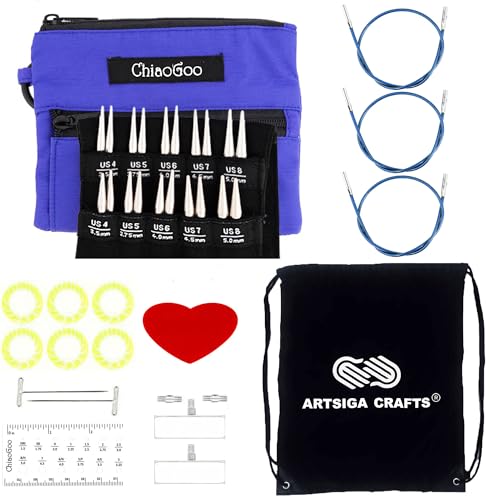
When you need speed and precision, stainless steel is hard to beat. ChiaoGoo needles are incredibly smooth, allowing your stitches to glide effortlessly, which is a lifesaver when you are working through a dense, complex cable chart.
The surgical-grade stainless steel is also remarkably durable and won’t bend or warp over time. Their sleek, pointed tips make it easy to pick up even the finest stitches without splitting the yarn ply.
Be warned, though: these are very slick. If your hands tend to be oily or you are using a smooth, high-twist yarn, your stitches might try to escape if you aren’t careful. Bottom line: These are the best choice for experienced knitters who value speed and need a needle that won’t snag.
Brittany Birch Wooden Cable Needles

There is something undeniably tactile and satisfying about using birch wood needles. Brittany needles have a warm, polished finish that feels wonderful in the hands and offers a balanced level of grip that sits right between bamboo and metal.
They are particularly excellent for fine-gauge projects where you don’t want the needle to be so slick that you lose control of your tension. The wood is dense enough to be sturdy but light enough to prevent hand fatigue during long, intricate projects.
One drawback is that wood can eventually show wear or splinter if you are particularly hard on your tools. Bottom line: Ideal for the knitter who loves natural materials and wants a "Goldilocks" level of grip for their fine cabling.
Knitter’s Pride Ginger Cable Needles

Knitter’s Pride Ginger needles are crafted from laminated wood, which gives them a beautiful, unique aesthetic alongside their functional benefits. The smooth, polished surface allows for a consistent flow, while the laminated wood provides enough grip to keep your stitches secure.
These needles are designed with a tapered shape that helps guide the yarn smoothly across the cross. They feel very ergonomic, which is a major plus if you are working on a large-scale project with hundreds of cable crossings.
Keep in mind that while they are strong, they are still wood and can snap if you accidentally sit on them or pack them poorly in a project bag. Bottom line: A fantastic, high-end option for knitters who want a balance of beauty and reliable, everyday performance.
Susan Bates Crystalites Cable Needles

Crystalites are a fantastic, budget-friendly option that brings a bit of fun to your knitting kit. Made from lightweight plastic, they are incredibly smooth and come in vibrant, translucent colors that make it easy to see your stitches against the needle.
Because they are plastic, they are very flexible, which some knitters find helpful when maneuvering around tight cable crossings. They are also very gentle on the hands and won’t cause the same cold sensation that metal needles can sometimes impart.
The main tradeoff is that they can feel a bit "cheap" compared to wood or steel, and they may not be as durable over the long term. Bottom line: A perfect, low-cost choice for beginners or for keeping in your travel knitting bag.
Addi Metal Cable Stitch Needle Set

Addi is legendary for their high-quality manufacturing, and their metal cable needle sets are no exception. The finish is polished to perfection, ensuring that your stitches move with zero resistance, which is essential when working with delicate, thin yarns.
The set usually includes various sizes, which is a game-changer if you switch between different yarn weights frequently. The needles are short and compact, making them easy to maneuver in the middle of a row without getting in the way of your main needles.
The only real downside is the price point, which is higher than most individual options. Bottom line: An investment piece for the dedicated cable-knitter who wants a professional, long-lasting set that covers all the bases.
How to Choose the Best Needle for Fine Cables
Choosing the right needle starts with understanding your own knitting tension. If you are a tight knitter, you want a slightly slicker needle to help you move stitches, whereas a loose knitter might prefer a wood needle to prevent stitches from sliding off accidentally.
Consider the fiber content of your project as well. For high-twist, slippery yarns like mercerized cotton or silk, a wooden needle with more grip is your best friend. For rustic, sticky wools, a metal needle will prevent the frustration of struggling to slide your stitches.
- Check the gauge: Ensure the cable needle is roughly the same diameter as your working needles to prevent tension gaps.
- Test the tip: A sharper tip is better for fine, thin yarn to avoid splitting the ply.
- Consider the length: Shorter needles are often easier to manage when you have a large number of stitches in a cross.
Material Differences: Wood vs. Metal for Cables
The choice between wood and metal is the most common debate in the knitting community. Metal is undeniably faster and more durable, making it the preferred choice for high-speed production or complex, multi-stitch cables where you need the yarn to travel quickly.
Wood, on the other hand, provides a tactile experience and a level of control that many knitters find soothing. It is less likely to cause your stitches to "pop" off the needle unexpectedly, which is a common source of anxiety when working with fine, slippery yarns.
Ultimately, your choice should be based on your project’s needs. If you are working on a delicate lace-weight cable project, the grip of wood is often safer. If you are powering through an aran-weight sweater, the speed of metal will keep you moving.
Tips for Preventing Dropped Stitches in Cables
Dropped stitches are the biggest fear when working with cables, but they are easily managed with the right technique. Always ensure your cable needle is securely tucked into the work before you begin the cross.
If you find yourself constantly losing stitches, try using a cable needle with a slight groove or a "U" shape. These designs are specifically engineered to cradle the stitches and prevent them from sliding off the ends.
- Count your stitches: Always count the stitches on the cable needle before and after the cross.
- Don’t rush: Take a breath during the crossing; speed is the enemy of accuracy.
- Use a safety pin: If you are nervous, you can use a locking stitch marker to secure the stitches on the cable needle.
Essential Techniques for Perfect Cable Crossings
Perfect cable crossings are all about tension management. When you move stitches to the cable needle, try to keep them as close to the main needle as possible to avoid pulling and creating a "ladder" or a loose gap in your fabric.
When you knit the stitches off the cable needle, give the first stitch of the cross a slightly firmer tug. This helps bridge the gap between the cable and the background fabric, resulting in a cleaner, more professional look.
- Consistent tension: Keep your working yarn tension steady throughout the entire crossing.
- Blocking: Don’t worry if your cables look a bit messy off the needles; proper blocking will even out the tension and make the stitches pop.
- Practice: Start with a simple 2×2 cable to get the rhythm down before moving to more complex designs.
Finding the right cable needle is about balancing your personal comfort with the specific demands of your yarn and pattern. Whether you prefer the warmth of wood or the speed of metal, there is a tool out there that will make your knitting experience more enjoyable. Don’t be afraid to experiment with different materials to see what feels best in your hands. With the right needle in your kit, you will be tackling complex, beautiful cables with total confidence in no time.
