6 Best Nylon Brushes For Felting Work Surfaces
Discover the top 6 nylon brushes for needle felting. This guide compares durability and fiber density to help you choose the perfect, stable work surface.
Needle felting is a natural extension for many knitters looking to add three-dimensional flair to their hand-knitted accessories. Just as choosing the right needle material—like slick nickel or grippy bamboo—changes your knitting tension, selecting the proper felting surface dictates the quality of your finish. A high-quality nylon brush mat provides the perfect resistance for your needles to pass through the wool fibers without damaging your workspace. These tools are essential for achieving professional, clean results on everything from felted appliques to sculptural fiber art.


Clover Felting Needle Mat: The Industry Standard

The Clover mat is the workhorse you’ll find in almost every well-stocked fiber arts studio. Its bristles are engineered to provide just the right amount of resistance, allowing the needle to penetrate the wool and lock fibers into place without significant force.
This mat is particularly reliable because it doesn’t leave behind the small, annoying bits of debris that foam pads often shed. When you’re working on a delicate project like a felted detail for a stranded colorwork mitten, you don’t want foam particles embedded in your wool.
The trade-off here is the surface area, which is relatively compact. It is perfect for small motifs, but if you are planning to felt a large, sculptural piece, you may find yourself constantly repositioning your work.
Ashford Felt Punching Mat: Durable Design Choice

Ashford has built a reputation on high-quality looms and wheels, and their felting mat carries that same expectation of longevity. The bristles are notably firm, which is a major advantage for those who tend to felt with a heavy hand.
If you are the type of knitter who grips their needles tightly—the kind who often snaps a wooden needle—you will appreciate the structural integrity of this mat. It stands up to aggressive punching without the bristles splaying prematurely.
The base is sturdy and stays put on your table, which is a relief when you are focusing on intricate shaping. However, because the bristles are so dense, they can be slightly harder to clean deep down compared to softer alternatives.
Woolbuddy Felting Brush: Best for Precision Work

The Woolbuddy brush is designed for the maker who treats felting like fine art. Its bristles are soft enough to allow for deep, precise needle penetration, making it ideal for creating crisp edges and fine details.
When you are working on a miniature project, such as a tiny needle-felted sheep to attach to a baby blanket, the ability to control exactly where the needle hits the mat is invaluable. It provides a tactile feedback that helps you "feel" the wool locking together.
While it excels at precision, it is not the best choice for large-scale, high-speed felting. Treat this as your "surgical" tool rather than your general-purpose mat.
Dimensions Needle Felting Mat: Great for Beginners

If you are just coming over from the knitting world and want to try your hand at felting, the Dimensions mat is a gentle, accessible starting point. It offers a forgiving surface that won’t punish you for inconsistent needle angles.
Beginners often struggle with the "angle of attack," which can lead to broken needles if the surface is too hard or too soft. This mat provides a middle-ground density that helps you learn the mechanics of fiber entanglement without frustration.
Keep in mind that as your skills improve and your projects become more complex, you may eventually want to upgrade to a denser brush. It is a fantastic entry-level tool that serves its purpose well during the learning curve.
Sullivans Felting Brush: Sturdy Bristle Density
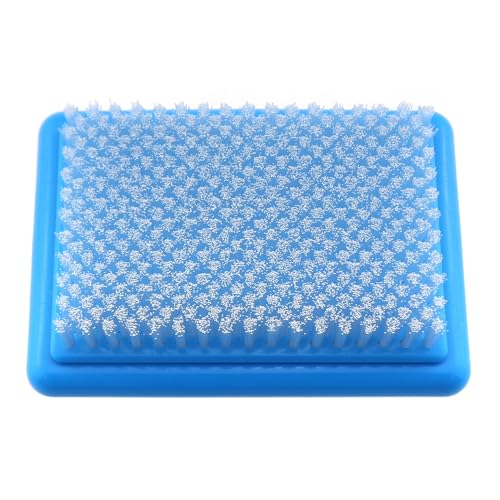
Sullivans offers a dense bristle arrangement that excels at keeping your work elevated. This elevation is key, as it prevents the fibers from becoming matted to the surface of the mat itself.
For those who enjoy working with coarser, more rustic wools—the kind you might use for a heavy felted bag—this brush is an excellent companion. The bristles are stiff enough to handle the extra pressure required to felt thick, unspun roving.
Because the bristles are so tightly packed, you won’t experience much "sinking" of your work. This makes it a great choice for flat projects where you want to maintain a consistent, even thickness across the entire piece.
Hamanaka Felting Brush: Excellent for Small Tasks
The Hamanaka brush is the specialist tool for the fiber artist who loves tiny, intricate work. Its compact size makes it perfect for keeping near your knitting chair for quick repairs or small embellishments.
Think of this as the "DPN" (Double Pointed Needle) of felting mats—small, specialized, and incredibly useful for specific tasks. It is highly portable, so if you are taking your knitting and felting projects to a local guild meeting, this will fit easily in your project bag.
While it is not suitable for large projects, its quality is top-tier. It is a luxury item that justifies its cost through its durability and the refined control it offers for detail work.
Why Nylon Brushes Outperform Foam Felting Pads
Foam pads are the "beginner yarn" of the felting world: cheap and easy to find, but prone to failure. Over time, foam pads develop deep craters that make it impossible to get a smooth, even surface on your felted project.
Nylon brushes, by contrast, allow the needle to pass through the fibers and into the brush, which creates a much more efficient locking action. This reduces the amount of time you have to spend punching the wool, saving your wrists and hands from fatigue.
Furthermore, foam pads eventually break down, leaving bits of plastic in your beautiful natural fibers. Nylon brushes are a one-time investment that will last for years, provided you treat them with the same care you give your favorite set of interchangeable needles.
How to Maintain Your Felting Brush Bristles
Just as you wouldn’t leave your best wooden needles in direct sunlight, you need to care for your nylon bristles to keep them upright. Over time, fibers will inevitably get trapped at the base of the bristles.
Use a small pair of tweezers or a fine-toothed comb to gently remove stray wool remnants after every session. If you let the wool build up, it creates a "mat" that prevents the needles from reaching the proper depth, effectively ruining the brush’s utility.
Never use water or harsh cleaners on the brush, as this can degrade the adhesive holding the bristles in place. A dry, gentle cleaning is all that is required to keep your mat in peak condition.
Choosing the Right Size for Your Felting Projects
Selecting the right size mat is all about matching the tool to the surface area of your project. If you are felting a small applique, a large, bulky mat is unnecessary and cumbersome.
- Small (under 4 inches): Perfect for facial features, small details, and quick repairs.
- Medium (5-7 inches): The "Goldilocks" size for most decorative felting and small 3D figures.
- Large (8+ inches): Essential for flat panels, large sculptural work, or multiple components at once.
Always consider your workspace. If you are knitting and felting at the same small table, a medium mat is usually the best balance of utility and footprint.
Essential Tips for Extending Your Brush Life
The most common way to ruin a brush is by using a needle that is too thick or by punching at an extreme angle. If you force the needle, you will bend the bristles, and once they are permanently bent, they lose their ability to hold the wool firmly.
Always try to keep your needle movement as vertical as possible. This isn’t just for the health of the brush; it also produces a more uniform felt structure, similar to how maintaining consistent tension produces a better gauge in knitting.
Lastly, store your brush flat. If you lean it against a wall or stack heavy objects on top of it, the bristles will warp over time. Treat your mat as a precision instrument, and it will serve your creative projects for many years to come.
Investing in a high-quality nylon felting brush is one of the smartest decisions a fiber artist can make to improve their efficiency and project outcomes. By choosing a mat that suits your specific felting style and maintaining it with regular cleaning, you ensure a smooth, debris-free experience. Much like your favorite knitting needles, the right tool will eventually feel like a natural extension of your hands. May your fibers always lock perfectly and your creative projects bring you endless joy.