7 Best Adjustable Tension Pegs For Custom Scarf Widths
Discover the top 7 adjustable tension pegs for custom scarf widths. Learn how these versatile tools ensure uniform tension and perfect edges for every project.
Achieving perfectly straight selvedges on a handwoven scarf is the hallmark of a seasoned weaver, yet many beginners struggle with uneven tension that pulls the edges inward. Adjustable tension pegs are the secret weapon for maintaining consistent warp width across your entire project. By fine-tuning the pull on your threads, you can transform a wavy, inconsistent fabric into a professional-grade textile. This guide explores the best tools to help you master your loom’s tension and elevate your finished work.


Schacht Spindle Company Adjustable Pegs

Schacht is synonymous with reliability, and their adjustable pegs are designed for weavers who prioritize precision. These pegs slide smoothly along the loom’s beam, allowing for granular adjustments that are essential when working with delicate fibers like silk or fine mohair.
The build quality here is exceptional, featuring a sturdy construction that resists bending under high warp tension. If you are working on a project with a high ends-per-inch (EPI) count, you will appreciate how these pegs lock firmly into place without slipping.
However, they are specifically engineered for the Schacht ecosystem. If you are trying to retrofit these onto a different loom brand, you may find that the groove width doesn’t align, leading to frustration. Stick to these if you already own a Schacht loom and want a seamless, factory-fit experience.
Ashford Rigid Heddle Loom Tension Pegs
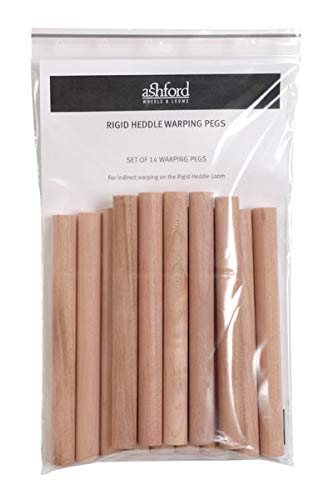
Ashford’s approach is all about accessibility and ease of use, making these pegs a fantastic choice for those new to rigid heddle weaving. They are straightforward to install and adjust, which is ideal if you frequently switch between different scarf widths.
The plastic construction is lightweight and cost-effective, though it lacks the sheer durability of metal alternatives. If you tend to crank your tension extremely tight for rug-style weaving, you might notice a slight flex in the material over time.
For most scarf projects using wool or cotton blends, these pegs are perfectly adequate. They provide just enough resistance to keep your warp threads organized without requiring a degree in engineering to operate. They are the definition of practical, no-fuss design.
Kromski Harp Forte Tension Adjustment Set

The Kromski Harp Forte is a beautiful piece of equipment, and their tension adjustment set matches that aesthetic while offering high functionality. These pegs are designed to work in tandem with the loom’s unique ratcheting system.
What I love about these is the tactile feedback they provide during the tensioning process. You can feel exactly when the tension is balanced across the width of the warp, which is vital when working with fibers that have low elasticity, such as linen.
Be aware that the finish on these pegs is quite smooth, which can be a double-edged sword. If you are using slippery synthetic yarns, you may need to double-check that your knots are secure against the peg, as there is less "bite" than on unfinished wood.
Glimakra Standard Loom Tensioning Pegs

Glimakra represents the gold standard for traditional, heavy-duty floor looms. Their tensioning pegs are built for the long haul, designed to handle the immense pressure of long warps and complex twill patterns.
These are not for the casual hobbyist; they are for the weaver who views their loom as a permanent fixture in the home. The metal components are robust and offer a level of stability that ensures your scarf width remains identical from the first inch to the last.
The tradeoff is the learning curve and the weight. These are heavier than your average accessory, and the installation process is more involved. If you are serious about production weaving, the investment in Glimakra’s hardware is well worth the effort.
Leclerc Weaving Loom Tension Control Pegs

Leclerc has been a staple in the North American weaving community for decades, and their tension pegs reflect that history of practical design. They are highly compatible with a wide range of their classic floor looms.
These pegs excel in environments where you need to make quick, frequent adjustments. If you are experimenting with different scarf widths using the same warp, the ease of movement on these pegs will save you significant time during the setup phase.
One minor drawback is that the finish can sometimes be a bit rough on older models. A quick sanding with fine-grit paper can solve this, ensuring that your delicate warp threads don’t snag or fray as you adjust your tension.
Harrisville Designs Adjustable Peg System
Harrisville Designs is known for their rugged, "workhorse" looms, and their adjustable peg system follows suit. These are designed to be simple, effective, and nearly indestructible, perfect for the weaver who wants to focus on the craft rather than the tool maintenance.
The design is remarkably intuitive, allowing for rapid adjustments that don’t require specialized tools. This is a huge plus if you struggle with hand fatigue or dexterity issues, as the knobs are sized for a comfortable, ergonomic grip.
Because they are so sturdy, they can be a bit bulky compared to sleeker, modern alternatives. Ensure you have enough clearance on your loom’s beam before purchasing, as these require a specific amount of space to operate properly.
Louet Erica Loom Tensioning Accessory
The Louet Erica is a beloved portable loom, and its tensioning accessories are designed to maintain that portability without sacrificing performance. These pegs are compact and efficient, ideal for the weaver who travels or has limited studio space.
They provide a precise, incremental adjustment that is surprising given their small footprint. If you are weaving fine scarves on the go, these pegs ensure that your tension stays locked in even while the loom is being moved or stored.
The main tradeoff is their size; they are not intended for heavy-duty, high-tension projects. If you try to push them beyond their intended capacity, you risk wearing out the locking mechanism prematurely. Keep these for your light-to-medium weight scarf projects.
Why Adjustable Pegs Improve Scarf Symmetry
Symmetry in a scarf is not just about aesthetics; it is about the structural integrity of the fabric. When your tension is uneven, the threads on one side of the loom are under more stress than the other, leading to "draw-in" that makes the scarf look lopsided.
Adjustable pegs allow you to compensate for this by fine-tuning the tension across different sections of the warp. This ensures that every thread is working in harmony, resulting in a scarf that hangs straight and drapes beautifully once it comes off the loom.
Without this level of control, you are essentially fighting against the physics of your loom. By utilizing adjustable pegs, you stop compensating with your hands and start relying on the precision of your equipment. It is the difference between a handmade look and a professional finish.
How to Calibrate Tension for Even Edges
Calibration is a process of small, iterative changes rather than one big adjustment. Start by tensioning your warp to a moderate level, then use a tension gauge or a simple "pluck test" to check the sound and feel of the threads across the width.
If the threads on the left are looser than the right, adjust the corresponding pegs until the pitch of the plucked threads is uniform. Remember that different fibers react differently to tension; wool has more "give," while linen is unforgiving.
Always re-check your tension after you have woven the first few inches, as the initial settling of the warp can change the dynamics. A little bit of patience during this calibration phase will save you hours of frustration when you reach the end of your scarf.
Essential Tips for Maintaining Loom Pegs
Your tension pegs are the heart of your loom’s performance, so treat them with care. Keep them clean and free of dust or stray fibers, which can build up and cause the pegs to stick or slip during operation.
If you are using wooden pegs, a light application of beeswax can help them glide smoothly without losing their grip. For metal pegs, ensure the threads remain clear of debris to prevent cross-threading or jamming.
Lastly, never force a peg if it feels stuck. Take a moment to inspect the track or the locking mechanism, as a little bit of maintenance now prevents a broken loom component later. Treat your tools with respect, and they will help you create beautiful scarves for years to come.
Investing in high-quality adjustable tension pegs is one of the most effective ways to upgrade your weaving practice. By taking control of your warp tension, you eliminate the common issues of uneven edges and distorted selvedges. Choose the system that best fits your specific loom model and your preferred fiber types. With these tools in your kit, you are well on your way to weaving scarves with professional-level precision.