6 Best Foldable Tables For Blocking Stations Tested
We tested top foldable tables for blocking stations. Discover our 6 best picks, evaluated for durability, stability, and portability for your workspace needs.
Blocking is the final, transformative step that turns a slumped, uneven piece of knitting into a professional-grade garment. To achieve this, you need a stable, expansive surface that won’t buckle under the tension of wet pins or heavy wool. A dedicated folding table is often the most practical solution for home crafters who lack a permanent workshop. Here is my guide to selecting the best folding stations to ensure your stitches set perfectly every time.
Cosco 6-Foot Centerfold Table: Best Overall Choice
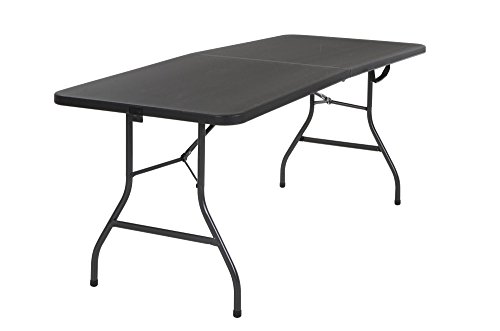

The Cosco 6-Foot Centerfold is a staple in many fiber studios because it offers a massive, uninterrupted surface area. When you are blocking a large lace shawl or a full-sized sweater back, having that extra length prevents the edges from drooping off the side.
The table features a solid, smooth resin top that is incredibly easy to wipe down after a damp blocking session. Its center-fold design means it stores away easily in a closet, which is a major win if you live in a smaller space.
However, be aware that the locking mechanism needs to be engaged firmly to ensure the table remains perfectly flat. If you are pinning down a heavy, water-saturated wool blanket, you want a surface that won’t flex in the middle. This table remains my top recommendation for its balance of size, portability, and stability.
Lifetime 4-Foot Adjustable Height Foldable Table

Sometimes you don’t need a massive table, but you do need one that saves your back during long pinning sessions. The Lifetime 4-Foot table offers adjustable height settings, which is a game-changer for someone spending hours hunching over intricate lace charts.
Being able to raise the table to waist height means you can pin with precision without straining your neck or shoulders. The smaller footprint is perfect for blocking socks, hats, or individual sweater pieces that don’t require a full six feet of space.
The trade-off here is the smaller surface area, which limits what you can block at one time. If you primarily work on garments, you might find yourself needing to block in sections. Choose this for ergonomic comfort and smaller-scale projects.
Flash Furniture Rectangular Plastic Folding Table

This table is the "workhorse" option, designed for durability and frequent use in high-traffic areas. The heavy-duty plastic surface is resistant to the moisture that inevitably drips from wet-blocked items.
Because the surface is slightly textured, it provides a bit of grip, which can actually help keep your blocking mats from sliding around while you work. It’s a straightforward, no-nonsense tool that does exactly what you expect it to do.
It lacks the bells and whistles of height adjustability, so you are stuck with a standard table height. If you have a sensitive back, you might need to pair this with a high stool to keep your posture comfortable. It is a reliable, budget-friendly choice for the dedicated maker.
Office Star Resin Multipurpose Folding Station

The Office Star resin table stands out for its lightweight construction, making it easy to move from your living room to your bedroom. If your blocking area doubles as a guest room or a dining space, this portability is essential.
The resin material is non-porous, meaning it won’t absorb any water or dye if you are blocking hand-dyed yarns that might bleed. This is a critical feature when working with high-contrast colorwork where bleeding could ruin your hard work.
While it is lightweight, it can feel slightly less rigid than heavier commercial tables under extreme tension. Always ensure your blocking mats are thick enough to protect the table surface from pin tips. This is an excellent choice for those who need to set up and break down their station frequently.
Best Choice Products 6-Foot Portable Craft Table
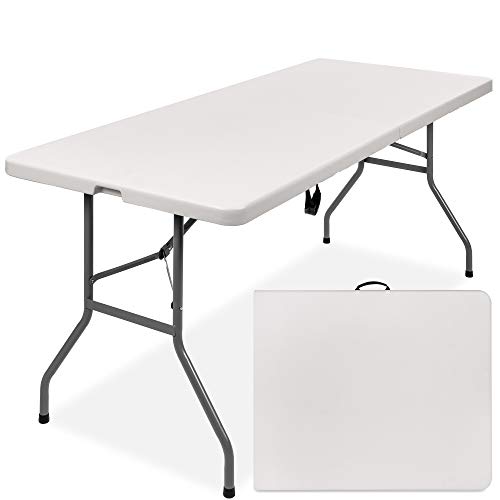
This table is designed specifically with crafters in mind, often featuring a slightly more aesthetic finish than industrial-grade folding tables. It provides a generous 6-foot length that is ideal for blocking long scarves or large triangular shawls.
The build quality is solid, providing a stable foundation for the firm pressure required to stretch out lace stitches. A flat, stable table is the difference between a shawl that drapes beautifully and one that ends up lopsided.
Because it is a 6-foot model, it does require a bit more storage space than the 4-foot options. Make sure you have the floor space to accommodate its footprint before committing. A great, reliable option for blocking larger, more complex projects.
Mainstays 5-Foot Fold-in-Half Utility Table

The 5-foot length is a "Goldilocks" size for many knitters who find 4 feet too small but 6 feet too cumbersome. It offers enough room for most sweaters and shawls while still being manageable to carry alone.
The fold-in-half design is very secure, and the handle makes it easy to tuck away into a corner. It’s a simple, functional utility table that gets the job done without any unnecessary frills.
The surface is standard plastic, so you will definitely want to use a set of interlocking foam blocking mats on top. These mats prevent your pins from scratching the plastic and provide the necessary medium to hold your tension. Perfect for the knitter who wants a middle-ground size without breaking the bank.
Essential Features for Blocking Station Tables
When shopping for a table, prioritize stability over everything else. A wobbly table will cause your blocking mats to shift, which can lead to uneven tension in your finished fabric.
- Height: Can you stand at it for 30 minutes without pain?
- Surface: Is it flat, non-porous, and resistant to moisture?
- Weight Capacity: Can it handle the weight of heavy, wet wool?
- Portability: Does it fit in your storage space when not in use?
Avoid tables with thin, flimsy legs that might buckle under the weight of a heavy, saturated wool blanket. A good blocking table should feel like a solid foundation for your craft.
Why Surface Material Matters for Blocking Mats
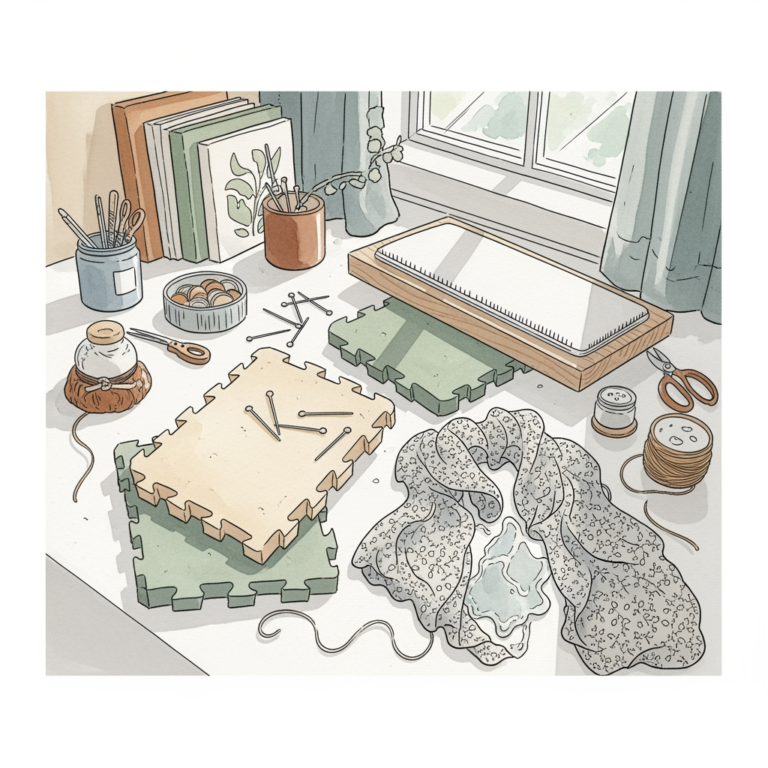
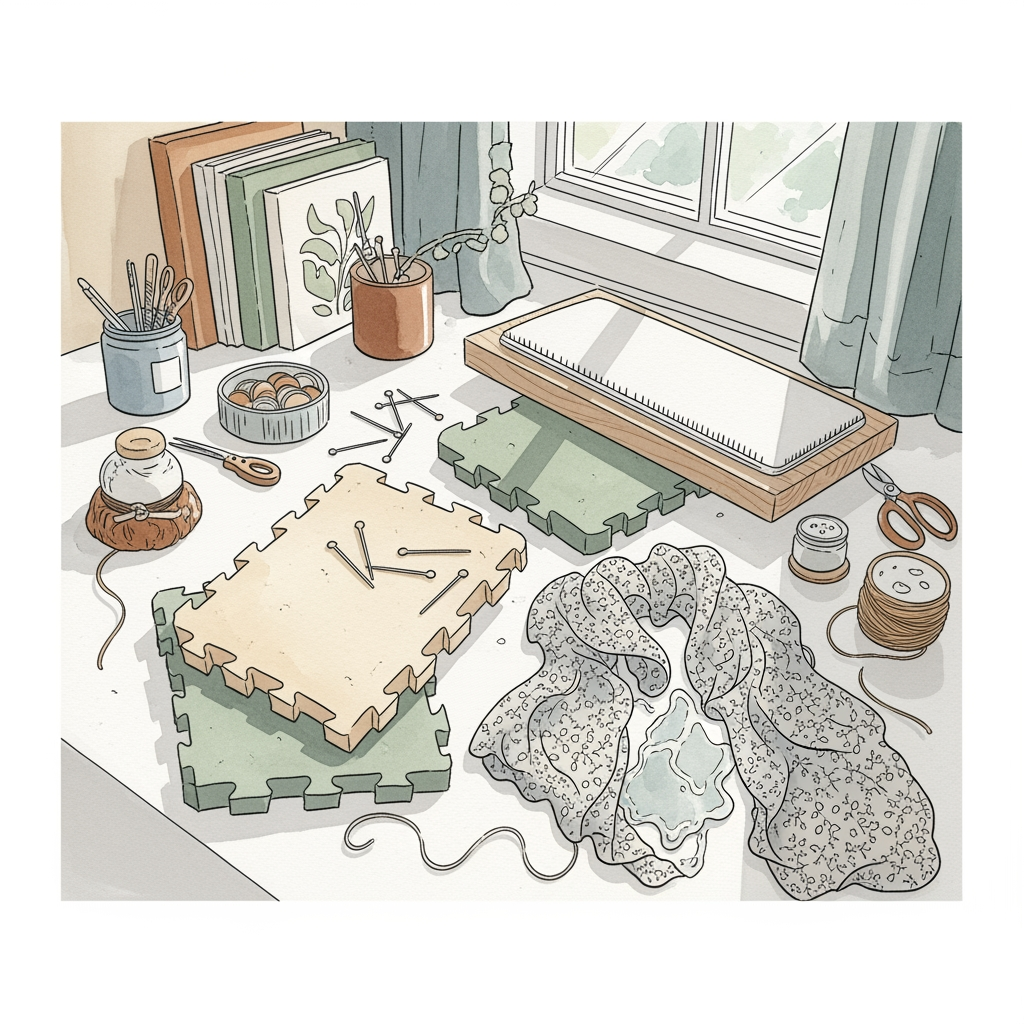
The table is just the base; your surface material is the interface between your pins and the table. I always recommend using thick, interlocking foam mats on top of any plastic folding table.
The foam allows you to push your T-pins in at an angle, which is essential for creating the perfect tension in lace or colorwork. If you pin directly into a hard table, you won’t be able to achieve the consistent tension required for professional results.
Ensure your mats are at least 0.5 to 1 inch thick to prevent the pin tips from damaging your table surface. Always treat the table as the support and the mats as the working surface.
How to Properly Set Up Your Home Blocking Area
Start by finding a space with good lighting so you can clearly see your stitch patterns and check for symmetry. A well-lit area is crucial for spotting dropped stitches or uneven tension before the piece dries.
Once your table is set up, cover it with a layer of towels or a drop cloth before laying down your blocking mats. This provides a secondary layer of protection against moisture and helps keep your workspace clean.
Position your table away from high-traffic areas where pets or family members might bump into it. A piece of lace left to dry can be easily snagged, so keep your station in a quiet, undisturbed corner.
Maintenance Tips for Your Folding Craft Tables
After every blocking session, wipe down the table surface with a damp cloth to remove any residual moisture or dye. Even if the material is water-resistant, leaving water to sit can cause mineral buildup or sticky residue over time.
Check the hinges and locking mechanisms periodically to ensure they aren’t collecting dust or debris. A quick spray of silicone lubricant can keep the folding joints moving smoothly for years.
When storing, keep the table in a cool, dry place to prevent the plastic from becoming brittle. If you store it vertically, make sure it is secured so it doesn’t tip over and damage the corners.
Your blocking station is an investment in the longevity and beauty of your knitting projects. By choosing a table that balances stability with your specific space requirements, you create a dedicated environment that encourages you to finish your projects properly. Remember that the best tools are the ones you use consistently, so prioritize your comfort and the needs of your workspace. Happy knitting, and may all your blocking sessions lead to perfectly finished garments.