6 Best Work Mats For Bench Surface Protection
Protect your workbench from damage with our top 6 picks for durable work mats. Explore our expert reviews and choose the perfect surface protection today.
Protecting a workspace is as essential as choosing the right needle size for a delicate lace project. A scratched table or a heat-damaged desk can ruin the joy of making, especially when working with fine yarns or precision tools. Selecting the right mat creates a dedicated zone for your craft, whether you are cutting fabric for a quilt lining or blocking a finished sweater. This guide explores the best surface protectors to ensure your fiber arts space remains functional, beautiful, and ready for your next project.
Olfa Self-Healing Rotary Mat: For Fabric Cutting


The Olfa mat is the gold standard for anyone who regularly uses a rotary cutter to prepare fabric for backing quilts or sewing bag linings. Its self-healing properties ensure that blade grooves vanish quickly, preventing the cutter from snagging or wandering during long, straight cuts.
For knitters who often incorporate fabric into their projects, precision is paramount. A surface that grips the fabric without sliding ensures that measurements remain accurate, preventing the dreaded “wobbly” edge that can make attaching a lining to a knitted piece frustrating.
While these mats are resilient, they are not designed for extreme heat. Avoid using heavy steam irons directly on the surface, as the heat can warp the mat’s core. Stick to these for cutting tasks, and keep the ironing board separate.
Litemogo Silicone Craft Mat: For Messy Projects

Silicone mats are the ultimate defense against spills and sticky residues. When working with fabric glues for decorative embellishments or hand-dying yarn at the kitchen table, this mat acts as a non-porous barrier that wipes clean in seconds.
The heat resistance of silicone is a major advantage for crafters who transition between tasks frequently. If you are glueing a label onto a finished hat and then decide to quickly steam-block a seam, the mat won’t melt or scorch under moderate temperatures.
However, silicone lacks the rigidity needed for precise fabric cutting. The surface can have a slight “give,” which may cause a rotary cutter to veer off track. Treat this as your “dirty” station mat, keeping it separate from your precision cutting surfaces.
Cocoknits Blocking Mat Kit: The Knitter’s Choice

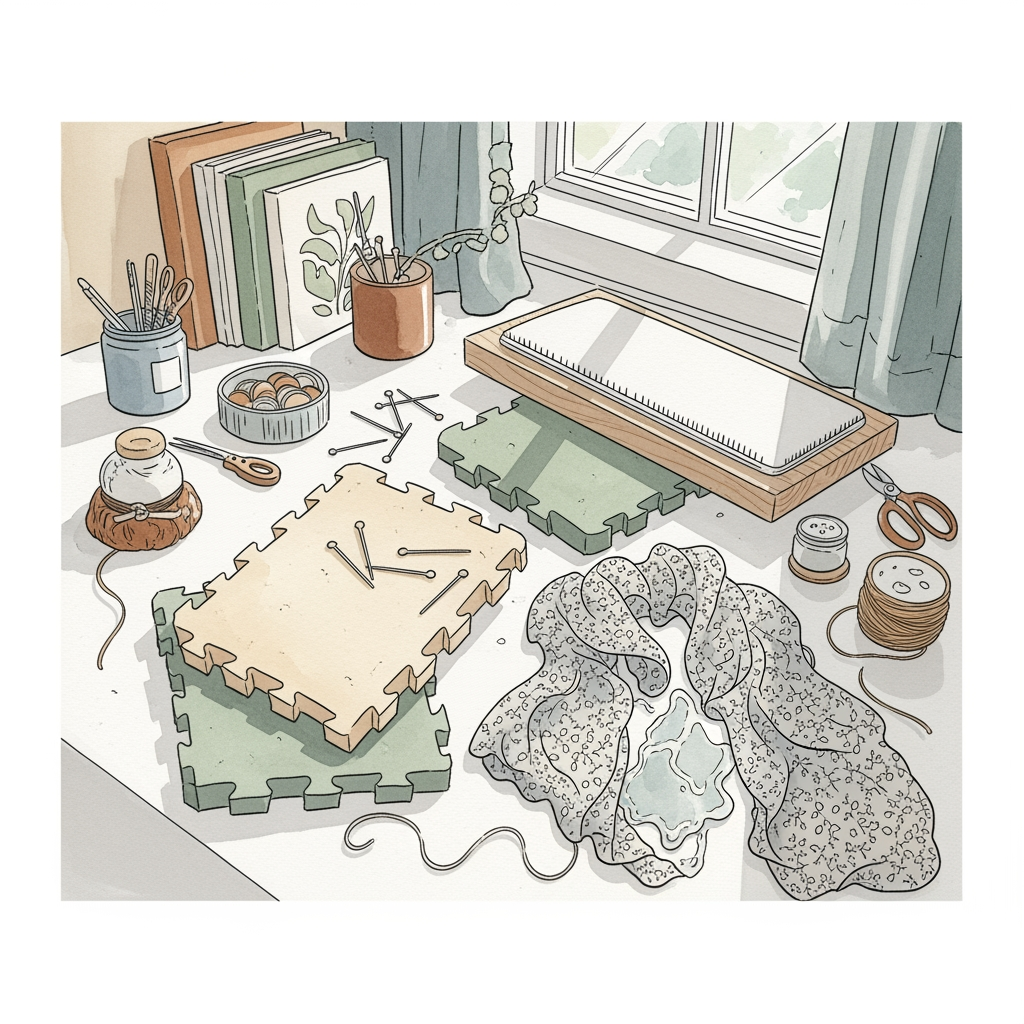
Blocking is the final, most crucial step in finishing a hand-knit garment, and the Cocoknits system is designed specifically for this purpose. The interlocking tiles allow for a custom-sized surface that can accommodate everything from a small swatch to a full-sized adult sweater.
The material is dense enough to hold T-pins firmly without crumbling over time. Unlike generic foam floor tiles, which can contain chemicals that might react with delicate natural fibers like mohair or silk, these are designed with the fiber artist’s safety in mind.
Consider the grid markings, which are a major functional benefit. Having a visual reference for square inches or centimeters makes it significantly easier to ensure that a pair of socks is blocked to identical dimensions.
The Gypsy Quilter Wool Mat: For Perfect Pressing

Wool pressing mats are transformative for the finishing stages of any project. The natural density of the wool fibers holds heat, effectively pressing both sides of a garment at once, which is ideal for smoothing out seams in heavy-weight wool sweaters.
Because wool is naturally heat-resistant, these mats protect your table surface from even the highest steam settings. They provide a firm, slightly textured base that prevents fabric or delicate yarn from shifting while you work.
The trade-off is maintenance and scent. When a wet iron hits a wool mat, expect a faint “sheep” aroma, which is completely normal for the fiber. Always store these flat, as they can lose their shape if bent or folded for extended periods.
Sullivans Cutting & Pressing Station: Dual-Use
For those with limited space, the Sullivans station offers a clever compromise. It combines a cutting surface with a pressing area, allowing for a seamless transition between drafting patterns and preparing fabric components for a project.
This is particularly useful for knitters who multitask. You can lay out your pattern pieces for a sweater lining, measure them against your blocked gauge swatch, and press your interface within the same footprint.
Be aware that no “hybrid” tool is perfect. The cutting side is excellent, but it will never quite match the longevity of a dedicated, high-end professional mat. It is an ideal choice for the apartment-dwelling crafter who needs high utility in a tight space.
Fiskars Eco Cutting Mat: Sustainable & Durable

Fiskars is a staple in the craft world for a reason: the durability of their materials. The Eco line focuses on construction that withstands years of heavy use, which is critical for those who produce multiple projects per year.
A thick, durable mat is essential when you are working with heavy-duty fabrics, such as heavy-weight cottons for bags or rugged canvas projects. The thickness of the mat prevents your cutting blade from hitting the underlying table, saving your furniture from permanent damage.
While these mats are long-lasting, they can be sensitive to extreme temperature changes. Do not store your mat in a cold garage or near a heater, as drastic shifts can cause the synthetic material to bow. Keep it stored flat in a climate-controlled room.
How to Choose the Right Work Mat for Your Craft
The first question to ask is whether your work is primarily cutting, pinning, or pressing. If you are focused on garment construction, you will likely need at least two different surfaces: one for the sharp, aggressive cuts of a rotary blade and one for the soft, heat-intensive process of blocking.
Consider the physical space available in your studio. If your workspace doubles as your dining table, portability and ease of storage must take precedence over having a massive, permanent surface.
Finally, evaluate the intensity of your projects. A casual hobbyist might find a dual-use mat sufficient, while a professional maker or prolific knitter will find that investing in specialized mats for each task pays for itself in efficiency.
Mat Materials: Silicone vs. Self-Healing vs. Wool
- Self-Healing: Composed of multi-layered vinyl, this material is designed to reseal after a blade passes through it. It is the gold standard for rotary cutting but is unsuitable for ironing.
- Silicone: A heat-resistant, rubber-like material that is perfect for messy tasks. It is waterproof and easy to clean but provides a poor surface for precise cutting.
- Wool: A dense, felted material that retains heat and stabilizes fabric. It is the superior choice for pressing, but it is not intended for use with cutting tools.
Keeping Your Cutting & Work Mats in Top Shape
Never roll your cutting mats for storage, as they will develop a permanent “memory” and never lay perfectly flat again. Always store them horizontally under a bed or hanging vertically on a wall hook.
Clean your self-healing mats periodically with a soft cloth and a mild vinegar-water solution to remove fiber dust and debris. This keeps the surface “tacky” enough to grip fabric without the buildup of grit that can dull your blades.
If your wool mat begins to smell dusty, a light steam from a distance can refresh the fibers. Always keep these away from direct sunlight, which can dry out and eventually degrade the cellular structure of both vinyl and wool mats.
Do You Really Need a Special Mat for Blocking?
While it is possible to block a project on a spare towel draped over a bed, a professional blocking mat is an investment in the final appearance of your work. The specialized foam used in these kits provides the airflow necessary for yarn to dry evenly, preventing mildew and ensuring that your stitches set correctly.
A towel lacks the grid lines that allow for symmetry. When you are blocking a complex lace shawl, being able to pull points to exact, measured coordinates ensures that your finished project is sharp and professional rather than lopsided.
If you are just starting out, prioritize a flat, pinnable surface over aesthetics. Once you start knitting sweaters or intricate lace, the transition to a proper blocking mat will feel like an upgrade that genuinely changes the quality of your finished handiwork.
Investing in a quality work mat is an investment in your craft itself, providing the stability and protection needed to execute your best work. Choose the tool that matches your primary project needs, maintain it properly, and your workspace will serve you well for years to come.