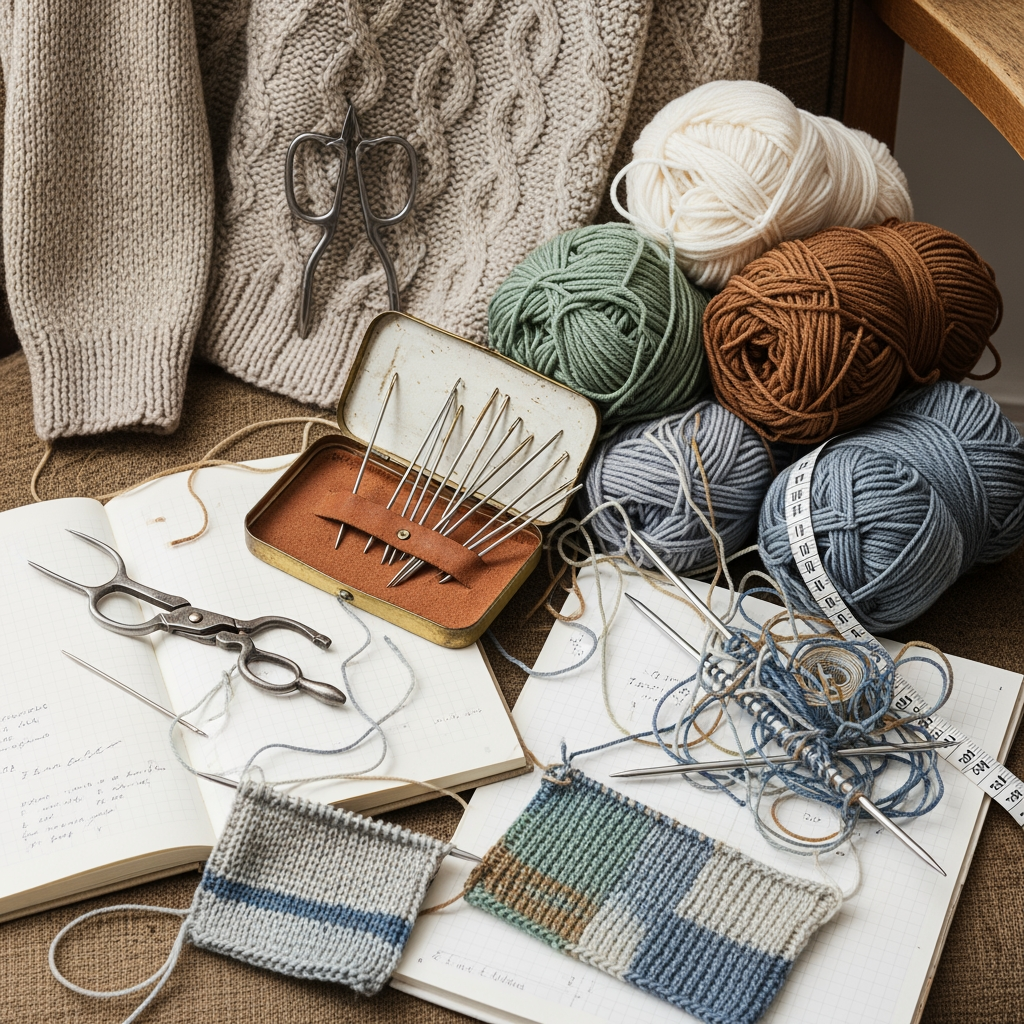
6 Best Wool Needles For Thick Seams Worth Owning
Struggling with bulky yarn? Discover the six best wool needles designed for thick seams. Our guide highlights durable, easy-threading picks for any project.
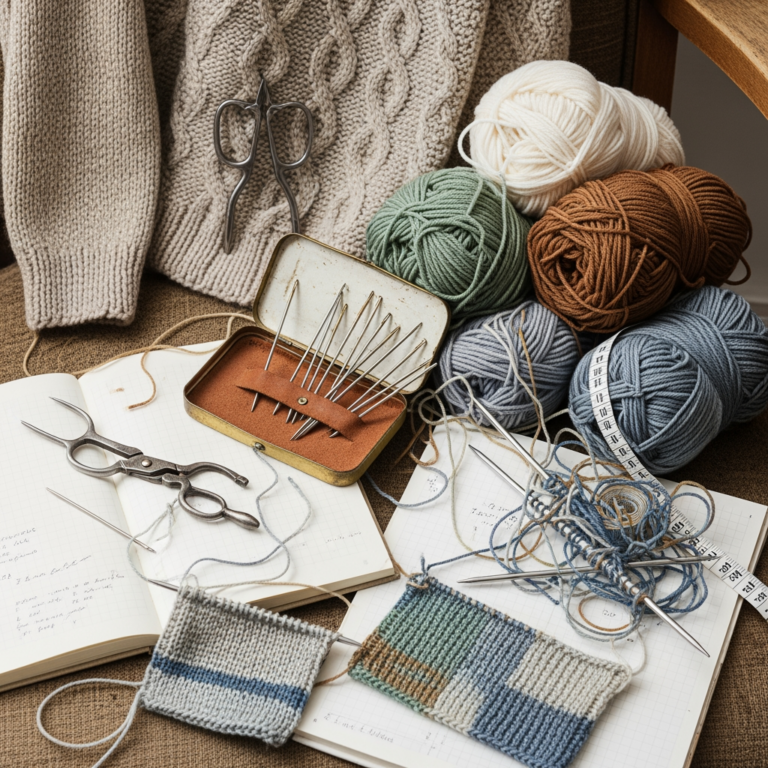
Finishing a chunky sweater is a satisfying milestone, but the wrong needle can turn a quick seaming job into a frustrating struggle. When working with bulky wool, the thickness of your yarn often outpaces the capacity of standard sewing needles. Choosing the right tool ensures your seams remain flexible, secure, and invisible. Here are the top picks to help you master the art of finishing heavy knitwear.
Clover Chibi Bent Tip Tapestry Needles: Best Overall


These needles have become a staple in my notions bag for good reason. The bent tip is a game-changer when you are trying to slide underneath a stitch without piercing the yarn fibers themselves.
The set comes in a convenient, sturdy carrying case that keeps them from vanishing into the depths of your knitting basket. Because they are made of a flexible, durable material, they don’t snap easily when you’re pulling thick, stubborn wool through a tight seam.
If you struggle with hand fatigue during finishing, the slight curve of the tip allows for a more ergonomic movement. It mimics the motion of a crochet hook, making it much easier to pick up loops without catching on the surrounding fabric.
Dritz Finishing Needles for Heavy Wool Seams
When you are dealing with truly heavy-weight, rustic wools, you need a needle that offers a bit more structural integrity. Dritz finishing needles are robust and have a slightly larger eye that accommodates even the thickest single-ply roving yarns.

The metal construction provides a stiff, reliable point that won’t bend when you are forcing the needle through a dense seam or a double-thick edge. This is particularly useful when you are seaming a heavy fisherman’s sweater where the fabric is naturally bulky.
Keep in mind that these are not as flexible as plastic alternatives. If you are a tight knitter, you’ll appreciate the rigidity, but be careful not to split your yarn as you navigate the stitches.
ChiaoGoo Large Eye Steel Tapestry Needles: Sturdy

ChiaoGoo is well-known for precision, and their steel tapestry needles are no exception. These are the workhorses of the knitting world, offering a smooth finish that glides through wool fibers with minimal resistance.
The large eye is the standout feature here, designed specifically for weavers and knitters who work with chunky, multi-ply yarns. Because they are steel, they are incredibly durable and won’t develop those annoying burrs that can snag your delicate cashmere or soft merino.
While they are excellent for most projects, they lack the bent tip found in other specialized needles. Use these when you need a straight, precise angle to insert your needle into a specific, tight spot in a complex cable pattern.
Cohana Bent Tip Needles: Precision for Thick Yarn

Cohana tools are as beautiful as they are functional, but their bent tip needles offer more than just aesthetics. They provide a level of delicate control that is ideal for finishing fine-gauge items that still require a bit of extra help with thick yarn.
The tip is finely tapered, which allows you to navigate between the "legs" of a stitch with surgical precision. This is essential if you are trying to hide your yarn ends within a seam without creating a visible lump.
These needles are a luxury item, but they pay for themselves in the quality of your finishing work. If you find yourself frequently frustrated by bulky, clumsy needles that distort your stitch pattern, this is the upgrade you need.
Tulip Tapestry Needles: Best for Smooth Piercing
Tulip needles are renowned for their incredibly smooth surface and perfectly shaped eyes. When you are working with sticky, high-friction fibers like unspun wool or mohair, the slickness of these needles is a massive advantage.
The tip is designed to be sharp enough to pierce if necessary, yet rounded enough to glide through the fabric effortlessly. This balanced design makes them versatile enough to switch between seaming a bulky sweater and weaving in ends on a lighter project.
They feel substantial in the hand without being heavy. If you have any sensitivity to metal, you will appreciate how smoothly these move through the wool, reducing the "drag" that often happens with lower-quality, textured needles.
Pony Plastic Finishing Needles for Bulky Knits

Sometimes, you don’t need a precision instrument; you need something that is gentle on your hands and won’t snag your yarn. Pony plastic needles are perfect for beginners or for those working with very soft, delicate fibers.
Because they are plastic, they are flexible and lightweight. This makes them less likely to accidentally split your yarn, as the rounded, blunt tip naturally pushes the fibers aside rather than piercing them.
They are also excellent for children or for knitters who find metal needles too cold or slippery. While they aren’t the best for extremely tight, dense seams, they are a fantastic, affordable option for standard bulky weight projects.
How to Select the Right Needle Eye for Wool Seams
The eye of the needle is just as important as the tip. If the eye is too small, your yarn will fray and break as you pull it through; if it is too large, the needle will be difficult to push through the fabric.
- Large, elongated eyes: Ideal for bulky, thick, or multi-ply wools.
- Small, rounded eyes: Best for fine-gauge, lace-weight, or delicate fibers.
- Flexible eyes: Great for threading very thick, fuzzy wool that doesn’t compress easily.
Always match your needle eye to the thickness of your yarn. If you have to struggle to get the yarn through the eye, it is likely going to cause friction and damage your yarn as you sew.
Why Bent Tip Needles Improve Seaming Efficiency
The primary benefit of a bent tip is the ability to work "under" the fabric rather than "through" it. By curving the needle, you can easily scoop up the bar of a stitch, which is the standard technique for a professional-looking mattress stitch.
This design reduces the amount of wrist rotation required to complete each stitch. Over the course of seaming an entire sweater, this small mechanical advantage significantly reduces strain and improves your speed.
Bent tips also make it much easier to enter and exit the seam in tight corners. You can maneuver the needle into position without having to manipulate the entire garment to get the right angle.
Managing Tension When Joining Thick Wool Pieces
Seaming thick wool requires a delicate balance of tension. If you pull your yarn too tight, you will create a stiff, puckered seam that ruins the drape of your garment; if you pull too loosely, the seam will sag and look unprofessional.
Try to mimic the tension of the original knitting as you work. Use your thumb to hold the yarn in place as you pull it through each stitch, ensuring that it lies flat against the fabric without distorting the surrounding loops.
If you are working with superwash wool, remember that it has more "stretch" than non-superwash. You may need to leave your seam slightly looser than you think, as the yarn will naturally relax and settle over time.
Essential Tips for Securing Bulky Yarn Tail Ends
Securing ends in bulky wool can be tricky because the tail is often too thick to hide easily. Instead of just knotting it, which creates a hard lump, weave the tail through the back of the stitches for several inches.
If the yarn is very thick, you can gently untwist the plies and weave them in separately. This distributes the bulk and makes the end virtually invisible, even on the inside of the garment.
Always weave your ends in the direction of the stitch pattern. Following the path of the yarn makes the repair blend in seamlessly and prevents the end from working its way loose over time.
Investing in a high-quality set of wool needles is one of the most underrated ways to improve your knitting results. Whether you prefer the precision of a bent tip or the reliability of steel, the right tool makes the finishing process a pleasure rather than a chore. Take the time to experiment with these options to see which matches your unique knitting style and project needs. Happy seaming!