6 Best Sewing Awls For Heavy Materials To Try
Need to stitch leather or canvas? Discover the 6 best sewing awls for heavy materials. Our guide compares durability and ease of use for your toughest projects.
Sewing leather or heavy canvas is a natural extension for many fiber artists looking to create custom project bags or durable notions cases. Just as choosing the right needle size for a bulky wool yarn changes the drape of your fabric, selecting the correct sewing awl dictates the strength and longevity of your leather seams. These tools are the heavy-duty counterparts to our delicate tapestry needles, designed to pierce through dense materials that would snap a standard sewing needle. Understanding how to wield these tools will elevate your handmade projects from hobbyist crafts to professional-grade gear.
Speedy Stitcher Sewing Awl: The Gold Standard


When you need a reliable workhorse, the Speedy Stitcher is the tool most makers reach for first. It functions much like a sewing machine in your hand, utilizing a lockstitch that is incredibly secure for heavy-duty applications.
Think of this like your favorite set of interchangeable circular needles; it is versatile enough to handle almost any project you throw at it. Whether you are repairing a thick canvas gear bag or stitching a leather strap for your knitting tote, the internal spool keeps your thread tension consistent.
The trade-off is that it requires a bit of practice to master the tensioning. If you don’t keep a firm grip on the thread, your stitches might look loose, much like an uneven row of stockinette.
Tandy Leather Craftool Awl: Best for Precision

If your project requires delicate, precise holes—perhaps for a leather needle case or a custom handle—the Craftool awl is an excellent choice. It is a manual tool, meaning you provide the force to pierce the material, which gives you complete control over every single stitch.
This is the "dpn" (double-pointed needle) of the leather world: simple, elegant, and highly effective in the right hands. You will need to use a separate needle to pull your thread through, which allows you to use two needles at once for a traditional saddle stitch.
Because it doesn’t have a spool, you aren’t limited by the thickness of the thread pre-loaded into the handle. You can use heavy-duty waxed linen thread, which is perfect for ensuring your seams won’t pop under the weight of a heavy project bag.
C.S. Osborne Lockstitch Awl: Built to Last

The C.S. Osborne brand is synonymous with durability, much like a pair of vintage nickel-plated knitting needles that have been passed down through generations. This tool is a heavy-duty lockstitch awl designed for those who want a tool that will outlive their current project pile.
The construction is robust, featuring a sturdy handle that feels substantial in the palm. If you are working with multiple layers of thick vegetable-tanned leather, the weight of this tool helps drive the needle through without excessive manual strain.
Keep in mind that this is a professional-grade tool, so it doesn’t come with the "beginner-friendly" bells and whistles of mass-market versions. However, for the serious maker, the reliability of the stitch is well worth the learning curve.
Weaver Leather Pro Stitcher: Best for Heavy Duty

When you are working with exceptionally thick materials, like heavy-duty harness leather or multi-layered canvas, the Weaver Leather Pro Stitcher provides the leverage you need. It is designed specifically for high-tension work where a standard awl might bend or slip.
It is comparable to using a size 10mm needle with bulky yarn; it is built to handle the heavy lifting without breaking a sweat. The ergonomic handle design is a major plus, especially if you have a long afternoon of stitching ahead of you.
Be aware that this tool is quite large, which can make it feel slightly cumbersome for smaller, intricate details. It is best reserved for structural seams where strength is far more important than aesthetic delicacy.
Generic Wood Handle Awl: The Budget Choice
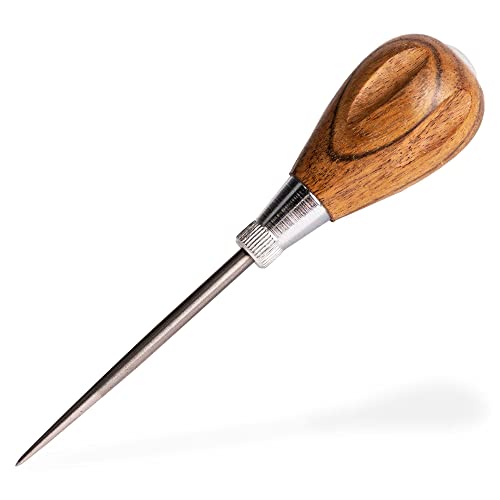
Sometimes you just need a basic tool to get the job done, and a generic wood-handle awl is often the most accessible starting point. It isn’t a complex piece of machinery, but it does exactly what you need it to do: it creates a hole.
Think of this as your basic bamboo straight needle; it is simple, affordable, and gets the job done without any unnecessary complications. It is perfect for those who are just starting to experiment with leather and aren’t ready to invest in high-end equipment.
The downside is that the metal quality may not be as high as professional brands, meaning the tip might dull faster. If you find yourself enjoying leatherwork, you will eventually want to upgrade to a tool that holds a sharper edge.
Fiebing’s Professional Awl: Best for Beginners
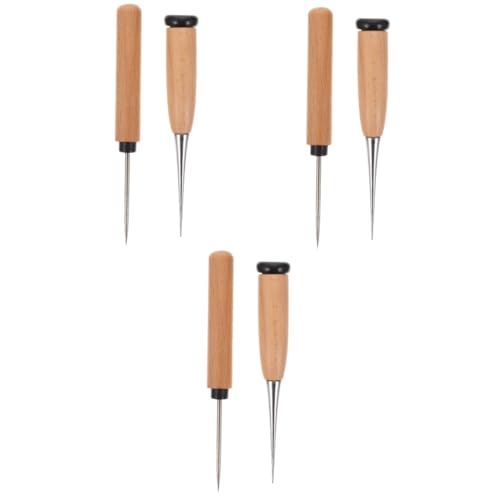
Fiebing’s is a name you will see in almost every leather shop, and their professional awl is a fantastic entry point for the novice. It is designed with a comfortable grip and a balanced weight that helps beginners learn the correct angle for punching holes.
It is much like a beginner’s knitting kit that includes everything you need to start your first scarf. It is forgiving, reliable, and provides a clear sense of how the tool should interact with the material.
The key to success here is to remember that the awl is meant to guide your path, not force it. Take your time, maintain a consistent angle, and your stitches will look as clean as a well-blocked lace project.
How to Choose the Right Awl for Heavy Materials
Choosing an awl is very similar to choosing the right knitting needle for a specific fiber. You must consider the thickness of your material, the weight of your thread, and the intended use of the finished piece.
- Material Density: Thicker, denser leather requires a diamond-shaped point to slice through the fibers rather than pushing them aside.
- Thread Weight: Ensure the eye of your needle is large enough to accommodate your chosen thread without shredding it.
- Ergonomics: If you plan on long sessions, prioritize a handle that fits your hand comfortably to avoid fatigue.
Ultimately, the right tool is the one that allows you to maintain consistent tension and spacing. Don’t be afraid to experiment with different sizes until you find the one that feels like an extension of your own hand.
Essential Tips for Sewing Thick Leather and Canvas
When working with heavy materials, the most common mistake is trying to stitch too fast. Just like in knitting, where rushing leads to dropped stitches and uneven gauge, rushing through leatherwork leads to crooked lines and weak seams.
- Mark your lines: Use a wing divider or a stylus to mark your stitch line before you start.
- Use a backing: Always place a scrap piece of leather or a cutting mat underneath your work to protect your table and your awl tip.
- Wax your thread: Always use beeswax on your thread to ensure it glides through the material and resists fraying.
The most important thing is to keep your stitches consistent. If your hole spacing is uneven, your seam will be structurally compromised, regardless of how strong your thread is.
Maintaining Your Awl Needles for Sharp Results
A dull awl is a dangerous awl because it requires more force to penetrate the material, which increases the chance of slipping. You should treat your awl needles with the same care you give your favorite metal needles—keep them clean and sharp.
- Strop regularly: Use a leather strop with polishing compound to keep the edges of your awl sharp.
- Avoid moisture: Always wipe your needles down after use to prevent rust, especially if you live in a humid climate.
- Replace when necessary: If you notice the needle is snagging or bending, do not try to repair it; replace it immediately.
Sharp tools make the work easier, safer, and much more enjoyable. When your tool glides through the leather like a hot needle through butter, you know you are doing it right.
Safety Best Practices When Using Sewing Awls
Safety is paramount when working with sharp, pointed tools. Always keep your fingers away from the path of the needle, and never point the awl toward your body while applying pressure.
- Mind your posture: Sit at a table with good lighting so you can see exactly where the needle is exiting the material.
- Secure your work: Use clamps or a stitching pony to hold your leather in place so you don’t have to use your hands to stabilize it.
- Store correctly: When not in use, keep your awl in a protective sheath or a dedicated tool roll to prevent accidental pokes.
Treat your tools with respect, and they will help you create beautiful, long-lasting items. A mindful approach to safety ensures that your crafting time remains a joy rather than a source of injury.
Armed with the right sewing awl, you are well-prepared to tackle those heavy-duty projects that require more than just yarn and needles. Remember that mastering these tools, much like mastering a complex cable pattern, takes patience and consistent practice. Start with simple repairs or small accessories to build your confidence before moving on to larger, structural builds. With the right technique and a sharp tool, you will find that working with leather and canvas is just as rewarding as any knitting project.