
6 Best Swift Umbrellas For Yarn Prep Worth Owning
Discover the 6 best swift umbrellas for efficient yarn prep. We compare features and durability to help you find the perfect tool for your knitting needs.
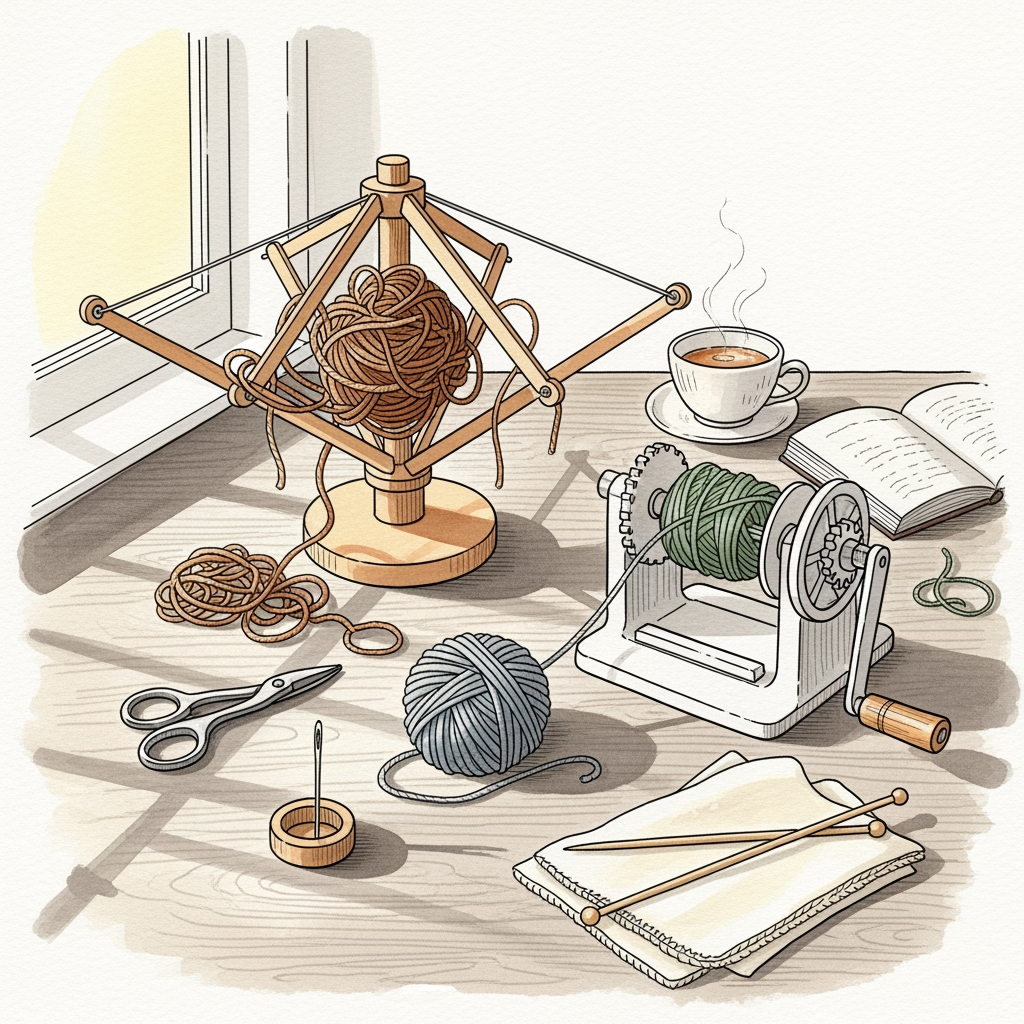
Every knitter eventually reaches the point where they trade pre-wound center-pull cakes for the beauty of hand-dyed hanks. While those twisted skeins look like works of art, they are a tangled disaster waiting to happen if you don’t have the right equipment. A reliable swift is the bridge between a luxurious purchase and a stress-free casting-on experience. Here are the tools that will save your yarn—and your sanity—during the prep process.
Stanwood Needlecraft Tabletop Swift: Best Overall
The Stanwood tabletop model is the gold standard for a reason. It features a smooth, ball-bearing rotation that allows the yarn to glide off the swift without catching or snapping.
If you frequently work with delicate fibers like lace-weight mohair or fine silk, this is your best friend. The gentle rotation prevents the accidental stretching that occurs when you fight against a sticky or poorly balanced swift.
It is built to last, with heavy-duty metal hardware that doesn’t loosen after a few uses. While it carries a higher price tag than basic models, the investment pays for itself in how much time you save on untangling messes.
Amish Style Wooden Yarn Swift: Best Budget Pick
The Amish-style swift is a brilliant piece of functional design. Unlike umbrella styles, this sits on a table and expands horizontally, which makes it incredibly stable for even the most aggressive winders.
Because it lacks the complex mechanical hinges of an umbrella swift, there is very little that can break. It’s a simple, elegant solution for those who want a reliable tool without the mechanical complexity.
The main trade-off is the footprint. It takes up a significant amount of table space, so ensure you have a dedicated crafting surface before committing to this style.
Lacis Wooden Umbrella Swift: Best Professional Tool
For the serious stash-builder, the Lacis umbrella swift is a precision instrument. It is crafted with high-quality wood that is sanded to a glass-like finish, ensuring that even the most fragile singles won’t snag on the frame.
This tool is designed for those who wind yarn for hours at a time. The tension control is consistent, and the mechanism is engineered to handle the varying circumferences of different skein sizes with ease.
It is a professional-grade tool that feels substantial in your hands. If you are regularly winding bulky-weight wool or large quantities of yarn, the durability of this unit is unmatched.
Strauch Jumbo Ball Winder Swift: Best for Bulk Use


If you are a sweater knitter who buys yarn by the pound, a standard swift might feel like it’s struggling to keep up. The Strauch Jumbo swift is built specifically to accommodate large, heavy hanks that would tip over a lighter model.
The structural integrity here is key. When you are winding a 400-gram skein of worsted wool, the sheer weight can cause cheaper swifts to wobble or collapse.
This model keeps the yarn perfectly taut throughout the entire winding process. It is a heavy-duty piece of equipment that prioritizes function over portability.
KnitPicks Yarn Swift: Best for Daily Home Knitting
The KnitPicks swift is the quintessential "workhorse" for the average home knitter. It is lightweight, easy to store, and simple to set up in seconds.
It strikes a perfect balance between cost and performance. If you only wind a few skeins a month, you don’t need a professional-grade studio tool; you need something that works when you need it and hides away when you don’t.
It handles standard fingering and worsted weights beautifully. It is an honest, reliable tool that won’t break the bank but will get the job done every time.
ChiaoGoo Yarn Swift: Most Portable Design Option
Portability is often overlooked until you are heading to a knit night or a retreat. The ChiaoGoo swift is designed to be compact and lightweight, making it easy to toss into a project bag.
Despite its smaller size, it doesn’t sacrifice stability. It features a clever clamping mechanism that secures firmly to almost any table edge, providing a sturdy base for winding.
This is an excellent choice for knitters with limited space. When you’re done, it folds down into a slim profile that fits easily into a drawer or shelf.
Why You Need a Swift for Hand-Dyed Skein Prep
Hand-dyed yarn is almost always sold in hanks, which are essentially large loops of twisted fiber. If you try to wind these by hand without a swift, you are almost guaranteed to end up with a "yarn barf" of tangled knots.
Using a swift keeps the yarn under a consistent, light tension. This is crucial for maintaining the integrity of the fiber, especially with delicate natural yarns like alpaca or cashmere that can be damaged by excessive handling.
Furthermore, a swift allows you to inspect the yarn for knots or breaks as you wind. It turns a chore into a meditative part of your knitting workflow.
How to Properly Mount Your Swift for Stability
A wobbly swift is a knitter’s worst nightmare. Always ensure your table surface is clean and that the clamp is tightened securely to the edge.
If your table is too thick for a standard clamp, don’t force it. Use a piece of scrap wood to bridge the gap or look for a swift with a wider clamp opening to prevent damage to your furniture.
Position your swift far enough away from your ball winder so the yarn has a clear, unobstructed path. A good rule of thumb is to keep them about 18 to 24 inches apart for optimal tension.
Avoiding Tangled Yarn: Tips for Smooth Winding
Always shake out your skein before placing it on the swift to ensure the threads are aligned. If you skip this step, you are inviting the yarn to catch on itself as it rotates.
Start winding slowly. It is tempting to speed up, but a steady, rhythmic pace is what prevents the yarn from jumping off the swift’s arms.
If you encounter a knot in the yarn, stop immediately. It is better to cut and rejoin the yarn intentionally than to try to wind through a tangle and create a permanent, messy knot in your ball.
Maintaining Your Swift for Long-Term Performance
Most wooden swifts benefit from a light dusting and an occasional wipe-down with a dry cloth. Avoid using harsh cleaners, as they can strip the wood of its natural finish and cause the yarn to snag.
If your swift uses metal hinges, a tiny drop of sewing machine oil can keep the rotation smooth. Just be sure to wipe away any excess so it doesn’t transfer to your precious yarn.
Store your swift in a dry, temperature-controlled environment. Wood can warp if left in a damp basement or a hot attic, which will eventually throw off the balance of the entire mechanism.
Choosing the right swift is about matching your tool to your specific knitting habits and the types of yarn you love most. Whether you prioritize professional-grade durability or simple, portable convenience, there is a model here that will make your prep work seamless. Invest in a quality swift, and you will find that winding your own yarn becomes one of the most satisfying rituals of your craft. Happy knitting, and may your yarn always wind smoothly.
