6 Best Cable Keys For Tight Join Maintenance
Maintain secure connections with our guide to the 6 best cable keys. Learn how to optimize tight join maintenance, ensure signal integrity, and boost efficiency.
Nothing ruins the rhythm of a complex lace project faster than a snagged stitch at the needle-to-cable join. Every knitter eventually encounters that dreaded gap where yarn fibers catch, potentially leading to dropped stitches or uneven tension. Investing in the right tightening key is the simplest way to ensure your needles remain a seamless extension of your hands. Here are the best tools to keep your circular knitting smooth, secure, and frustration-free.
ChiaoGoo Stainless Steel Cable Tightening Key


The ChiaoGoo key is arguably the industry standard for a reason. Its thin, durable stainless steel construction allows it to slide perfectly into the small, precision-engineered hole found on their TWIST and SPIN cables.
Because these keys are remarkably sturdy, they won’t bend or snap under the pressure of a firm twist. If you are working with slippery materials like silk or bamboo yarns, you need that extra bit of torque to ensure the join doesn’t loosen while you work.
The trade-off is their size; they are quite small and prone to disappearing into the depths of a project bag. I always recommend attaching a small charm or a bit of colorful yarn to the loop to make them easier to track.
HiyaHiya Interchangeable Needle Gripping Key
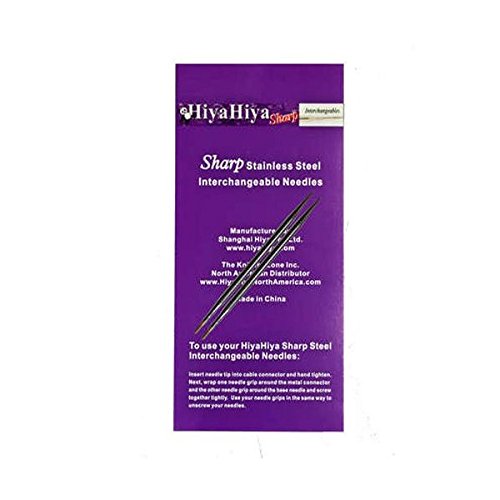
HiyaHiya designs their keys with a slightly different geometry that feels incredibly intuitive. The "L" shape provides a natural lever, allowing you to get a firm grip without straining your fingers or wrists.
This tool is particularly helpful for knitters who suffer from hand fatigue or arthritis. When you are working on a heavy project, like a wool-blend sweater, the weight of the fabric can cause the needles to unscrew over time; the HiyaHiya key provides the leverage needed to stop that migration.
Do keep in mind that these are specifically sized for HiyaHiya systems. While they might fit into other brands, they are optimized for the specific tension required by their proprietary swivel and fixed cables.
Knitter’s Pride Stainless Steel Cable Key Tool

Knitter’s Pride keys are reliable workhorses that come standard with most of their interchangeable sets. They are straightforward, no-nonsense tools that get the job done without any unnecessary flair.
I find these keys are excellent for beginners who are just learning the "feel" of a secure connection. They offer just enough resistance to let you know when the join is fully tightened, preventing the common mistake of over-tightening and stripping the threads.
If you find yourself losing these often, they are generally the most affordable to replace. Keep a few in your notions pouch and a few more at your primary knitting station to ensure you’re never caught without one.
Addi Click Interchangeable Needle Tightening Key

The Addi Click system is unique because it uses a push-and-twist mechanism rather than a traditional screw-in thread. Consequently, the "key" here is more of a structural necessity for the locking system than a tightening lever.
If you are a knitter who loves the speed of the Addi click-in system, you must ensure you hear that distinct "click." The tool acts as a guide to ensure the internal spring mechanism is fully engaged and locked.
Because this system doesn’t rely on threads, it is virtually immune to the loosening that happens with standard screw-in needles. It is a fantastic choice for fast-paced knitters who don’t want to pause to check their joins every few rows.
Lykke Driftwood Interchangeable Cable Key Set

Lykke keys are designed to match the aesthetic of their beautiful driftwood needles, but they are functionally robust as well. They are slightly thicker than the ChiaoGoo keys, which makes them easier to hold for those who find thin metal tools difficult to manipulate.
The metal used is smooth and won’t snag your yarn if you accidentally brush it against the needle tip. This is a subtle but important feature for those working with delicate, single-ply yarns that are prone to pilling or breaking.
These keys are best suited for the Lykke system, as the hole size is calibrated to their specific cable ends. Using them on other brands might result in a loose fit that doesn’t provide the necessary security.
Clover Interchangeable Needle Tightening Tool

Clover’s tool often features a slightly more ergonomic handle than the standard wire keys. This is a massive benefit if you have been knitting for hours and your hands are feeling the strain of a long session.
The handle provides a better surface area to push against, allowing for a tighter seal with less physical effort. It feels substantial in the hand, which is helpful if you are prone to misplacing smaller, wire-style tools.
While it is a bit bulkier to store, the trade-off is the ease of use. It is a perfect addition to a home knitting kit where space isn’t as much of a concern as comfort and efficiency.
Why Tight Joins Prevent Yarn Snags and Breakage
A loose join creates a tiny "step" or gap between the needle tip and the cable. As you move your stitches from the cable onto the needle, the yarn catches on this edge, leading to fraying or even snapped fibers in delicate yarns like mohair or alpaca.
Beyond damage, a gap is a magnet for stitch distortion. When your yarn catches, you instinctively pull harder to move the stitch along, which can result in uneven tension and inconsistent gauge across your fabric.
By keeping the join perfectly flush, you allow the yarn to glide effortlessly across the transition point. This preserves the integrity of your yarn and ensures that your finished fabric looks professional and uniform.
Proper Technique for Using a Cable Tightening Key
Insert the key into the hole at the base of the needle while the cable is attached. Use the key as a lever to hold the cable steady while you rotate the needle tip with your other hand.
Don’t overdo it; you only need to reach the point where the needle is snug against the cable. Over-tightening can actually damage the threads, making it harder to connect them securely in the future.
Always use a rubber gripper pad alongside your key for the best results. The pad gives you the traction needed to hold the needle firmly, while the key provides the mechanical advantage to finish the job.
Signs Your Interchangeable Join Needs Tightening
If you hear a faint "click" or feel a slight wiggle when you move your stitches, your join is likely loose. This is a common occurrence during long projects where the natural movement of the needles creates a slow unscrewing effect.
Watch your yarn carefully; if you see fibers catching or bunching at the join, stop immediately. Continuing to knit with a snagging join will eventually weaken the yarn and leave a visible row of distorted stitches in your work.
Checking your joins should become a part of your knitting ritual. I always give my needles a quick check every time I sit down to start a new session or after a long break.
Maintenance Tips for Needle Cable Connections
Periodically clean the threads of your needles and cables with a soft, dry cloth to remove lint and dust. Over time, debris can build up in the threads, preventing a tight seal even when you use a key.
Store your cables in a way that minimizes kinking, as a kinked cable puts unnecessary torque on the join. A stressed cable is much more likely to pull apart from the needle during use.
If you notice a join that just won’t stay tight, check the threads for damage. Sometimes a tiny bit of wax or a specialized thread lubricant can help, but if the threads are stripped, it is time to replace that specific cable.
Maintaining your needle connections is a small, five-second habit that pays massive dividends in the quality of your finished projects. By choosing the right key for your specific system and making it a habit to check your joins, you eliminate one of the most common sources of knitting frustration. Keep your tools in good working order, and your knitting will remain the relaxing, creative outlet it was meant to be.