6 Best Notebook Binders For Dye Recipe Tracking
Organize your dye recipes with these 6 top-rated binders. We compare durability, ring mechanisms, and archival features to help you track your color formulas.
Achieving the perfect shade of indigo or a precise madder root red requires more than just intuition; it demands rigorous documentation of every variable. When you are working with natural or synthetic dyes, the difference between a masterpiece and a muddy mess often lies in your notes. A dedicated notebook binder acts as your laboratory log, ensuring that your successful experiments can be replicated years down the line. These six options provide the structure necessary to turn your dye kitchen chaos into a professional-grade archive.
Filofax Classic A5: Best Overall for Dye Recipes


The Filofax Classic A5 is the gold standard for those who treat their dye practice like a professional laboratory. Its ring-binder mechanism allows you to reorganize your recipes by fiber type, mordant, or dye source as your collection grows.
This system is perfect for the dyer who constantly iterates on their process. You can pull out a specific recipe sheet to take into the dye shed without risking the entire volume to accidental splashes of cochineal or weld.
The trade-off here is the bulk; it is not a notebook you toss into a small project bag. However, for a stationary home studio, the ability to add graph paper for bath calculations and plastic sleeves for fiber samples makes it an unmatched organizational powerhouse.
Leuchtturm1917 A5: Best for Ink and Dye Swatches
If you prefer a bound book over loose-leaf, the Leuchtturm1917 is a favorite for its high-quality, ink-friendly paper. It handles the moisture of a taped-in fiber sample or a small swatch of dyed yarn without significant buckling.
The numbered pages and blank table of contents are essential for keeping track of your dye sessions chronologically. You won’t have to flip through fifty pages to find that specific recipe for a variegated merino-nylon blend you created last spring.
Be mindful that you cannot rearrange the pages, so you must commit to your order early. If you are the type of dyer who likes to group by color family, consider leaving extra pages between sections to accommodate future experiments.
Kokuyo Campus Smart Ring: Best for Custom Layouts

The Kokuyo Smart Ring binder is a brilliant, lightweight solution for the dyer who values portability and minimalist design. It uses a unique sliding ring mechanism that lays perfectly flat, making it easy to write down measurements while your hands are busy with wet wool.
Because it uses specialized loose-leaf paper, you can mix and match grid, lined, and dot-grid sheets in a single binder. This is ideal for pairing a complex chemical formula on grid paper with a narrative description of the process on lined paper.
It is incredibly thin, which means you might need several binders if you are a prolific dyer. Think of these as "volume one, volume two" archives rather than a single, all-encompassing tome.
Archer and Olive Dot Grid: Best for Thick Paper
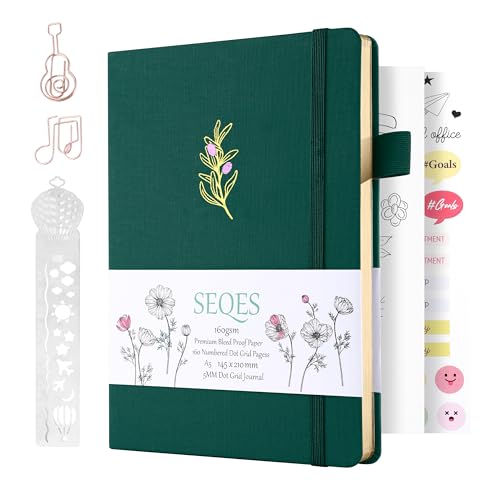
Dyeing is a messy business, and the Archer and Olive notebooks are famous for their ultra-thick, 160gsm paper. This weight is vital if you are gluing down actual yarn samples or using heavy-duty archival tape to secure your swatches.
The thick paper prevents "ghosting" or bleed-through, even if you use heavy markers to label your dye baths. When you are documenting the difference between a pre-mordant of alum versus a post-mordant of iron, you want a clean surface that won’t warp.
The main drawback is the weight; this is a heavy book. If you prefer to keep your notes directly next to the dye pot, ensure you have a dedicated, dry workspace away from the steam and splashing.
Midori MD Notebook Cover: Best for Minimalists

The Midori MD system is for the dyer who wants to focus entirely on the process rather than the gear. It offers a clean, distraction-free aesthetic that allows your color samples to take center stage on the page.
The paper is exceptionally smooth, which feels luxurious when you are recording the nuances of a complex over-dye. It is a simple, no-frills approach that encourages you to write daily, even if your dye session was just a small test batch.
Because the notebooks are sold as thin, individual inserts, you can easily archive them by year or by project type. It is a modular system that grows with your experience level without feeling overwhelming.
Rapesco A5 Ring Binder: Best for Large Archives

When you reach the point where you have hundreds of recipes and dozens of fiber samples, a standard notebook will no longer suffice. The Rapesco A5 ring binder is the heavy-duty workhorse designed to hold a lifetime of dye documentation.
This is the best choice for storing large swatches of different fiber bases, such as Bluefaced Leicester, silk, or mohair. You can use heavy-duty page protectors to keep your fiber samples clean and protected from moths or dust.
It is strictly a storage solution rather than a pocket-sized field guide. Keep this on your bookshelf as your primary reference library, and use a smaller notebook for scribbling down quick notes while you are actively stirring the pot.
Why Paper Quality Matters for Dye Documentation
Dyeing is a chemistry-heavy pursuit that involves moisture, heat, and sometimes acidic or alkaline substances. If your paper is too thin, it will buckle when you tape down a damp fiber sample or write with a fountain pen.
High-quality paper ensures that your notes remain legible for years, which is crucial when you are trying to replicate a specific shade of teal. You don’t want your ink to fade or your pages to yellow when you need to reference a recipe five years later.
Look for acid-free paper to ensure your documentation doesn’t degrade over time. Your recipes are an investment in your skill, and the paper should be durable enough to protect that investment.
Essential Data Points for Every Dye Recipe Log
To make your recipes truly reproducible, you must record more than just the dye amount. Always note the Water-to-Fiber Ratio, the Mordant Type, and the Temperature of the Bath.
Include details about the fiber content, as a 100% superwash merino will take color differently than a wool-alpaca blend. Mentioning the water quality—whether you used distilled, tap, or rainwater—can also be a game-changer for consistent results.
- Weight of Fiber (WOF): Always record in grams for accuracy.
- Dye Percentage: Note the percentage of dye relative to the WOF.
- Time and Temperature: How long did it simmer, and at what heat?
- pH Levels: If you are using modifiers, note the starting and ending pH.
Organizing Your Swatches and Fiber Samples Well
A recipe is only as good as the visual evidence that accompanies it. Always include a small "yarn tag"—a snippet of the yarn before it was dyed—next to the finished, dried sample.
Use clear, archival-safe tape or small staples to secure your samples to the page. Avoid using glue sticks, as they can discolor the fiber or attract pests over time.
Organizing by color wheel or by dye source (e.g., botanical vs. synthetic) helps you visualize your palette. If you are a production dyer, consider organizing by project so you can easily reference your "go-to" colors for specific sweater quantities.
Tips for Maintaining Your Dye Recipe Notebooks
Keep your notebook at least three feet away from your dye pots to prevent accidental spills or steam damage. It is easy to get caught up in the excitement of a color shift, but a stray drop of indigo can ruin a page of perfect notes.
Review your notes at the end of every season to identify which recipes were successful and which need tweaking. Add "post-mortem" notes to your entries, such as "next time, increase mordant by 2% for deeper saturation."
Finally, treat your notebook with the same care you treat your finest hand-dyed yarn. It is the most valuable tool in your studio, documenting the evolution of your craft and the unique colors that define your artistic voice.
Your dye recipe notebook is the bridge between a fleeting experiment and a repeatable, professional-grade result. Whether you choose the modular flexibility of a Filofax or the archival durability of a Rapesco, the most important step is simply starting the habit of consistent documentation. By tracking your variables with care, you transform your dye kitchen from a place of guesswork into a space of true creative mastery. May your baths be consistent, your colors vibrant, and your archives ever-growing.